How Do Level 2 EV Chargers Work?
A Level 2 charger sends 240V AC power to your car, and the onboard charger inside the car turns it into DC to charge the battery. The wall unit is mostly a smart, safe power supply; the real charging work happens in your vehicle.
On this page (9 sections)
- What actually happens inside a Level 2 charger?
- How does a Level 2 charger talk to your car?
- How many amps and miles per hour does Level 2 add?
- Why does a Level 2 charger need a 240V circuit?
- What does the smart side of a Level 2 charger do?
- What protects you and the car during a charge?
- Should you pick a plug-in or hardwired Level 2 charger?
- How does Level 2 compare with Level 1 and Level 3?
- What should you check before buying a Level 2 charger?
A Level 2 charger sends 240V AC power to your car, and the onboard charger inside the car turns it into DC to charge the battery. The wall unit is mostly a smart, safe power supply; the real charging work happens in your vehicle.
That split explains most of what people ask about level 2 charging. The box on the wall controls delivery and safety, while the car decides the pace.
Here is how the two sides work together.
What actually happens inside a Level 2 charger?
The wall unit delivers AC power and the car converts it. A Level 2 charger is essentially a smart switch, a cable, and a safety system, not a battery charger in the usual sense.
The unit takes 240V from your panel and passes it down the cable to the car. Inside the car, an onboard charger converts that AC into DC and feeds it to the battery pack.
The wall box reads how much the car is ready to accept and sends exactly that.
That is why the same unit can charge a slow car and a fast one at different speeds. The connector is a J1772 plug on most non-Tesla cars.
The unit also handles ground-fault protection and over-current cutoff, so a fault stops power before it reaches the car.
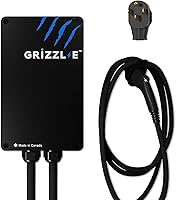
The cable itself is part of the design. The EVIQO runs 25 ft so it can reach across a garage or driveway, and the Grizzl-E Avalanche Edition carries a 24 ft premium cable.
The MACH 1 goes longer still at 30 ft, which matters if your outlet sits on a far wall from where the car parks.
How does a Level 2 charger talk to your car?
A low-voltage pilot signal on the connector tells the car how much power is available. This handshake is why Level 2 charging is safe to leave plugged in overnight.
The charger uses that signal to announce its maximum current, and the car replies with what it can take. Whichever number is lower becomes the limit.
When the battery fills, the car asks for less and the unit follows.
If the cable is unplugged or the car is full, the unit cuts power to the pins. You never handle live current when you connect or disconnect.
This is also why a charger rated higher than your car doesn't overcharge it: the car sets the ceiling.
Some units now read the setup for you. The ApexCharger MACH 1 senses whether it is plugged in or hardwired and self-adjusts its max current, so there are no dip switches to set.
How many amps and miles per hour does Level 2 add?
A 40A Level 2 charger adds roughly 28 to 30 miles of range per hour. That is the Grizzl-E figure at its top setting, and most drivers get a full overnight charge.
Amperage scales with the circuit breaker. The Grizzl-E runs 40A on a 50A breaker, 32A on 40A, 24A on 30A, and 16A on 20A, with charge rates falling to 22–25, 15–18, and 10–12 miles per hour.
A 48A hardwired unit can push faster, but only if the car accepts it.
The car's onboard charger is the hard ceiling. If your EV is limited to 32A, a 40A or 48A unit won't add speed.
Check the car's onboard charger rating before you pay for a bigger circuit.
What speed can a 48A hardwired unit reach?
Hardwiring lifts the ceiling to 48A. The ApexCharger MACH 1 claims up to 38 miles per hour on a NEMA 14-50 plug and up to 46 miles per hour when hardwired, or roughly 6 to 8 hours for a full charge plugged in and 5 to 7 hours hardwired.
Those figures only land if your car's onboard charger can take the full 48A, so check both sides before you plan the circuit.
Why does a Level 2 charger need a 240V circuit?
It moves far more power than a standard 120V socket can safely supply. A Level 2 unit pulls 32A to 48A, which is why it gets its own circuit from the panel.
Most plug-in models use a NEMA 14-50 outlet on a dedicated 50A circuit, the same type an RV or electric range uses. It is not a dryer outlet, and the two don't mix.
Hardwired models skip the outlet and connect straight to the circuit, which allows the full 48A.
Before ordering, confirm your panel has room for the breaker and that the outlet type matches the charger. An electrician can check load capacity and whether hardwiring or a plug suits your garage.
For a wider look at home setups, see how does a home EV charger work.
What does the smart side of a Level 2 charger do?
The app and onboard electronics handle scheduling, current limits, and energy tracking. This is what separates a modern Level 2 unit from a plain cable.
The EVIQO charger lets you start and stop charging, set speed from 6A to 40A, schedule off-peak overnight sessions, and track energy use and cost from a phone. A stronger antenna keeps it online in a garage or basement, and it needs 2.4 GHz WiFi.
Over-the-air updates keep the features current without you touching the hardware.
The MACH 1 layers on its own controls: Bluetooth and WiFi, a 2.4 in LED display, two RFID cards for access control, and a True Plug N' Play mode. Connector holders, a wall mount plate, and the tools for fitting are in the box.
The point is the same across all three: the app sets the rules and the car still sets the pace.
What protects you and the car during a charge?
Ground-fault protection, over-current cutoff, and weather sealing keep a Level 2 session safe. The unit watches for faults and shuts off before they reach the car or you.
A built-in GFCI trips if current leaks to ground, the same protection a bathroom outlet has. Over-current and over-temperature protection cut power if the draw or heat gets too high.
Certified units carry UL or ETL testing, which is worth checking on any charger you buy.
Outdoor units need an IP rating for rain, snow, and dust. The EVIQO carries IP66 and a NEMA 4 rating for indoor or outdoor use, with internal steel shielding around the electronics.
The Grizzl-E is IP67 and fire resistant, with a self-monitoring recovery feature that restarts after a power outage. The ApexCharger adds a NEMA plug temperature sensor that gradually reduces power if heat is detected.
Should you pick a plug-in or hardwired Level 2 charger?
Pick a plug-in unit for easy install and portability; pick hardwired for the full 48A. The right answer depends on your panel and whether you might move the charger.
A plug-in unit drops onto an existing NEMA 14-50 outlet and comes with you if you move. A hardwired unit connects directly and can reach higher current, which suits a car that accepts it.
The ApexCharger MACH 1 handles both, working as a 40A plug-in or a 48A hardwired unit on a 60A breaker, and its hardwiring kit and instructions ship in the box.
If you rent or travel, a portable unit that plugs in is the flexible choice. Our guide to the best portable Level 2 EV charger covers the options that pack up.
If you only have a standard outlet for now, a Level 1 unit is the stopgap. Our Lectron EV charger review shows what a 120V setup can and can't do.
How does Level 2 compare with Level 1 and Level 3?
Level 1 uses 120V and is slow; Level 2 uses 240V and is the home standard; Level 3 is DC fast charging. Each step changes the voltage and where the conversion happens.
Level 1 plugs into a normal wall socket and adds only a few miles per hour, enough for a short commute topped up overnight. Level 2 moves to 240V and turns an empty battery into a full one in a night.
Level 3 skips the onboard charger entirely and feeds DC straight to the battery at a public station. For the full breakdown, read Level 2 vs Level 3 EV chargers.
What should you check before buying a Level 2 charger?
Match the charger to your car's onboard charger and to the circuit your panel can support. A bigger amp rating buys nothing if either side is limited.
Check the car's port type first. Most non-Tesla EVs use J1772, and Teslas charge through the adapter that comes with the car.
Confirm your outlet type and whether it is a dedicated 50A circuit, not a dryer plug.
Then look at the features that matter day to day: app scheduling, current adjustment, a cable long enough for your parking spot, and a weather rating if the unit lives outside. Check the warranty and support too, since the electronics are the part that ages.
The EVIQO covers three years with U.S.-based support, the Grizzl-E carries federal rebate eligibility, and the MACH 1 offers five years of coverage.
That is how do Level 2 EV chargers work in practice: the wall unit supplies safe 240V power, the car converts it, and the two agree on a pace your battery can take. Pick a plug-in unit if your outlet is ready, go hardwired if your car wants 48A, and let the car set the speed.
Frequently asked questions
Do I need an electrician to install a Level 2 charger?
Usually yes, if you want a dedicated 240V circuit run from your panel to a new outlet or a hardwired unit. A licensed electrician checks your panel capacity and pulls the right permit, which keeps the install safe and up to code.
Can a Level 2 charger charge a Tesla?
Yes. A J1772 unit charges a Tesla through the small adapter that comes with the car, or you can buy a charger built with a NACS connector.
Either way, the car's onboard charger handles the conversion to DC.
Does a higher amp rating always mean faster charging?
No. Your car's onboard charger caps how much AC power it can accept, so a 48A unit won't beat a 40A one on a car limited to 32A.
Match the charger to the car and to the circuit your panel can support.
Why does a Level 2 charger need a special outlet?
It draws much more current than a standard 120V wall socket can safely supply. A NEMA 14-50 outlet on a dedicated 50A circuit gives it the 240V feed it needs, and it is the RV and range type outlet, not a dryer plug.