9 Best Level 2 EV Chargers for Home (November 2026)
The best best level 2 EV chargers for home use include the Autel Level 2 EV Charger 50A for most home garages, the Emporia 48A Hardwired J1772 Charger for smart energy tracking, and the ChargePoint HomeFlex 50A Hardwired Charger for road-trip planning.
On this page (5 sections)
The best Level 2 EV charger for home is the Autel Level 2 EV Charger 50A, which adds up to 37 miles of range per charging hour and gives you Wi-Fi, Bluetooth and Ethernet control. For the smartest energy tracking, pick the Emporia 48A Hardwired.
Renters and anyone with a 14-50 outlet already in the garage should start with the ChargePoint HomeFlex NEMA 14-50.
A Level 2 charger is the difference between plugging into a wall outlet and actually running your car on home power. It uses a 240V circuit instead of the 120V household supply, so it charges several times faster.
At the top end, the hardwired models here add 37 to 46 miles of range per hour, which is more than most people drive in a day.
The right model depends on your panel, your parking spot and how long your car sits each night. This guide compares nine options across hardwired and plug-in setups so you can match one to your garage.
It covers the whole range, from 50A units that fill a large battery overnight to portable chargers you can pack for a trip.
If you want the bigger picture on home charging, our guide to EV chargers for home use covers the basics before you shop. And if you need to charge away from a fixed station, the best portable Level 2 EV chargers roundup covers travel-ready units.
Our picks at a glance
-
1
-
2
 Best for smart energy tracking
Emporia 48A Hardwired J1772 Charger
8.9/10 our score
See it on Amazon -
3
 Best for road-trip planning
ChargePoint HomeFlex 50A Hardwired Charger
8.8/10 our score
See it on Amazon
- 4
 Check it
ChargePoint HomeFlex NEMA 14-50 Charger
Best for renting a home - 5
 Check it
EVIQO 48A Hardwired J1772 Charger
Best for cold or wet garages - 6
 Check it
EVIQO 40A NEMA 14-50 J1772 Charger
Best for plug-in simplicity - 7
 Check it
AIMILER Level 2 Electric Vehicle
Best for budget-conscious buyers - 8
 Check it
EVDANCE Level 1 and 2 Portable Charger 25ft
Best for travel between two homes - 9
 Check it
EVDANCE 32A Portable Level 2 Charger
Best for quick portable top-ups
The best Level 2 EV chargers for home, ranked
The Autel is the top pick for most people, while the other chargers here solve specific problems like renting, energy tracking or budget. Scores weigh specs, features and buyer feedback against what a home charger needs to do.
A charger that wins on raw speed loses points if the install is awkward for the typical buyer.
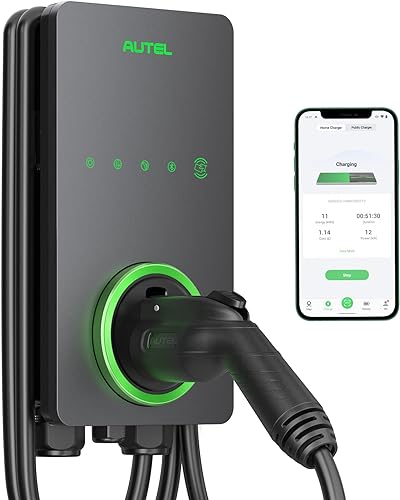
Autel Level 2 EV Charger 50A: Best for most home garages
- 50A hardwired, 12 kW output
- Adds up to 37 miles of range per hour
- CSA certified and NEMA Type 4 rated
- 25 ft cold-rated cable to -40 F
- Wi-Fi, Bluetooth and Ethernet app control
- 3-year warranty
The Autel pairs a fast 50A hardwired setup with three ways to connect to your home network. A long cold-rated cable and a 3-year warranty round out the package.
Pros
- 50A hardwired for the fastest home charging
- Wi-Fi, Bluetooth and Ethernet connectivity
- 25 ft cable rated for cold weather
- 3-year warranty
Cons
- Hardwired install needs an electrician
- Highest amp rating needs a large dedicated circuit
Autel suits a garage where the car sits overnight and the driver wants the fastest reliable home charge. A 50A hardwired setup at 12 kW adds up to 37 miles per hour, which covers a long commute in a few hours.
The amperage is adjustable from 16A to 50A, so an electrician can dial it down to match a smaller circuit.
Three ways to connect set it apart from most rivals. Wi-Fi, Bluetooth and an Ethernet port keep the charger online for over-the-air firmware updates and scheduled off-peak charging through the Autel Charge app.
A wired Ethernet run is the most stable option if your garage Wi-Fi is patchy.
The 25 ft cable stays flexible down to -40 F, so a cold-climate garage won't make the cable stiff. A NEMA Type 4 rating means it handles rain, snow and sleet if you mount it outside.
Built-in over current, over voltage and over temperature protection add peace of mind.
Autel backs the MaxiCharger with a 3-year warranty and around-the-clock support. The trade-off is the install: 50A needs a dedicated circuit and an electrician, so budget for that before ordering.
See the hardwired EV charger roundup for more options in this class.
Emporia 48A Hardwired J1772 Charger: Best for smart energy tracking
- 48A hardwired, up to 46 miles per hour
- Wi-Fi energy monitoring in the app
- UL listed and ENERGY STAR certified
- 25 ft J1772 cable
- 3-year warranty
Emporia leans into smart charging with real-time energy data and off-peak scheduling. The 48A hardwired setup delivers up to 46 miles of range per hour.
Pros
- Real-time energy data in the app
- Off-peak scheduling to cut costs
- UL listed and ENERGY STAR certified
- 3-year warranty
Cons
- Hardwired install needs an electrician
- 2.4 GHz Wi-Fi only
Emporia suits the driver who wants to see exactly what each charge costs. Its app shows real-time energy data and lets you schedule sessions for off-peak rates.
Emporia says scheduling can cut energy costs by 30%, though the real figure depends on your utility's rate structure.
The 48A hardwired connection adds up to 46 miles per hour, which is the highest range-per-hour figure in this group. It ships preconfigured for hardwired install with a whip, and Emporia recommends professional installation.
A whip is the short length of conduit and cable that runs from the wall to the unit, so the electrician has less to build on site.
Certifications matter here: UL listed and ENERGY STAR certified, with the unit built to NEC 625 and SAE J1772 standards. The 25 ft J1772 cable works with all non-Tesla EVs in North America.
Emporia also offers the same charger with a NACS connector for Tesla and newer EVs.
The trade-off against the Autel is connectivity: this one uses 2.4 GHz Wi-Fi only, with no Bluetooth or Ethernet fallback. If your garage Wi-Fi is weak, the Autel's extra options may serve you better.
Choose Emporia when the app's energy tracking is the feature you'll actually use.
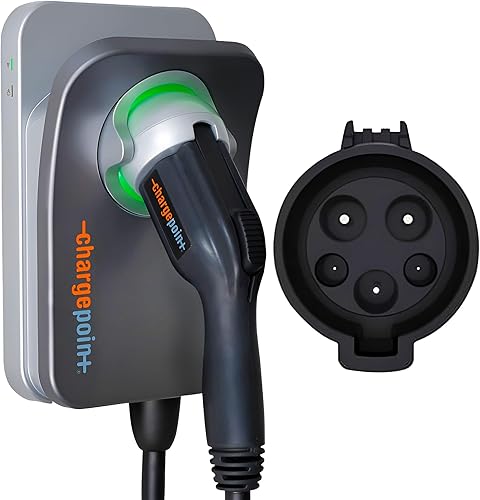
ChargePoint HomeFlex 50A Hardwired Charger: Best for road-trip planning
- 50A hardwired, up to 45 miles per hour
- Access to 274k+ public charging stations
- UL certified, ENERGY STAR
- 23 ft cold-resistant cable
- Adjustable 16-50A
ChargePoint's app reaches a huge public network alongside your home charger. The 50A hardwired version gives the fastest charge in the HomeFlex line.
Pros
- App shows 274k+ public stations
- 50A hardwired for fast home charging
- UL certified and ENERGY STAR
- Cold-resistant cable
Cons
- Wi-Fi needed for some app features
- Warranty length not stated in the data
ChargePoint's hardwired HomeFlex suits the driver who plans road trips and wants one app for home and public charging. The ChargePoint app reaches 274k+ stations across North America and Europe, plus 565k+ roaming partners.
It also supports Apple CarPlay and Android Auto, so station info shows on your car screen.
At home, the 50A hardwired version charges up to 45 miles per hour. Amperage is adjustable from 16A to 50A.
The 23 ft cold-resistant cable is shorter than the Autel and Emporia cables, so measure your parking spot before you commit.
The unit is UL certified and ENERGY STAR rated, and ChargePoint offers 24/7 support. One thing to know: some app features and troubleshooting steps need Wi-Fi, so a weak garage signal can limit the smart side.
The app also handles reminders and smart home connections.
Against the Emporia, you give up some energy-data depth and cable length but gain the public network app. Against the Autel, you lose the Ethernet option and the longer cable.
Pick ChargePoint when travel planning matters as much as home charging.
ChargePoint HomeFlex NEMA 14-50 Charger: Best for renting a home
- Plugs into a NEMA 14-50 outlet
- Up to 40A on a 40A or 50A circuit
- Same ChargePoint app and network
- UL certified, ENERGY STAR
- 23 ft cable
This HomeFlex plugs into an existing 240V outlet instead of being hardwired. That makes it the easier pick when you rent or plan to move the charger.
Pros
- No hardwiring needed with a 14-50 outlet
- Same smart app as the hardwired HomeFlex
- UL certified and ENERGY STAR
Cons
- Capped at 40A on the outlet
- Needs a 14-50 receptacle already installed
The plug-in HomeFlex is the renter's pick. It plugs into a NEMA 14-50 outlet on a 40A or 50A circuit, so you skip the hardwiring and the electrician.
That convenience costs some speed. The outlet version provides up to 40A and 45 miles per hour, while the hardwired model reaches 50A.
For most overnight charging, 40A is plenty. A full battery from empty takes roughly 8 to 12 hours at this rate for a typical EV.
You get the same ChargePoint app and public network access as the hardwired version, plus a 23 ft cable. UL certified and ENERGY STAR rated, it's a safe choice for an indoor or outdoor install.
The catch is the outlet itself. You need an industrial-grade 14-50 receptacle rated for continuous EV use, not a standard range outlet.
Emporia's guidance on Hubbell, Leviton or Cooper (Eaton) brands applies here too. If your garage already has one, this is the easiest fast-charging upgrade here.
If not, the hardwired models may be simpler overall.
EVIQO 48A Hardwired J1772 Charger: Best for cold or wet garages
- 48A hardwired on a 60A circuit
- DIP switches enable 50A on a 70A circuit
- IP66 and NEMA 4 sealed housing
- Glow-in-the-dark holster
- 25 ft cable, 3-year warranty
EVIQO's sealed housing and glow-in-the-dark holster suit outdoor and garage installs. A 48A hardwired setup charges most EVs fully overnight.
Pros
- IP66 and NEMA 4 sealed housing
- Glow-in-the-dark holster
- Side reset button for quick restarts
- 3-year warranty
Cons
- Hardwired install needs an electrician
- 2.4 GHz Wi-Fi only
EVIQO's 48A hardwired charger suits a garage or carport that sees weather. Its IP66 and NEMA 4 sealed housing stands up to rain, snow, heat and dust, indoors or out.
Internal steel shielding protects the electronics over the long run.
Install takes a licensed electrician on a dedicated 60A, 240V circuit. If you have a 70A circuit, DIP switches 4 and 5 enable 50A.
The 25 ft cable reaches across most garages and driveways. You can set the charge rate anywhere from 6A to 48A in the app.
A glow-in-the-dark holster is a small but useful touch: you can find and dock the plug at night without a flashlight. A side reset button restarts the unit without opening it or flipping the breaker.
A stronger built-in antenna helps it hold a Wi-Fi signal in a basement or detached garage.
The trade-off against the top picks is the app's Wi-Fi requirement: it needs a 2.4 GHz network. Choose EVIQO when durability and a bright holster matter more than the deepest energy analytics.
It carries a 3-year warranty and U.S.-based support Monday to Saturday.
EVIQO 40A NEMA 14-50 J1772 Charger: Best for plug-in simplicity
- 40A plug-in on a 50A circuit
- NEMA 14-50 four-prong plug
- IP66 and NEMA 4 sealed housing
- Glow-in-the-dark holster
- 25 ft cable, 3-year warranty
The plug-in EVIQO needs a 240V NEMA 14-50 outlet and no hardwiring. You get the same sealed housing and glow holster as the 48A model.
Pros
- No hardwiring with a 14-50 outlet
- IP66 and NEMA 4 sealed housing
- Glow-in-the-dark holster
- 3-year warranty
Cons
- 40A ceiling on the plug-in version
- Needs a 14-50 outlet on a dedicated 50A circuit
The plug-in EVIQO gives you most of the 48A model's features without the hardwiring. It delivers 40A from a NEMA 14-50 outlet on a dedicated 50A circuit and charges most EVs fully overnight.
At 9.6 kW, it adds a steady amount of range each hour, enough to recover a long commute in one session.
The housing is the same sealed IP66 and NEMA 4 design, so it handles a wet carport. The glow-in-the-dark holster and side reset button carry over too.
The 25 ft cable gives you reach across the garage.
The app sets speed from 6A to 40A and tracks energy and cost per charge. Schedule off-peak charging to cut your bill.
Certification includes UL, ETL, FCC and ENERGY STAR. The outlet type matters: this is a four-prong 14-50, not a dryer outlet.
The trade-off is speed: 40A instead of 48A costs you a few miles per hour. But for a renter with a 14-50 outlet, this is one of the simplest fast chargers to set up.
It's also the better fit than the hardwired EVIQO if you may move within a year or two. Pair it with a 14-50 outlet that is rated for continuous EV use.
AIMILER Level 2 Electric Vehicle: Best for budget-conscious buyers
- 32A plug-in on a 40A circuit
- NEMA 14-50 plug
- Built-in CCID-20 leak protection
- Touch screen and Wi-Fi app
- 25 ft cable, 3-year warranty
AIMILER covers the basics at a lower output: 32A on a 40A circuit with app control and built-in leak protection. It's a fit for shorter daily drives.
Pros
- Built-in CCID-20 leak protection
- Touch screen shows live charging data
- Wi-Fi app scheduling
- 3-year warranty
Cons
- 32A is the lowest hardwired-class output here
- Needs a 14-50 outlet
AIMILER suits the buyer who wants app control and safe charging on a tighter budget. Its 32A output on a 40A circuit adds about 6 times the speed of a standard Level 1 charger.
The unit can also run at 24A on a 30A breaker or 16A on a 20A breaker, so it flexes to a smaller panel.
The built-in CCID-20 leak protection means you don't need a separate GFCI breaker for a 14-50 receptacle. A touch screen shows amperage, voltage and delay time, and the Wi-Fi app handles scheduling.
The screen also shows input voltage and charging speed at a glance.
The 25 ft cable and NEMA Type 4 rating handle a garage or covered outdoor spot. AIMILER covers it with a 3-year warranty.
The plug end is a NEMA 14-50P, and the connector is J1772 for all non-Tesla EVs.
Against the 40A and 48A chargers here, the lower amperage means a longer overnight session. If your daily drive is short and your panel is modest, that's a fair trade.
Skip it if you routinely arrive home with a nearly empty battery and need the fastest turnaround. The built-in leak protection is the feature that sets it apart at this output level.
EVDANCE Level 1 and 2 Portable Charger 25ft: Best for travel between two homes
- Level 1 at 12A on 120V
- Level 2 at 16A on 240V
- 25 ft cable
- IP66 housing
- Carry bag included
One charger that works from a standard wall outlet or a 240V 6-20 outlet. It's the pick for drivers who split time between two locations.
Pros
- Works on 120V and 240V outlets
- 25 ft cable with carry bag
- IP66 housing
Cons
- 16A is the slowest Level 2 rate here
- Needs adapters for 14-50 or 6-50 outlets
This EVDANCE unit suits the driver who splits time between two homes or rents a place without a fixed station. It runs on a 120V standard outlet at 12A or a 240V 6-20 outlet at 16A.
The 25 ft cable and included bag make it easy to toss in the trunk. At 240V it adds 10 to 12 miles per hour, which covers an overnight session for many commuters.
At 120V the rate drops to 2 to 5 miles per hour. The charger syncs with your car's onboard current limit, so the actual rate can be lower than the outlet's maximum.
The housing is IP66 rated and the control box monitors charging status. An LED display shows status and error codes.
A 1-year warranty covers it. Note that it isn't compatible with every model, so check the full compatibility list on the product page before buying.
The trade-off is outlet compatibility. It works with NEMA 5-15/5-20 and 6-20 outlets, not 14-50 or 6-50, so you need an adapter for those.
That makes it a secondary or travel charger more than a primary home station. For a permanent garage install, the hardwired picks here are the stronger choice.
EVDANCE 32A Portable Level 2 Charger: Best for quick portable top-ups
- 32A portable, 7.68 kW
- NEMA 14-50 plug
- Adjustable 16A to 32A
- IP66 housing
- 25 ft cable, carry bag
A portable charger that reaches 32A when plugged into a 14-50 outlet. It suits renters and road trips where a fixed station isn't practical.
Pros
- 32A output from a portable unit
- Adjustable 16A to 32A
- Carry bag and wall bracket included
Cons
- 1-year warranty is the shortest here
- Needs a 14-50 outlet for full speed
EVDANCE's portable 32A charger suits renters and road-trippers who need more speed than a 16A travel unit. Plugged into a NEMA 14-50 outlet, it delivers 32A and 7.68 kW, with adjustable current from 16A to 32A.
A 32A unit fills an empty battery in about 8 to 13 hours, per EVDANCE.
The 25 ft cable, carry bag and wall bracket cover both travel and a semi-permanent garage spot. IP66 protection handles dust and water, though EVDANCE doesn't recommend direct sunlight or heavy rain.
A drop-resistant plug is rated for over 10,000 insertions.
The LED screen shows amperage, voltage, speed and delay settings. You can schedule off-peak sessions to save on electricity.
Amperage changes happen with a long press of the "A" button while the unit is plugged in and not charging. Lower settings like 10A or 16A reduce heat and are gentler on the battery over time.
Against the plug-in EVIQO and ChargePoint 14-50, this one is slower and carries the shortest warranty in the group at 1 year. Its strength is portability: pack it for a trip or use it as a backup when your main station fails.
Choose it as a second charger, not the only one for a long commute. For a dedicated home station, a hardwired unit serves you better.
How these Level 2 chargers compare
Every charger here runs on 240V and uses a J1772 connector for non-Tesla EVs. The real differences come down to install type, amperage and how smart the app is.
Use the table to line up the specs side by side.
| Product | Best for | Amperage | Install type | Connector | Our score |
|---|---|---|---|---|---|
| Autel Level 2 EV Charger 50A | most home garages | 50 A | Hardwired | J1772 | 9.3 |
| Emporia 48A Hardwired J1772 Charger | smart energy tracking | 48 A | Hardwired | J1772 | 8.9 |
| ChargePoint HomeFlex 50A Hardwired Charger | road-trip planning | 50 A | Hardwired | J1772 | 8.8 |
| ChargePoint HomeFlex NEMA 14-50 Charger | renting a home | 40 A | Plug-in (NEMA 14-50) | J1772 | 8.6 |
| EVIQO 48A Hardwired J1772 Charger | cold or wet garages | 48 A | Hardwired | J1772 | 8.4 |
| EVIQO 40A NEMA 14-50 J1772 Charger | plug-in simplicity | 40 A | Plug-in (NEMA 14-50) | J1772 | 8.3 |
| AIMILER Level 2 Electric Vehicle | budget-conscious buyers | 32 A | Plug-in (NEMA 14-50) | J1772 | 8.2 |
| EVDANCE Level 1 and 2 Portable Charger 25ft | travel between two homes | 16 A | Portable (NEMA 6-20 or 5-15) | J1772 | 7.6 |
| EVDANCE 32A Portable Level 2 Charger | quick portable top-ups | 32 A | Portable (NEMA 14-50) | J1772 | 7.2 |
How we compared these chargers
We compared the nine models on install type, amperage, cable length, certifications and app features. Then we weighed each against what a typical home driver needs: a safe overnight charge without a panel upgrade surprise.
Hardwired models earn credit for the fastest charge rates, while plug-in models score on flexibility. Smart features count when they help schedule off-peak charging or track energy cost.
Certifications like UL, ETL, CSA and ENERGY STAR matter because they show the unit was independently tested. We also noted which units carry weather ratings for outdoor installs, since a carport or driveway mount is common.
Warranty length and cable reach separate otherwise close models. A 1-year warranty against a 3-year warranty is a real difference if something fails in year two.
We also considered cold-weather ratings, since many garages drop below freezing in winter. The Autel's -40 F cable rating and the ChargePoint cold-resistant cable both count here.
Scores reflect how well each charger fits the keyword's searcher: someone setting up home charging for the first time. A unit that needs an electrician and a panel upgrade loses ground to one that drops onto an existing outlet.
That's why the top picks balance speed, features and a realistic install path.
Which Level 2 charger fits your home?
The right charger depends on your electrical panel and how long your car sits each night. Start with your panel capacity, then match the amperage.
A licensed electrician can tell you what your service can support before you buy.
Hardwired or plug-in: which should you choose?
Pick hardwired if you want the fastest charge and plan to stay put. A hardwired unit reaches 48A to 50A and adds up to 37 to 46 miles per hour.
It's tidier, with no outlet to wear out. The Autel and both EVIQO models are hardwired.
Pick plug-in if you rent or move often. A NEMA 14-50 outlet model caps at 40A, which still fills most EVs overnight.
It also travels with you to a new home. The ChargePoint 14-50, EVIQO 40A, AIMILER and EVDANCE 32A all fall in this group.
One caution on outlets: not every 14-50 receptacle is rated for continuous EV charging. Emporia recommends industrial-grade, 50A-rated, continuous-duty brands like Hubbell, Leviton or Cooper (Eaton).
Check yours before relying on it. A worn outlet can overheat under a multi-hour EV load.
How many amps does your panel support?
A 40A charger needs a dedicated 50A circuit. A 48A unit needs a 60A circuit, and a 50A unit needs a 60A or larger circuit.
Your electrician checks the panel's spare capacity before any install.
If your panel is tight, a 32A plug-in model like the AIMILER is the practical answer. It needs only a 40A circuit.
That's enough for a short commute, though a long daily drive will charge more slowly. A 16A portable unit needs just a 20A circuit and is the lightest load of all.
What should you check before you buy?
Check three things first: your panel capacity, your outlet type and your car's charge port. Then measure the distance from the mounting spot to your parking position.
Cable length matters more than people expect. The Autel and EVIQO models give you 25 ft, while the ChargePoint HomeFlex models stop at 23 ft.
Two feet can be the difference between a tidy install and an extension cord you shouldn't use. Extension cords are not rated for continuous EV charging and can overheat.
Port type is the other check. Every charger here uses J1772.
Tesla drivers need the J1772 adapter that comes with the car. For a Level 1 comparison, read our Lectron EV charger review to see how the slowest option works day to day.
What do the safety certifications mean?
UL, ETL and CSA marks mean the charger passed independent safety testing. ENERGY STAR means it meets efficiency criteria in standby and charging.
NEMA Type 4 or IP66 ratings cover weather protection.
A charger without these marks is a gamble you don't need to take. All nine models here carry at least one major certification.
The Autel adds CSA and NEMA Type 4, while the Emporia and ChargePoint units carry UL and ENERGY STAR. The EVIQO models add ETL and FCC to the mix.
Built-in leak protection like the AIMILER's CCID-20 covers a shock hazard that a breaker alone may not.
What smart features are worth paying for?
Scheduling off-peak charging is the feature that pays for itself. Emporia, ChargePoint and EVIQO all let you set sessions in the app.
If your utility offers a lower overnight rate, that's real money back each month. The Autel app does the same and adds Bluetooth setup for when Wi-Fi is down.
Energy tracking is the next most useful feature. Emporia's real-time data is the deepest in this group.
ChargePoint's app adds public station finding for road trips. Autel's three connection options make it the most reliable to keep online.
Skip paying extra for features you won't use. If you always plug in at night and your rate is flat, a basic plug-in unit like the AIMILER covers the job.
Over-the-air firmware updates are worth having on any smart unit, since they keep the charger current without a service call.
Where should you mount the charger?
Mount it close enough that the cable reaches your car's charge port without stretching. A garage wall next to the parking spot is the usual choice.
Outdoors, check the weather rating first.
The Autel, EVIQO models and AIMILER carry NEMA Type 4 or IP66 ratings for outdoor use. The ChargePoint units are UL certified for indoor or outdoor installs and include a cold-resistant cable.
Keep the holster within reach so the connector doesn't hang on the ground. A holster also keeps dust and water out of the plug end.
If you park outside in a cold climate, the Autel's -40 F cable rating is the most reassuring figure here. Cable stiffness in winter is a real annoyance on cheaper units.
Mounting under a roof overhang or inside a carport adds another layer of protection either way.
The best Level 2 EV charger for home: final verdict
The best Level 2 EV charger for home is the Autel Level 2 EV Charger 50A for most drivers. It combines a fast 50A hardwired charge with Wi-Fi, Bluetooth and Ethernet control, a 25 ft cold-rated cable and a 3-year warranty.
Choose the Emporia 48A Hardwired if energy tracking and off-peak savings matter most. Choose the ChargePoint HomeFlex 50A Hardwired if you want one app for home and public charging.
Renters should start with the plug-in HomeFlex or the EVIQO 40A, and budget-minded buyers can look at the AIMILER 32A. For travel, the two EVDANCE portables cover the gap when a fixed station isn't practical.
Match the amperage to your panel first, then pick the smart features you'll actually use. That order keeps the install simple and the charging fast.
For more home charging options, browse the EV charger for home guide and the portable Level 2 EV charger picks.
Our top 3 picks at a glance
-
1
-
2
Best for smart energy tracking
Emporia 48A Hardwired J1772 Charger
8.9/10 our score
See it on Amazon -
3
Best for road-trip planning
ChargePoint HomeFlex 50A Hardwired Charger
8.8/10 our score
See it on Amazon
Frequently asked questions
How many amps do I need for a home Level 2 charger?
Most homes are well served by a 40A to 50A hardwired charger, which adds 25 to 37 miles of range per hour. A 32A plug-in model covers shorter daily drives, while 48A to 50A units need a dedicated 60A or larger circuit and an electrician.
Can I install a Level 2 EV charger myself?
A plug-in charger that uses an existing NEMA 14-50 outlet is the easiest DIY option. Hardwired models should go to a licensed electrician, who checks panel capacity, wire gauge and code requirements before the install.
How long does a Level 2 charger take to charge an EV?
A 32A charger takes about 8 to 13 hours to fill an empty battery, according to EVDANCE. A 48A to 50A hardwired unit adds up to 37 to 46 miles per hour, so most drivers finish overnight.
Do Level 2 chargers work with Teslas?
A J1772 Level 2 charger works with a Tesla when you use the J1772 adapter that comes with the car. Most models here ship with a J1772 connector, so Tesla drivers keep the adapter in the trunk.
Is a hardwired or plug-in Level 2 charger better?
Hardwired models reach the highest amps and are the tidier permanent choice. Plug-in models cap at 40A but move with you and skip the electrician, which suits renters.
What should I check before buying a Level 2 charger?
Check your electrical panel capacity, the outlet type in your garage and your car's charge port. Then pick an amperage your panel can support and confirm the cable reaches your parking spot.