8 Best EV Chargers for Home Use (October 2026)
The best home EV chargers include the Grizzl-E Classic 40A NEMA 14-50 Charger for simple plug-in setups, the Emporia 48A Hardwired J1772 Charger for scheduled charging, and the ChargePoint HomeFlex 50A Hardwired Charger for higher hardwired output.
On this page (8 sections)
- How we chose the best EV chargers for home use
- Compare these home EV chargers
- The best EV chargers for home use
- How do you choose the best EV charger for home?
- What should you check before installing a home EV charger?
- How should you use and care for a home EV charger?
- What mistakes should you avoid when buying a home EV charger?
- Which home EV charger should you choose?
The Grizzl-E Classic is the best EV charger for most homes if you have a suitable NEMA 14-50 outlet and want adjustable charging without app setup. Choose Emporia for scheduled charging, ChargePoint for higher hardwired output, or AIMILER for portable Wi-Fi controls.
The best EV charger for home use fits three things: your car's charge port, your electrical setup and the place you park. Start with those checks, then weigh cable reach and app features you will actually use.
For a broader look at power levels and outlets, read our Level 2 charger for home guide. Our guide to installing an EV charger in a garage covers placement and setup.
Our picks at a glance
-
1
 Best for simple plug-in setups
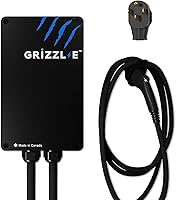
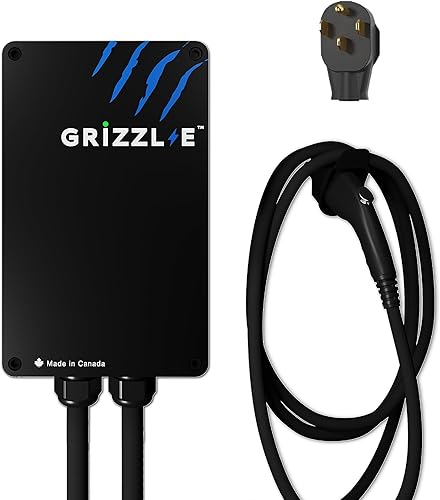
Grizzl-E Classic 40A NEMA 14-50 Charger
9.0/10 our score
See it on Amazon -
2

-
3
 Best for higher hardwired output
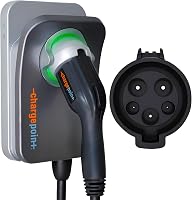
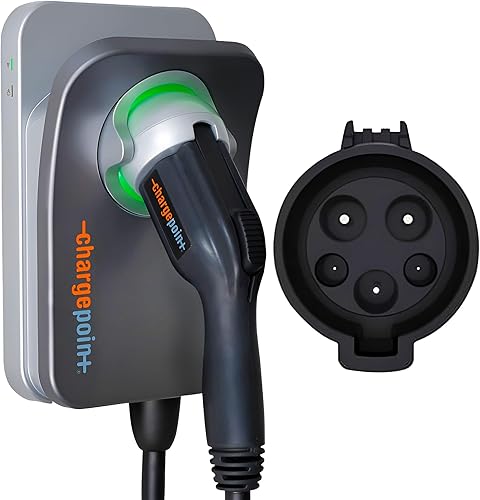
ChargePoint HomeFlex 50A Hardwired Charger
8.8/10 our score
See it on Amazon
- 4
 Check it
EVIQO 48A Hardwired J1772 Charger
Best for outdoor app control - 5
 Check it
AIMILER 40A Wi-Fi NEMA 14-50 Charger
Best for portable Wi-Fi charging - 6
 Check it
Lectron 40A NEMA 14-50 Level 2 Charger
Best for compact parking areas - 7
 Check it
IYILO 48A Hardwired J1772 Charger
Best for two-charger homes - 8
 Check it
Wallbox Pulsar Plus 40A Charger
Best for Bluetooth app access
How we chose the best EV chargers for home use
We compared connection type, output, cable length, connector, app functions and stated certifications. We also considered whether a pick suits a common home setup, such as a compatible plug-in receptacle or a planned hardwired circuit.
A higher amp rating does not automatically make a charger the better choice. Your car's onboard charger and the home's circuit both affect how much power you can use, so check those limits before deciding.
Compare these home EV chargers
The main differences are connection type, available output, cable reach and app controls. Use the table to narrow the field, then focus on the setup details that match your garage or driveway.
| Product | Best for | Output | Connection | Cable | Our score |
|---|---|---|---|---|---|
| Grizzl-E Classic 40A NEMA 14-50 Charger | simple plug-in setups | Up to 40A | NEMA 14-50 plug | 24 ft | 9.0 |
| Emporia 48A Hardwired J1772 Charger | scheduled charging | Up to 48A | Hardwired with whip | 25 ft | 8.9 |
| ChargePoint HomeFlex 50A Hardwired Charger | higher hardwired output | Up to 50A | Hardwired | 23 ft | 8.8 |
| EVIQO 48A Hardwired J1772 Charger | outdoor app control | Up to 48A | Hardwired | 25 ft | 8.4 |
| AIMILER 40A Wi-Fi NEMA 14-50 Charger | portable Wi-Fi charging | Up to 40A | NEMA 14-50 plug | 25 ft | 8.0 |
| Lectron 40A NEMA 14-50 Level 2 Charger | compact parking areas | Up to 40A | NEMA 14-50 plug | 16 ft | 7.9 |
| IYILO 48A Hardwired J1772 Charger | two-charger homes | Up to 48A | Hardwired | 25 ft | 7.6 |
| Wallbox Pulsar Plus 40A Charger | Bluetooth app access | 40A plug-in version | NEMA 14-50 plug | 7.6 |
The best EV chargers for home use
The Grizzl-E Classic leads this group for a straightforward plug-in setup. Its adjustable output and NEMA 14-50 connection suit homes that already have the right receptacle.
Grizzl-E Classic 40A NEMA 14-50 Charger: Best for simple plug-in setups
- NEMA 14-50 plug
- Adjustable 16A to 40A output
- 24 ft cable
- UL certified
A plug-in 40A charger with adjustable output and a 24 ft cable. Its output settings let you match charging current to the circuit.
Pros
- Adjustable output from 16A to 40A
- 24 ft cable
- Metal case enclosure
Cons
- No app controls
- Needs a compatible NEMA 14-50 receptacle
The Grizzl-E Classic is the right fit if you want a simple home charger and already have a suitable NEMA 14-50 receptacle. You can choose among 16A, 24A, 32A and 40A settings, which lets the output match the circuit rather than forcing you to use the maximum.
The 24 ft cable gives useful reach across many garage parking positions. The metal enclosure and indoor or outdoor suitability also make this a practical option where the charger needs to sit near a driveway.
Choose it if you prefer a physical plug-in setup and do not need app scheduling or energy tracking. Skip it if you want phone controls, need more than 40A, or would have to install a receptacle just for this charger.
Before buying, measure the path from the outlet to the car's charge port with the vehicle parked normally. Our guide to Level 2 charger outlets explains why outlet type and circuit capacity matter.
Emporia 48A Hardwired J1772 Charger: Best for scheduled charging
- 48A hardwired connection
- 2.4 GHz Wi-Fi
- 25 ft cable
- UL listed and ENERGY STAR certified
A hardwired J1772 charger with Wi-Fi app controls, energy data and charging schedules. Professional installation is recommended.
Pros
- Up to 48A when hardwired
- App supports schedules and energy data
- 25 ft cable
Cons
- Hardwired installation requires planning
- J1772 connector may require an adapter for NACS vehicles
Emporia is the smart choice for drivers who want app scheduling on a hardwired charger. It combines a J1772 connector with up to 48A output and 2.4 GHz Wi-Fi controls.
Use the app to manage sessions, schedules and energy data. The 25 ft cable can help when the car parks farther from the mounting point, but the hardwired configuration means you should plan the electrical work before ordering.
Choose Emporia if app control is part of your regular routine and a licensed professional can install the charger. Skip it if you want to move the charger between locations, do not want Wi-Fi-dependent features, or your vehicle uses NACS and you have not arranged a compatible connector or adapter.
Its J1772 plug fits vehicles with a J1772 charge port. Confirm the connector arrangement for your exact car before settling on a model.
ChargePoint HomeFlex 50A Hardwired Charger: Best for higher hardwired output
- Adjustable 16A to 50A
- J1772 connector
- Wi-Fi app features
- Indoor or outdoor installation
HomeFlex offers adjustable output up to 50A and app controls for charging data, reminders and smart home connections. An electrician installs the hardwired unit.
Pros
- Adjustable output up to 50A
- App offers reminders and charging data
- Cold-resistant cable
Cons
- J1772 connector may need a Tesla adapter
- Wi-Fi is needed for some features and troubleshooting
ChargePoint HomeFlex suits drivers who want adjustable hardwired output and a connected app. The model in this roundup has a J1772 connector and can be adjusted up to 50A.
Its app supports charging data, reminders and smart home connections. Some functions and troubleshooting steps require Wi-Fi, so check the signal at the planned installation spot if you expect to use the app regularly.
Choose HomeFlex if you want a hardwired charger with flexible output and use app features for managing charging. Skip it if you need a plug-in unit, want to avoid Wi-Fi, or your vehicle needs a connector other than J1772 and you do not have an adapter.
The cable is 23 ft, so compare that length against your parking layout. ChargePoint describes the charger for indoor or outdoor installation and recommends an electrician for installation.
EVIQO 48A Hardwired J1772 Charger: Best for outdoor app control
- Up to 48A output
- 25 ft cable
- 2.4 GHz Wi-Fi app
- IP66 and NEMA 4 housing
A hardwired J1772 charger with app controls for charging speed, schedules and energy use. Its sealed housing is rated IP66 and NEMA 4.
Pros
- App can set charging speed from 6A to 48A
- 25 ft cable
- IP66 and NEMA 4 housing
Cons
- Requires a licensed electrician
- App features require 2.4 GHz Wi-Fi
EVIQO is a strong fit for a driveway or garage where app control and a sealed housing matter. Its hardwired J1772 unit provides up to 48A on a dedicated 60A, 240V circuit.
The app can set charging speed, start or stop sessions, set reminders and track energy use. It needs a 2.4 GHz Wi-Fi connection, and the 25 ft cable gives room to reach a car parked beyond the charger.
Choose EVIQO if you want app controls and a charger described for indoor or outdoor use, with IP66 and NEMA 4 housing. Skip it if you want a plug-in setup, lack reliable 2.4 GHz Wi-Fi near the charger, or do not want to arrange professional installation.
Ask an electrician to confirm the circuit and mounting location before purchase. The advertised maximum current depends on the electrical setup, not just the charger itself.
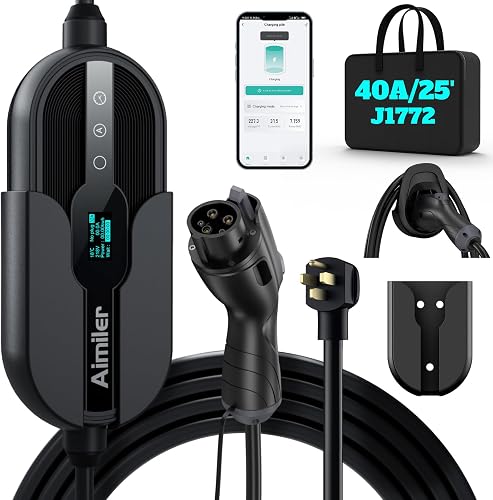
AIMILER 40A Wi-Fi NEMA 14-50 Charger: Best for portable Wi-Fi charging
- NEMA 14-50 plug
- Adjustable 16A to 40A
- 25 ft cable
- Wi-Fi app and screen
This portable plug-in charger pairs adjustable output with a screen and Wi-Fi app controls. It uses a J1772 connector, so some NACS vehicles need an adapter.
Pros
- Portable NEMA 14-50 connection
- 25 ft cable
- Screen shows charging information
Cons
- App setup requires 2.4 GHz Wi-Fi
- Needs a compatible 14-50 receptacle
AIMILER fits drivers who want a portable plug-in charger with both a screen and Wi-Fi app controls. It uses a NEMA 14-50 plug, a J1772 connector and a 25 ft cable.
The screen shows charging details such as amperage, voltage and delay time. The app can track charging status and cost, and charging schedules can help you time sessions around your household routine.
Choose AIMILER if you want to unplug the charger or need extra cable reach from a compatible receptacle. Skip it if you want a hardwired installation, do not want to configure an app, or your Wi-Fi uses only 5 GHz where the charger will connect.
Its output can be adjusted from 16A to 40A. Set it to a level the circuit can support, and confirm whether your NACS vehicle needs a separate J1772 adapter.
Lectron 40A NEMA 14-50 Level 2 Charger: Best for compact parking areas
- NEMA 14-50 plug
- 40A output
- 16 ft cable
- ETL and Energy Star certified
A portable plug-in charger for a 240V NEMA 14-50 outlet. Its 16 ft cable is shorter than several other picks here.
Pros
- No hardwiring necessary
- Portable format
- ETL and Energy Star certified
Cons
- 16 ft cable may limit parking options
- J1772 connector needs an adapter for Tesla
Lectron is a practical pick for a portable setup where a shorter cable still reaches comfortably. It plugs into a compatible 240V NEMA 14-50 outlet and provides up to 40A through a J1772 connector.
The cable is 16 ft, noticeably shorter than the other plug-in options in this roundup. That can suit a charger mounted close to the parking spot, but it may be awkward if the outlet sits at the far end of a garage or the car's charge port is on the opposite side.
Choose Lectron if you need a portable charger and have a compact parking layout. Skip it if you need a long reach, app scheduling or a connector that works natively with a Tesla.
Lectron states that the unit is ETL and Energy Star certified and rated IP65 for dust and water resistance. Keep the cable routed where it will not be driven over or tripped on.
IYILO 48A Hardwired J1772 Charger: Best for two-charger homes
- Up to 48A hardwired output
- 25 ft cable
- App scheduling and energy tracking
- Power sharing support
IYILO supports power sharing between two chargers on one circuit and app controls for schedules and energy use. Maximum output requires hardwiring and a 60A breaker.
Pros
- Power sharing support
- Adjustable current
- 25 ft cable
Cons
- Requires a licensed electrician for hardwiring
- App supports 2.4 GHz Wi-Fi only
IYILO is the option to consider when two chargers may share one circuit. It supports power sharing between two units and app controls for schedules and energy use.
The hardwired J1772 charger can provide up to 48A with a 60A breaker, and its app supports 2.4 GHz Wi-Fi. It also offers current adjustment, which can be useful when the installation needs a lower setting.
Choose IYILO if you are planning a two-car charging setup and will have an electrician configure the circuit and chargers. Skip it if you need a plug-in unit, only want a basic charger, or do not want to rely on a Wi-Fi app.
Its 25 ft cable helps with parking reach, while the J1772 connector means some NACS vehicles will need an adapter. The adapter is not included for Tesla vehicles.
Wallbox Pulsar Plus 40A Charger: Best for Bluetooth app access
- 40A plug-in version
- J1772 connector
- Wi-Fi and Bluetooth
- Indoor or outdoor use
The 40A plug-in version supports app charging controls over Wi-Fi and Bluetooth. Wallbox also offers a separate hardwired 48A model.
Pros
- Wi-Fi and Bluetooth connectivity
- 40A plug-in option
- UL and Energy Star certified
Cons
- J1772 connector needs an adapter for Tesla
- Confirm the exact plug-in configuration before ordering
Wallbox Pulsar Plus suits drivers who want a plug-in charger with app access through Wi-Fi or Bluetooth. The 40A version uses a NEMA 14-50 connection and a J1772 plug.
Bluetooth provides another way to connect with the app, which can be useful if Wi-Fi coverage is limited at the parking spot. Wallbox also offers a separate hardwired 48A model, but this pick is the 40A plug-in version.
Choose it if you want app controls and Bluetooth alongside a plug-in installation. Skip it if you want a longer cable than the configuration offers, need hardwired output, or want to avoid checking model variations before buying.
Tesla drivers need an adapter for the J1772 connector. Confirm the exact plug-in configuration and cable reach for your parking layout.
How do you choose the best EV charger for home?
Choose a charger by matching the connector, circuit and cable reach to the car and parking spot. App features, weather exposure and portability help you decide between models once those basics are clear.
What connector does your EV use?
Check the charge port on your vehicle before you order. A J1772 charger fits cars with a J1772 port, while vehicles with NACS may need an adapter when paired with a J1772 charger.
Confirm whether an adapter is included or must be bought separately. Our guide to what NACS means for EV charging explains the connector, and J1772 to Tesla adapters covers adapter choices.
Should you choose 40A, 48A or 50A?
Choose an output your vehicle and home circuit can support. A car's onboard charger may limit charging speed, and a higher-output hardwired charger can require a dedicated circuit with a larger breaker.
A 40A plug-in charger may be enough if it fits your routine and your home has a compatible receptacle. Compare the tradeoffs in our guide to 40A vs 48A EV chargers.
How much cable reach do you need?
Measure from the planned mounting point to the vehicle's charge port while the car is parked as usual. Leave enough slack to connect without stretching the cable across a walking path or vehicle lane.
This group spans 16 ft to 25 ft. Longer is helpful only if you can route and store the cable neatly; a short, direct route can be simpler to manage.
Is a smart EV charger worth choosing?
A smart charger is useful if you want to schedule sessions, check energy use or control charging from a phone. Emporia, ChargePoint, EVIQO, AIMILER, IYILO and Wallbox offer app functions, while Grizzl-E keeps operation simple without app controls.
Think about which features you will use every week. For example, app schedules matter more when you plan charging around a time-based electricity rate, while basic plug-in charging may be enough if you connect the car every night.
A charger app also needs a reliable connection at the installation point. Read our guide to choosing a smart EV charger before paying extra for controls you may not need.
When does a plug-in charger make sense?
A plug-in model makes sense when a compatible 240V receptacle is already installed in a convenient place. You can unplug the charger, and the installation does not require hardwiring the unit.
The receptacle still needs to be suitable for continuous EV charging and matched to the circuit. Do not assume that any outlet with the same shape can safely deliver the charger’s maximum current.
When is hardwiring the better fit?
Hardwiring is a good fit when you are planning a permanent installation or want the higher output available on some models. It requires electrical planning, and several chargers in this roundup call for professional installation.
Ask an electrician to review the panel capacity, breaker, wire run and mounting location before choosing a maximum output. The 40A vs 48A charger guide can help you understand what the extra capacity changes.
Can you install an EV charger outdoors?
Outdoor suitability depends on the specific charger, its rating and the installation location. Follow the manufacturer's instructions and have an electrician confirm that the mounting position and wiring are appropriate.
Keep the connector off the ground and route the cable so it will not sit in standing water or get crushed. See our practical guide to charging an EV in the rain.
What should you check before installing a home EV charger?
Before installation, confirm the car connector, circuit capacity, charger location and cable path. These checks help prevent buying a model that cannot connect, cannot reach the vehicle or needs electrical work you did not plan for.
Start with the owner's manual and the vehicle's charge port. Then have an electrician verify the planned circuit and receptacle or hardwired connection, especially if you want to use a charger's maximum output.
Next, park the car in its normal position and measure to the inlet. If more than one vehicle uses the space, check the reach for both cars and consider how the cable will hang when not charging.
Finally, decide whether you need scheduling or energy reports. If you do, check the available Wi-Fi signal at the mounting location and make sure the app features fit how you intend to charge.
How should you use and care for a home EV charger?
Use the current setting that matches the circuit, connect the cable without strain and store it where it will stay clear of tires and foot traffic. A careful routine protects the cable and keeps charging convenient.
For adjustable models, do not assume the maximum setting is right for every circuit. Follow the charger's instructions and have an electrician confirm the correct setting for the installation.
Check the cable and connector from time to time for visible damage, dirt or unusual wear. Keep the connector in its holster when it is not in use, and avoid driving over the cable or pulling it tight around corners.
If an app-controlled charger goes offline, check the home Wi-Fi connection and the manufacturer's troubleshooting steps. For the AIMILER model, the app setup requires 2.4 GHz Wi-Fi; other models may have their own connection requirements.
What mistakes should you avoid when buying a home EV charger?
The most common mistakes are choosing by maximum amps alone, guessing at cable reach and assuming that all plugs or connectors are interchangeable. Check the complete setup before you commit.
A high-output charger does not make every EV charge faster. The vehicle, circuit and charger all affect the rate, so compare the home circuit and onboard charging limit before paying for more output.
Do not buy a plug-in model based only on seeing a NEMA 14-50 outlet. Confirm the outlet's rating and installation condition with a qualified electrician, and make sure the charger's output is set for the circuit.
Also avoid relying on a connector adapter without checking compatibility. Verify the car's port, adapter requirements and whether an adapter is included with the charger.
Which home EV charger should you choose?
For the best EV charger for home use, pick the Grizzl-E Classic if you already have a suitable NEMA 14-50 outlet and want adjustable charging without app setup. Choose Emporia for scheduled smart charging, ChargePoint for up to 50A hardwired output, or AIMILER when portability and Wi-Fi controls matter.
If two vehicles will share a circuit, consider IYILO's power-sharing feature and plan the installation with an electrician. Before ordering any model, confirm the connector, circuit and cable reach, then use our home charging time guide to set expectations for your car.
Our top 3 picks at a glance
-
1
Best for simple plug-in setups
Grizzl-E Classic 40A NEMA 14-50 Charger
9.0/10 our score
See it on Amazon -
2
-
3
Best for higher hardwired output
ChargePoint HomeFlex 50A Hardwired Charger
8.8/10 our score
See it on Amazon
Frequently asked questions
What is the best EV charger for home use?
The Grizzl-E Classic suits homes with a compatible NEMA 14-50 receptacle and drivers who want adjustable charging without app setup. For app scheduling, compare Emporia or ChargePoint, and confirm that your panel and vehicle connector fit the charger you choose.
Cable reach and installation type can narrow the options further.
Should I choose a plug-in or hardwired home EV charger?
Choose a plug-in charger if you have a properly installed, compatible receptacle and want a unit you can unplug. Choose hardwired when your installation plan supports it or you want output above the plug-in options here.
Have an electrician confirm the circuit, breaker and installation requirements before you buy.
Do I need a 48A or 50A EV charger at home?
Not necessarily. A 40A charger can be enough for many overnight charging routines, while 48A or 50A models may add charging capacity if your vehicle and electrical circuit support it.
The charger's maximum output is useful only when the vehicle and home wiring can accept it.
Will a J1772 home charger work with a Tesla?
A J1772 charger may work with a Tesla when you use a compatible adapter. Some newer EVs use NACS, so confirm your car's port and included adapter before choosing a charger.
See our guide to J1772 to Tesla adapters for the connector details.
How long does it take to charge an EV at home?
Charging time depends on the vehicle's battery, its onboard charger, the starting charge level and the power supplied by your home setup. A higher-amp charger cannot exceed the vehicle's charging limit.
Our guide to home EV charging times explains the factors that affect a full charge.