Best 240V EV Chargers: Top 9 Picks (November 2026)
The best 240V EV chargers for home charging include the Emporia 48A Hardwired J1772 Charger (best overall), the ChargePoint HomeFlex 50A Hardwired Charger for ChargePoint network users, and the ChargePoint HomeFlex NEMA 14-50 Charger (best plug-in for existing outlets).
On this page (5 sections)
The best 240V EV charger for most homes is the Emporia 48A Hardwired J1772 Charger, which adds up to 46 miles of range per hour and schedules charging for cheaper off-peak rates. Go plug-in with the ChargePoint HomeFlex NEMA 14-50 if your garage already has the outlet, or pick a NACS model if you drive a Tesla.
A 240V charger, often called Level 2, is the step up from the cord that came with your car. It fills a battery several times faster and turns an overnight stop into a full charge by morning.
The best 240v ev charger for you depends on three things: your electrical panel, your car's connector and whether you own or rent. This guide sorts the options by those needs.
Our picks at a glance
-
1

-
2
 Best for ChargePoint network users
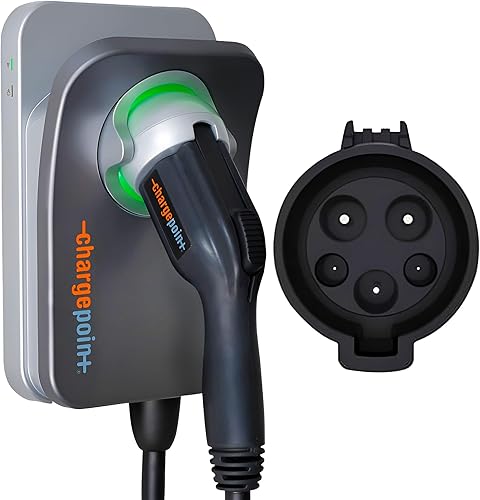
ChargePoint HomeFlex 50A Hardwired Charger
8.8/10 our score
See it on Amazon -
3
 Best plug-in for existing outlets
ChargePoint HomeFlex NEMA 14-50 Charger
8.6/10 our score
See it on Amazon
- 4
 Check it
Emporia Pro 48A Hardwired Charger
Best for limited electrical panels - 5
 Check it
EVIQO 48A Hardwired J1772 Charger
Best hardwired value - 6
 Check it
EVIQO 40A NEMA 14-50 J1772 Charger
Best for renters - 7
 Check it
EVIQO 48A NACS Hardwired Charger
Best for Tesla hardwired - 8
 Check it
EVIQO 40A NACS Plug-In Charger
Best for Tesla renters - 9
 Check it
bokman Level 1 and 2 Portable Charger 16A
Best for travel
The best 240V EV chargers for every garage setup
The Emporia 48A hardwired unit is the top pick overall, and each charger below is the best fit for one clear situation. Match the install type and connector to your garage before comparing smaller features.
Emporia 48A Hardwired J1772 Charger: Best overall
- 48 A hardwired
- Up to 46 mi/hr
- 2.4 GHz WiFi and app control
- UL listed and ENERGY STAR certified
- 25 ft cable
The Emporia 48A hardwired unit pairs the fastest charge rate here with app scheduling and a 25 ft cable. It's the pick for a dedicated garage circuit and a J1772 port.
Pros
- Up to 46 mi/hr hardwired
- Scheduling app with energy tracking
- UL listed and ENERGY STAR certified
- 25 ft cable
Cons
- Requires professional hardwired install
- J1772 only; needs an adapter for Tesla
The Emporia 48A is the strongest all-round choice for a homeowner with a free breaker slot and a J1772 port. Hardwired to a 240V circuit, it adds up to 46 miles of range per hour, roughly nine times a standard wall outlet.
It's UL listed and ENERGY STAR certified and meets the NEC 625 and SAE J1772 standards. The 25 ft cable reaches across most garages, and the wall mount, handle holster and mounting hardware all come in the box.
The 2.4 GHz WiFi link feeds the Emporia app, where you set schedules around off-peak rates and watch real-time energy use. Emporia says scheduling off-peak sessions can trim energy costs by 30%.
Emporia backs the unit with a 3-year warranty and US-based support from its Littleton, Colorado office.
The trade-off is the install. It ships preconfigured for hardwiring with a whip and professional installation is recommended for the full 48A.
If you rent or can't add a circuit, one of the plug-in picks fits better. J1772 also means a Tesla needs the adapter that comes with the car.
ChargePoint HomeFlex 50A Hardwired Charger: Best for ChargePoint network users
- 50 A hardwired
- Up to 45 mi/hr
- Adjustable 16-50 A
- 274k+ station network
- Cold-resistant cable
A 50A hardwired charger that taps ChargePoint's 274k+ station network and adjusts from 16A to 50A. Best for drivers who already use the ChargePoint app for public charging.
Pros
- Up to 50 A hardwired
- Adjustable 16-50 A
- 274k+ station network in one app
- Indoor and outdoor rated
Cons
- WiFi needed for some app features
- Tesla needs an adapter
ChargePoint's hardwired HomeFlex is the pick if you already use the ChargePoint app for public charging. The 50A hardwired version reaches up to 45 miles per hour and adjusts from 16A to 50A, so you can dial it down to match your panel.
The app controls reminders, charging schedules and smart home links, and the same app finds stations in ChargePoint's 274k+ North American network plus 565k+ roaming partners. A cold-resistant cable lets the unit work indoors or out.
It's UL certified and ENERGY STAR listed, measures about 7 inches deep and wide, and weighs 13.8 pounds. An electrician handles the install.
The app needs WiFi for some features and troubleshooting steps, so keep a strong signal near the unit.
Against the Emporia, the HomeFlex trades a little top-end speed for network reach. Pick it if station finding matters more than the last few miles per hour.
The J1772 connector also needs a Tesla adapter.
ChargePoint HomeFlex NEMA 14-50 Charger: Best plug-in for existing outlets
- 40 A plug-in
- NEMA 14-50 plug
- Up to 45 mi/hr
- Smart app control
- 23 ft cable
The plug-in HomeFlex drops onto a 240V NEMA 14-50 outlet without hardwiring. It's the choice when the outlet is already in place and you want ChargePoint's app features.
Pros
- No hardwired install needed
- 40 A on a 14-50 outlet
- ChargePoint app and network
- UL listed
Cons
- Capped at 40 A
- Needs a dedicated 14-50 outlet
This HomeFlex model is the plug-in answer for a garage that already has a 240V NEMA 14-50 outlet. It needs no hardwiring: plug it in, and the unit delivers up to 40A and about 45 miles per hour on a 40A or 50A circuit.
It carries the same ChargePoint app, network access and UL certification as the hardwired version. The 23 ft cable is slightly shorter than the Emporia's 25 ft, and the unit weighs the same 13.8 pounds.
The ceiling is the amperage. A 14-50 outlet limits the charge rate to 40A, so a hardwired 48A unit will always beat it on paper.
ChargePoint lists 16, 24, 32, 40, 48 and 50A settings, but the outlet caps what you can actually draw.
Choose it when the outlet is in place and you want ChargePoint's station network without an electrician running new wire. Skip it if your panel can take a hardwired circuit and you want the fastest possible home charge.
Also confirm the outlet is a 4-prong 14-50 on its own 50A circuit, not a dryer receptacle.
Emporia Pro 48A Hardwired Charger: Best for limited electrical panels
- 48 A hardwired
- PowerSmart load balancing
- Includes Emporia Vue monitor
- WiFi and Bluetooth setup
- 25 ft cable
Emporia's PowerSmart software balances load against your existing panel, so you can charge at up to 48A without a service upgrade. The included Vue monitor adds whole-home energy data.
Pros
- 48 A without a panel upgrade
- Includes Emporia Vue energy monitor
- WiFi and Bluetooth setup help
- US-based support
Cons
- Pro software adds setup steps
- Needs hardwired install for full speed
The Emporia Pro suits a home with a limited electrical panel. Its PowerSmart software works with your existing service to balance load automatically, so you can still charge at up to 48A without upgrading the panel.
The Pro adds an Emporia Vue 3 home energy monitor with two 200A CT sensors. That gives you whole-home usage data alongside the charger, which helps you see what the car really costs to run.
It's UL listed and ENERGY STAR certified and carries the same 3-year warranty and Colorado-based support as the standard model.
Installation is flexible: hardwire it or use a NEMA 14-50 plug, though the hardwired route is the one that reaches 48A. Emporia notes the plug tops out at 40A.
WiFi and Bluetooth setup help you or your electrician get it online.
The trade-off against the standard Emporia is setup: the Pro's PowerSmart and Vue hardware add steps and a bit of configuration. If your panel is roomy and simple is better, the standard 48A model is the cleaner buy.
Pick the Pro when the panel can't take another 60A breaker.
EVIQO 48A Hardwired J1772 Charger: Best hardwired value
- 48 A hardwired
- Adjustable 6-48 A
- Glow-in-the-dark holster
- IP66 and NEMA 4 housing
- 25 ft cable
A 48A hardwired charger with app speed control from 6A to 48A and a sealed outdoor-rated housing. A strong middle pick when you want fast hardwired charging without the premium price tier.
Pros
- 48 A on a 60 A circuit
- App speed control from 6-48 A
- IP66 and NEMA 4 rated housing
- Side reset button
Cons
- Needs a dedicated 60 A circuit
- Tesla needs the car's J1772 adapter
EVIQO's 48A hardwired charger is the value pick in this group. It delivers 48A on a dedicated 60A, 240V circuit, enough to fill most EVs overnight, and DIP switches 4 and 5 open 50A on a 70A circuit.
The app controls speed from 6A to 48A and tracks energy and cost per session. A sealed IP66 and NEMA 4 housing handles rain, snow and dust, and a glow-in-the-dark holster helps you dock the plug at night.
A stronger built-in antenna keeps it online in a garage or basement, though it needs a 2.4 GHz network.
It's certified to UL, ETL, FCC and ENERGY STAR, with a 3-year warranty and US-based support Monday to Saturday. A side reset button restarts the unit without cutting breaker power, and over-the-air updates keep features current.
It weighs 20.2 pounds and spans about 9 inches across.
The gap to the Emporia is the smart layer. EVIQO's app covers scheduling and energy tracking, but the Emporia's load-aware features and wider track record edge it out.
Pick EVIQO when hardwired speed is the goal and you want to spend less. It's also the easier fit for a 70A circuit if you have one.
EVIQO 40A NEMA 14-50 J1772 Charger: Best for renters
- 40 A plug-in
- NEMA 14-50 plug
- Adjustable 6-40 A
- IP66 and NEMA 4 housing
- 25 ft cable
The plug-in version of EVIQO's 40A charger uses a 14-50 outlet on a dedicated 50A circuit. It's a practical choice when you rent and can't add a hardwired circuit.
Pros
- No hardwired install
- 40 A from a 14-50 outlet
- App speed control from 6-40 A
- Weatherproof housing
Cons
- 40 A cap vs 48 A hardwired units
- Needs the right 14-50 outlet
The plug-in EVIQO 40A is the pick for renters and anyone who can't add a hardwired circuit. It plugs into a 240V NEMA 14-50 outlet on a dedicated 50A circuit and delivers up to 40A, enough for most EVs to finish overnight.
The 25 ft cable spans a garage or driveway, and the same app controls speed from 6A to 40A with off-peak scheduling. The IP66 and NEMA 4 housing and glow-in-the-dark holster carry over from the hardwired model, and the side reset button and over-the-air updates keep upkeep simple.
It weighs 21 pounds.
Its 40A cap is the trade-off. A 14-50 outlet won't feed more than 40A, so a hardwired 48A unit charges faster.
EVIQO also warns the outlet must be the 4-prong 14-50 type, not a dryer outlet.
Choose it when the outlet is already there and the unit needs to come with you when you move. For a permanent home with a free breaker slot, the hardwired EVIQO or Emporia is the faster buy.
EVIQO 48A NACS Hardwired Charger: Best for Tesla hardwired
- 48 A hardwired
- NACS plug with port button
- Adjustable 6-48 A
- IP66 and NEMA 4 housing
- 25 ft cable
A 48A hardwired charger with a built-in NACS plug and a button that opens a Tesla charge port. Best for a Tesla owner who wants a permanent garage install without an adapter.
Pros
- NACS plug opens the Tesla port
- 48 A hardwired
- App speed control from 6-48 A
- Weatherproof housing
Cons
- NACS only; J1772 cars need an adapter
- Hardwired install required
This EVIQO unit is the hardwired choice for a Tesla. Its built-in NACS plug connects straight to a Model S, 3, X or Y and has a button that pops open the charge port, so no adapter is needed.
It charges at up to 48A on a dedicated 60A, 240V circuit and adjusts from 6A to 48A in the app. The housing is IP66 and NEMA 4 rated for indoor or outdoor mounting, and the holster glows in the dark.
A 37 inch input cable gives the install some slack.
It's certified to UL, ETL, FCC and ENERGY STAR and weighs 18.86 pounds. The same 3-year warranty and US-based support applies, with a side reset button and over-the-air updates.
The limit is compatibility. NACS only fits Teslas and other NACS-port cars, and J1772 vehicles need an adapter that isn't included.
The app also needs a 2.4 GHz network.
Against the J1772 EVIQO, this model costs you flexibility across brands in exchange for a cleaner Tesla install. Pick it if a Tesla is the only car that will use the charger.
Skip it if a second non-Tesla car shares the garage.
EVIQO 40A NACS Plug-In Charger: Best for Tesla renters
- 40 A plug-in
- NACS plug with port button
- NEMA 14-50 plug
- Adjustable 6-40 A
- 25 ft cable
A NACS charger that plugs into a 14-50 outlet and opens a Tesla port without an adapter. Suits a Tesla driver who rents and can't hardwire.
Pros
- NACS plug for Teslas
- No hardwired install
- 40 A from a 14-50 outlet
- Weatherproof housing
Cons
- 40 A cap
- NACS only; needs an adapter for J1772 cars
EVIQO's plug-in NACS charger suits a Tesla owner who rents. It plugs into a 240V NEMA 14-50 outlet on a dedicated 50A circuit and delivers up to 40A, with the same port-opening button and 25 ft cable.
App control covers speed from 6A to 40A, scheduling and energy cost tracking. The sealed IP66 and NEMA 4 housing lets it handle weather, and the holster glows for night docking.
It's ETL listed for safety and ENERGY STAR certified. It weighs 19.81 pounds and spans about 15 inches across.
The 40A ceiling is the trade-off against the hardwired NACS model. The outlet also has to be the 4-prong 14-50 type on its own 50A circuit, not a dryer receptacle.
EVIQO's app also needs a 2.4 GHz network.
Choose it when you can't hardwire and a Tesla is the main car. If the garage has a free breaker slot, the hardwired NACS unit charges faster and avoids the outlet altogether.
A J1772 car would need a NACS-to-J1772 adapter, which isn't included.
bokman Level 1 and 2 Portable Charger 16A: Best for travel
- 16 A portable
- NEMA 6-20 plug and 5-15 adapter
- Adjustable 6/8/10/12/16 A
- Delay timer 1-12 hours
- 20 ft cable
A portable Level 1 and 2 charger that runs from a NEMA 6-20 outlet or a standard 5-15 adapter. It's the pick for road trips and apartment parking where a fixed install isn't possible.
Pros
- Works on 240V and 120V outlets
- Adjustable 6-16 A
- Built-in 1-12 hour delay timer
- IP65 rated
Cons
- 16 A is the slowest Level 2 rate here
- Needs a 6-20 outlet for its fastest rate
The bokman portable charger is the travel pick. It works as a Level 2 unit on a 240V NEMA 6-20 outlet and as a Level 1 unit on a standard 120V outlet through the included 5-15 adapter.
Current adjusts across 6, 8, 10, 12 and 16A, and a built-in timer delays the start by 1 to 12 hours to catch off-peak rates. Tactile buttons and an LED screen keep control working in cold or wet weather without an app.
The LED screen shows live voltage and current.
It's ETL certified with an IP65 enclosure rated from -22°F to 130°F, and the 20 ft cable spans a parking space. The multi-protection system covers GFCI, over-voltage, over-current, surge, short circuit and over-temperature for unattended overnight charging.
It weighs 7.65 pounds and needs no electrician if the outlet already exists.
The trade-off is speed. At 16A it's the slowest Level 2 option here, so it's a backup rather than a primary home charger.
It also won't fit a 6-30 or 10-30 outlet. Pick it for road trips, camping and apartment parking where a fixed install isn't possible.
How these 240V EV chargers compare
The comparison table lines up the amps, connector and install type side by side. Check your panel and car port against it before you choose.
| Product | Best for | Amperage | Connector | Install | Our score |
|---|---|---|---|---|---|
| Emporia 48A Hardwired J1772 Charger | overall | 48 A | J1772 | Hardwired | 8.9 |
| ChargePoint HomeFlex 50A Hardwired Charger | ChargePoint network users | 50 A | J1772 | Hardwired | 8.8 |
| ChargePoint HomeFlex NEMA 14-50 Charger | plug-in for existing outlets | 40 A | J1772 | NEMA 14-50 plug | 8.6 |
| Emporia Pro 48A Hardwired Charger | limited electrical panels | 48 A | J1772 | Hardwired | 8.5 |
| EVIQO 48A Hardwired J1772 Charger | hardwired value | 48 A | J1772 | Hardwired | 8.4 |
| EVIQO 40A NEMA 14-50 J1772 Charger | renters | 40 A | J1772 | NEMA 14-50 plug | 8.3 |
| EVIQO 48A NACS Hardwired Charger | Tesla hardwired | 48 A | NACS | Hardwired | 7.8 |
| EVIQO 40A NACS Plug-In Charger | Tesla renters | 40 A | NACS | NEMA 14-50 plug | 7.7 |
| bokman Level 1 and 2 Portable Charger 16A | travel | 16 A | J1772 | Plug-in | 7.7 |
How we compared these chargers
Our score weighs specs, features and buyer feedback against what you're shopping for. We ranked each charger on charge speed, install type, connector fit, smart features and safety certification.
Hardwired units lead because they reach 48A to 50A and fill an EV faster. Plug-in units score well when they match an outlet you already have.
Portable units sit lower because their amperage limits how much they add per hour.
Safety certification carried real weight. Every full-size charger here meets UL, ETL or ENERGY STAR standards, while the bokman portable adds ETL and IP65 protection in a smaller package.
A sealed IP66 or NEMA 4 housing scored higher for garages or driveways exposed to weather.
We grouped the picks by the situation they solve: panel limits, outlet availability, connector type and travel. A charger that wins on raw speed can lose on install cost or outlet requirements, so the badge on each card names the need it fits.
Cable length and holster design also counted, since a longer cable reaches more parking positions and a holster you can find at night is easier to use every day.
What should you check before buying a 240V EV charger?
Start with your electrical panel and your car's connector. Those two facts decide whether you need a hardwired or plug-in unit and whether you want J1772 or NACS.
How much amperage can your panel support?
A 48A charger needs a dedicated 60A, 240V circuit. A 40A plug-in unit needs a dedicated 50A circuit and a NEMA 14-50 outlet.
A 16A portable needs only a 6-20 outlet or a 120V receptacle. If your panel is tight, the Emporia Pro's PowerSmart load balancing lets you charge without a service upgrade.
For a closer look at the 40A end of the market, our guide to the best 40 amp ev charger compares the options.
Should you hardwire or use a NEMA 14-50 outlet?
Hardwiring gives you the full amperage and a cleaner install, but it takes an electrician and doesn't move with you. A NEMA 14-50 outlet caps the rate at 40A, yet it's the practical choice for renters and for garages that already have the receptacle.
Emporia also notes that homes with GFCI breakers are better served by a hardwired charger, since its built-in GFCI can trip against a panel GFCI. If you want to stay portable, our roundup of the best plug in ev chargers covers outlet-based models.
Which connector fits your car?
J1772 is the standard port on most non-Tesla EVs, and a Tesla can use a J1772 charger with the adapter that comes with the car. NACS is the Tesla-style plug that now appears on more new EVs.
Pick the connector that matches your car's port to avoid an adapter every night. Our guide to the best 48 amp ev charger covers the fastest hardwired units in both connector types.
How much does charging speed matter day to day?
A 48A unit adds up to about 46 miles per hour, while a 40A unit runs a bit slower and a 16A portable unit slower still. Most drivers cover 30 to 40 miles a day, so even a 40A plug-in unit fills the battery overnight.
Go hardwired only if you regularly drive long distances or want the fastest possible top-up. Our overview of the best ev charger for home helps you match speed to your commute.
Can you cut charging costs with scheduling?
Yes. Every smart charger here except the bokman portable has app scheduling, and the bokman has an on-unit delay timer.
Emporia says scheduling off-peak charging can cut energy costs by 30%. Set the session to start after your utility's peak window ends and let the car fill overnight.
The Emporia and EVIQO apps also track energy and cost per session, so you can see what the car really adds to the bill. A 240V charger uses more power per hour than a 120V outlet, but the total energy to fill the battery is similar.
The savings come from timing, not from a lower charge rate. Check your utility's rate plan for the exact off-peak window before you set a schedule.
What should renters do?
Renters should look at plug-in chargers first. The ChargePoint HomeFlex NEMA 14-50 and both plug-in EVIQO models need only an existing 14-50 outlet and come with you when you move.
The bokman portable covers travel and apartment parking where no 240V outlet exists. If your landlord won't allow an outlet install, a portable Level 1 and 2 unit is the only route, and it's the slowest.
Ask before you buy whether the outlet is a 4-prong 14-50 on its own circuit. A dryer outlet won't do, since it's a different receptacle and not rated for continuous EV load.
A licensed electrician can confirm the outlet type and circuit rating in a short visit. That check is worth doing before you order any plug-in charger.
If you drive a Tesla and rent, the plug-in NACS EVIQO pairs the outlet route with a port-opening plug. J1772 cars should stick with a J1772 plug-in unit so the car's own adapter stays in the trunk.
Either way, keep a 2.4 GHz signal near the unit, since every smart charger here needs that band to stay online.
Which 240V EV charger should you buy?
For most homes, buy the Emporia 48A Hardwired J1772 Charger. It's the best 240v ev charger overall for a dedicated circuit, with 46 miles per hour, smart scheduling and full safety certification.
Pick the ChargePoint HomeFlex hardwired if you want its 274k+ station network in the same app. Go with the Emporia Pro when your panel is tight.
Choose a plug-in HomeFlex or EVIQO 40A when a 14-50 outlet is already in the garage. Tesla owners should take the NACS EVIQO, and the bokman portable is the one to pack for trips.
If you're still weighing speed against install cost, our guide to the best ev charger for home walks through the trade-offs in more detail. Check your panel and port first, then match the charger to them rather than the other way around.
Our top 3 picks at a glance
-
1
-
2
Best for ChargePoint network users
ChargePoint HomeFlex 50A Hardwired Charger
8.8/10 our score
See it on Amazon -
3
Best plug-in for existing outlets
ChargePoint HomeFlex NEMA 14-50 Charger
8.6/10 our score
See it on Amazon
Frequently asked questions
Do I need a 240V outlet or a hardwired circuit for an EV charger?
Both work. A hardwired charger connects straight to a dedicated breaker and reaches the full amperage, while a plug-in charger uses a 240V NEMA 14-50 outlet and typically tops out at 40A.
How many amps does a 240V EV charger need?
Home Level 2 chargers run from 16A to 50A. The amperage is capped by your breaker and wiring, so match the charger's setting to the circuit an electrician installs for it.
Can I install a 240V EV charger myself?
Emporia and ChargePoint both recommend a licensed electrician for hardwired installs. Plug-in models need a dedicated 14-50 outlet already in place, which also calls for an electrician to add safely.
Will a 240V charger work with a Tesla?
A J1772 charger works with a Tesla through the adapter that comes with the car. A NACS charger plugs straight into a Tesla port and skips the adapter.
How fast does a 240V EV charger fill a battery overnight?
A 48A hardwired charger adds up to about 46 miles of range per hour, so most EVs reach a full charge overnight. A 40A plug-in unit runs slightly slower but still covers a typical daily commute.
Does a 240V charger raise my electric bill a lot?
It uses more power per hour than a 120V outlet, but the total energy to fill the battery is similar. Scheduling sessions for off-peak utility rates is the main way to cut the cost.