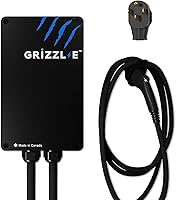
9 Best Plug In EV Chargers (November 2026)
The best plug in EV chargers for home charging include the Emporia 48A Hardwired J1772 Charger (best overall), the ChargePoint HomeFlex 50A Hardwired Charger for the fastest possible home charge, and the ChargePoint HomeFlex NEMA 14-50 Charger for outlet owners who want smart control.
On this page (7 sections)
- The best plug in EV chargers for different homes and cars
- How these plug in chargers compare
- Which plug in EV charger fits your outlet?
- What should you check before buying a plug in EV charger?
- Are plug in chargers as safe as hardwired ones?
- Should you pick a hardwired or plug in charger?
- The verdict on the best plug in EV chargers
The best plug in EV chargers balance outlet convenience with real charging speed, and the Emporia 48A Hardwired J1772 Charger is the top pick for most homes because it offers the highest power here plus smart scheduling. If you would rather keep your existing 14-50 outlet, the ChargePoint HomeFlex NEMA 14-50 is the smarter fit.
Plug in models skip the hardwire job, but they still need the right outlet and a dedicated circuit. That single fact decides more purchases than any app feature.
Use our plug in EV chargers for home guide for the outlet basics. Our best EV chargers for home use roundup helps if you are still deciding between plug in and hardwired.
Our picks at a glance
-
1

-
2
 Best for the fastest possible home charge
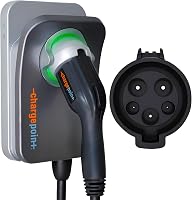
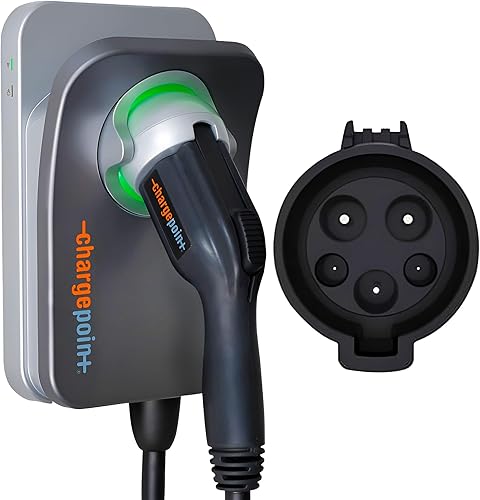
ChargePoint HomeFlex 50A Hardwired Charger
8.8/10 our score
See it on Amazon -
3
 Best for outlet owners who want smart control
ChargePoint HomeFlex NEMA 14-50 Charger
8.6/10 our score
See it on Amazon
- 4
 Check it
EVIQO 40A NEMA 14-50 J1772 Charger
Best for renters and easy DIY setup - 5
 Check it
Raylix 2026 Upgraded Level 1&2 EV Charger
Best for charging from ordinary outlets - 6
 Check it
Autel MaxiCharger Level 2 EV Charger up
Best for a polished wall install - 7
 Check it
EVIQO 40A NACS Plug-In Charger
Best for Tesla owners - 8
 Best for overnight trickle chargingCheck it
- 9
 Check it
EVDANCE Level 1 and 2 Portable Charger 25ft
Best for travel and outlet flexibility
The best plug in EV chargers for different homes and cars
The Emporia leads because it delivers the most power and the most control. Every other pick is the best answer for a specific outlet, car or budget situation.
Emporia 48A Hardwired J1772 Charger: Best overall
- 48 A hardwired
- Up to 46 miles/hour
- SAE J1772 connector
- 2.4 GHz WiFi and app scheduling
- 25 ft cable
The most power in this group, plus app control for off-peak charging. It needs a hardwire install, so plan for an electrician.
Pros
- Highest charge rate here at 48 A
- Scheduling and energy tracking in the app
- UL listed and ENERGY STAR certified
Cons
- Hardwired, so it needs professional installation
- J1772 only; Tesla drivers need an adapter
Emporia suits the owner who can hardwire and wants the fastest home charge. At 48 A it adds up to 46 miles of range per hour, roughly nine times a standard wall outlet.
The app connects over 2.4 GHz WiFi and shows real-time energy data. You can schedule sessions to land in off-peak hours, which is where the savings show up month after month.
Emporia cites a 30 percent cut in energy costs from scheduling.
It is UL listed and ENERGY STAR certified and meets a long list of standards including NEC 625 and SAE J1772. The 25 ft cable and the included wall mount and holster cover the garage setup.
The preconfigured hardwire whip and mounting hardware are in the box.
The trade-off is the install. A hardwire job needs an electrician and a 60 A circuit, while the plug in models here do not.
For Tesla drivers, Emporia makes a separate NACS version. The 3-year warranty and US-based support in Colorado soften the commitment.
Buy it if speed and scheduling matter more than a simple install. Skip it if you rent or want to keep your 14-50 outlet free.
Our 48 amp EV charger guide covers the hardwire route in more depth.
ChargePoint HomeFlex 50A Hardwired Charger: Best for the fastest possible home charge
- Up to 50 A hardwired
- Up to 45 miles/hour
- J1772 connector
- 23 ft cable
- ChargePoint app and network
A high-power hardwired unit with a wide charging network in its app. Choose it when you want top speed and smart features in one install.
Pros
- 50 A hardwired power
- Large public charging network in the app
- UL certified with a cold-resistant cable
Cons
- Hardwired, so installation is a project
- Needs an adapter for Tesla vehicles
ChargePoint's hardwired HomeFlex is the speed option when you have already decided to hire an electrician. It reaches up to 50 A and about 45 miles of range per hour.
ChargePoint lists the same 9x speed over a 120 V outlet.
The app is the standout. It manages reminders, connects to smart home devices, and opens access to a network of more than 274,000 stations across North America and Europe, plus 565,000 roaming partners.
It is UL certified and ENERGY STAR rated with a cold-resistant cable, and ChargePoint says it can be installed indoors or outdoors. The 23 ft cable is shorter than the Emporia's 25 ft.
The J1772 connector fits non-Tesla EVs, while Tesla owners need an adapter. Note that the product listing's current rating reads 80 A, but the usable hardwired rate is 50 A and the unit needs a 20 A or 80 A circuit per the bullet text.
The real cost is flexibility. Once it is hardwired, moving it means another electrician visit.
The plug in ChargePoint below gives up some power for an easier install.
Choose it if you plan to stay put and want top speed. For most people the plug in version is the easier decision.
See the 40 amp EV charger options for more outlet-friendly picks.
ChargePoint HomeFlex NEMA 14-50 Charger: Best for outlet owners who want smart control
- NEMA 14-50 plug
- Up to 40 A from a 14-50 outlet
- Up to 45 miles/hour
- J1772 connector
- ChargePoint app
Smart charging and app control without hardwiring, as long as you already have a 14-50 outlet on a dedicated circuit.
Pros
- Plugs into an existing 14-50 outlet
- Same app and network as the hardwired model
- UL listed and ENERGY STAR rated
Cons
- Capped at 40 A on the outlet
- A licensed electrician should still check the circuit
This is the plug in ChargePoint, and it is the best smart charger for someone with a 14-50 outlet already in the garage. You plug it in and skip the hardwire bill.
It runs up to 40 A from a 14-50 outlet on a 40 A or 50 A circuit. ChargePoint lists up to 45 miles per hour, dependent on the vehicle, so it is close to the hardwired model in daily use.
The unit supports adjustable settings across 16, 24, 32, 40, 48 and 50 A.
The same app and network come with it. You get smart home connections, station finding and charging data without a permanent installation.
The 23 ft cable and 13.8 lb body make it easy to handle during setup.
The J1772 connector covers non-Tesla EVs, and Teslas need an adapter. The 40 A ceiling is the main trade-off against the hardwired version.
Buy it for the best mix of smart features and a simple install. Skip it if you want the absolute highest amperage.
Read our EV charger for home comparison to weigh the two ChargePoint models side by side.
EVIQO 40A NEMA 14-50 J1772 Charger: Best for renters and easy DIY setup
- 40 A from NEMA 14-50
- 25 ft cable
- IP66 NEMA 4 housing
- Glow-in-the-dark holster
- 2.4 GHz WiFi app
A plug-in unit built for people who want to mount it themselves and take it when they move. The long cable and weatherproof housing suit driveways too.
Pros
- No hardwiring needed on a 14-50 outlet
- IP66 rated for outdoor use
- 25 ft cable reaches across a garage
Cons
- Limited to 40 A
- Needs a 14-50 outlet on a dedicated 50 A circuit
EVIQO's 40 A unit is the pick for renters and first-time installers. It plugs into a 14-50 outlet and takes about five minutes to mount, with no wiring.
The 25 ft cable gives you room to park however you like.
The housing is IP66 and NEMA 4 rated, so it handles rain, snow, heat and dust. The holster glows in the dark, which is a small thing you notice every night.
Internal steel shielding protects the electronics.
The app lets you set current from 6 A to 40 A and schedule off-peak charging. A side reset button restarts the unit in seconds without touching the breaker.
Over-the-air updates keep the firmware current, and EVIQO backs it with a 3-year warranty and US support Monday to Saturday.
The 40 A ceiling puts it a step below the Emporia. If your panel already has a spare hardwire slot, the extra speed is worth considering.
Pick it if you want to take your charger when you move. Skip it if you need maximum amperage and have an electrician lined up.
It also suits a mixed household, since the J1772 plug covers every non-Tesla EV and PHEV.
Raylix 2026 Upgraded Level 1&2 EV Charger: Best for charging from ordinary outlets
- Level 1 and Level 2 in one unit
- NEMA 5-15 and 6-20 plugs
- 4-level adjustable current
- 1-12 hour delay timer
- TFT color display
The flexible choice when you have only a standard outlet or a 6-20 outlet. It trades speed for portability and outlet options.
Pros
- Works on 120 V and 240 V outlets
- Adjustable current from 8 A to 16 A
- Built-in delay timer for off-peak charging
Cons
- 16 A maximum is far slower than the wall units
- Needs a 6-20 outlet for its faster mode
Raylix is the answer when your only outlet is a standard 120 V wall plug. It includes a 5-15 adapter for Level 1 charging and a 6-20 plug for faster Level 2 sessions.
It weighs 6.64 lb and travels easily.
On a 6-20 outlet it delivers 16 A and about 9 to 12 miles per hour. That is slower than the wall units here, but it beats a basic wall outlet.
On a 5-15 outlet it caps itself at 12 A for safety, giving 3 to 5 miles per hour.
The 4-level current adjustment at 8, 10, 12 and 16 A and the 1 to 12 hour delay timer let you charge when power is cheapest. A TFT display shows voltage, current, power load and temperature right on the unit.
Safety covers overheating, overvoltage and overcurrent, with IP65 water resistance and a UL94V-0 flame rating.
It is a portable, dual-purpose unit rather than a permanent station. The trade-off is speed: 16 A cannot match a 40 A or 48 A charger for a full overnight charge.
The 2-year warranty is shorter than the EVIQO's 3 years.
Buy it for a garage with only standard outlets. Skip it if you can install a 14-50 circuit and want faster charging.
Autel MaxiCharger Level 2 EV Charger up: Best for a polished wall install
- 40 A from NEMA 14-50
- 25 ft flexible cable
- NEMA 4X rated
- Autel app with scheduling
- Optional RFID card
A neat-looking plug-in station with app scheduling and strong weather protection. It suits a garage or driveway where the unit stays put.
Pros
- Plug-in install on a 14-50 outlet
- NEMA 4X weather rating
- Scheduling and optional RFID access control
Cons
- 40 A ceiling
- Needs a 14-50 outlet on a dedicated circuit
Autel brings its automotive electronics background to this plug in station. It plugs into a 14-50 outlet and delivers up to 40 A, about 40 miles of range per hour.
The 2.63 ft power cord leaves the outlet close to the wall.
The look is a selling point: a clean wall unit with a 25 ft cable designed to stay flexible in cold weather. The NEMA 4X rating covers dust, rain and hose spray, plus damage from ice.
The Autel app schedules charging and adjusts current from 16 A to 40 A. An optional RFID card can stop other people from using your charger.
The 3-year warranty and 24/7 hotline round it out. The unit meets CSA certification.
It is a solid middle option rather than a leader. The 40 A limit and the need for a dedicated 14-50 circuit are the same as its plug in rivals.
It also ranks well below the top picks in sales, so fewer owners have lived with it.
Choose it if appearance and access control matter to you. Skip it if you want the fastest charge or the widest app features.
EVIQO 40A NACS Plug-In Charger: Best for Tesla owners
- Built-in NACS plug
- 40 A from NEMA 14-50
- Charge port button
- 25 ft cable
- IP66 NEMA 4 housing
A plug-in Level 2 charger with a Tesla-style connector, so no adapter is needed. The trade-off is that non-Tesla EVs need an adapter.
Pros
- Native NACS connector for Teslas
- No hardwiring on a 14-50 outlet
- IP66 rated for outdoor use
Cons
- 40 A ceiling
- Non-Tesla EVs need a NACS-to-J1772 adapter
This is the plug in pick for Tesla owners. The built-in NACS plug connects straight to a Model S, 3, X or Y, and a button on the plug pops open the charge port.
No adapter, no dongle to lose.
It delivers up to 40 A from a 14-50 outlet and includes the same app control as the EVIQO J1772 model, with current settings from 6 A to 40 A and off-peak scheduling. The housing is IP66 and NEMA 4 rated.
The 37 inch input cable gives the unit some slack from the outlet.
The glow-in-the-dark holster and the 25 ft cable make nightly plugging easy. The 3-year warranty covers the unit.
It weighs just under 20 lb.
The limitation is the connector. Any non-Tesla EV needs a NACS-to-J1772 adapter, sold separately.
That makes it a one-car-family choice. It also costs more than the J1772 EVIQO for the same 40 A ceiling.
Buy it if every car in your driveway is a Tesla. Skip it if you also charge a J1772 vehicle.
Our Tesla and plug coverage explains the connector differences.
Lectron Level 1 Charger 15A: Best for overnight trickle charging
- 15 A Level 1
- NEMA 5-15 plug
- 16 ft extension cord
- J1772 connector
- IP65 rated
The simplest way to charge from a wall outlet, with no wiring and no smart app. Best as a backup or for low-mileage drivers.
Pros
- Plugs into a standard 120 V outlet
- Compact and easy to carry
- ETL and ENERGY STAR certified
Cons
- Slow Level 1 charging only
- No app or scheduling features
Lectron's Level 1 charger is the simplest option here. It plugs into a standard 120 V NEMA 5-15 outlet and needs no wiring or electrician.
The 2.93 kg body hangs on a wall or sits on a shelf.
At 15 A it delivers 1.65 kW and adds roughly 40 to 50 miles of overnight charge, which covers a short commute. The 16 ft extension cord gives you reach without moving the car.
It is ETL certified to the UL2594 standard and ENERGY STAR certified. The IP65 rating means it handles dust and water spray indoors or out.
Overvoltage, overcurrent and short circuit protection are built in.
There is no app, no scheduling and no Level 2 speed. It is a backup or a low-mileage solution rather than a primary charger for a long commute.
The 2-year warranty is shorter than the wall units offer.
Pick it for a second car or a rental where wiring is impossible. Skip it if you drive far every day.
A 40 A unit will pay off in time saved.
It is also handy as a spare kept in the trunk for visits where only a wall outlet is available.
EVDANCE Level 1 and 2 Portable Charger 25ft: Best for travel and outlet flexibility
- Level 1 and Level 2 modes
- NEMA 5-15 and 6-20 plugs
- 25 ft cable
- IP66 housing
- Carry bag included
A portable charger that covers both outlet types and packs into a bag. It is the slowest pick here but the easiest to take on a trip.
Pros
- Two outlet types in one unit
- 25 ft cable and carry bag
- IP66 water resistance
Cons
- 16 A maximum
- Not compatible with 14-50 outlets without a separate adapter
EVDANCE's portable unit covers both outlet types and packs into a bag. It handles 120 V at 12 A and 240 V at 16 A, with a 25 ft cable that works in a garage or at a motel.
It weighs 7 lb.
The 6-20 plug gives about 10 to 12 miles per hour on 240 V. The 5-15 adapter gives 2 to 5 miles per hour on a standard outlet.
A 1.44 kW draw on 120 V is gentle enough for older wiring.
It is IP66 rated and FCC and CE certified, and the LED display shows charging status and errors. A 1-year warranty covers the unit, the shortest here.
The catch is outlet compatibility. It does not plug into a 14-50 outlet without a separate adapter, and 16 A is the slowest Level 2 speed here.
It also has a short list of excluded models, including some Toyota and Porsche trims and the Mini Cooper Electric.
Buy it as a travel charger you can use at home too. Skip it if you have a 14-50 outlet and want a permanent station.
How these plug in chargers compare
All nine units charge an EV from a 240 V source except the pure Level 1 pick, and the differences come down to outlet type, amperage and smart features. The table lines up the specs that matter most.
| Product | Best for | Amperage | Connector | Voltage | Our score |
|---|---|---|---|---|---|
| Emporia 48A Hardwired J1772 Charger | overall | 48 A | J1772 | 240 V | 8.9 |
| ChargePoint HomeFlex 50A Hardwired Charger | the fastest possible home charge | 50 A | J1772 | 240 V | 8.8 |
| ChargePoint HomeFlex NEMA 14-50 Charger | outlet owners who want smart control | 50 A | J1772 | 240 V | 8.6 |
| EVIQO 40A NEMA 14-50 J1772 Charger | renters and easy DIY setup | 40 A | J1772 | 240 V | 8.3 |
| Raylix 2026 Upgraded Level 1&2 EV Charger | charging from ordinary outlets | 16 A | J1772 | 120/240 V | 8.2 |
| Autel MaxiCharger Level 2 EV Charger up | a polished wall install | 40 A | NEMA 14-50 | 240 V | 8.1 |
| EVIQO 40A NACS Plug-In Charger | Tesla owners | 40 A | NACS | 240 V | 7.7 |
| Lectron Level 1 Charger 15A | overnight trickle charging | 15 A | J1772 | 120 V | 7.7 |
| EVDANCE Level 1 and 2 Portable Charger 25ft | travel and outlet flexibility | 16 A | J1772 | 120/240 V | 7.6 |
Our score weighs specs, features and buyer feedback against what you're shopping for. We compared connector type, outlet requirements, amperage, cable length, weather rating and app control.
We also weighed install effort, since a hardwire job changes the real cost of ownership. Products with higher usable power and wider outlet compatibility rank higher.
Cable length and weather ratings break ties, because those are the things you notice after the unit is on the wall.
Which plug in EV charger fits your outlet?
The outlet in your garage decides most of this. A 14-50 outlet opens the 40 A and 48 A units, while a standard wall plug limits you to the portable picks.
Confirm the outlet type and the breaker size before you order anything.
Do you have a NEMA 14-50 outlet?
A 14-50 outlet on a dedicated 50 A circuit is the best-case setup. It supports the Emporia, both ChargePoint models, the EVIQO, and the Autel.
That outlet is the same type used for an electric range or an RV hookup. It gives you the full speed of these chargers, so you can add 25 to 40 miles of range per hour.
A 48 A unit needs a 60 A circuit, so check the breaker before assuming the top speed.
Is your only outlet a standard 120 V wall plug?
Then look at the Raylix or the Lectron. They run on the outlet you already have, adding a few miles of range per hour.
The Raylix adds a 6-20 option if you later install a 240 V circuit.
This is the slowest path. It suits plug in hybrids and short commutes, not a daily 80 mile drive.
A dedicated 240 V circuit is the upgrade to plan for.
What if you only have a NEMA 6-20 outlet?
The Raylix and the EVDANCE both accept a 6-20 plug. That gives you 16 A and about 10 to 12 miles per hour, better than a wall outlet but below the 14-50 units.
A 6-20 outlet is smaller and cheaper to install than a 14-50. It is a reasonable middle step if your panel cannot spare a 50 A breaker.
The EVDANCE needs a separate adapter to reach a 14-50 outlet, so read the outlet notes carefully.
What should you check before buying a plug in EV charger?
Check the connector on your car, the outlet type in your garage and the breaker size on that circuit before you order. Those three facts eliminate most wrong purchases.
Cable length matters too, so measure the run from the mount point to the charge port.
J1772 or NACS?
Most non-Tesla EVs sold before 2025 use J1772. Teslas and many newer EVs use NACS.
If your car has a J1772 port, choose a J1772 charger. For a Tesla, the EVIQO NACS unit avoids an adapter.
For a mixed household, a J1772 charger plus a NACS adapter is the flexible route.
How much power does your panel allow?
A 48 A charger needs a 60 A circuit. A 40 A unit needs a 50 A circuit.
A 16 A unit runs on a 20 A circuit. A hardwired install may also need a load calculation to confirm the panel can spare the breaker.
Have an electrician do that math before you buy the biggest unit. A panel that cannot support the circuit means a smaller charger or an upgrade.
Do you need outdoor weather protection?
Look for an IP rating and a NEMA enclosure rating if the charger lives outside. IP66 and NEMA 4 cover rain, snow and dust, and NEMA 4X adds corrosion resistance.
A cold-resistant cable matters in northern winters.
The EVIQO, Autel, Raylix and EVDANCE units all carry strong weather ratings. The ChargePoint models are rated for indoor or outdoor use as well.
How long a cable do you need?
Measure from where the charger mounts to where your car's charge port sits when parked. The units here run 16 to 25 ft.
A longer cable helps when the car parks nose-in or the outlet sits far from the parking spot. A 25 ft cable covers most garages and driveways.
The Lectron's 16 ft cord is the shortest, so check it reaches before you buy.
How much smart control do you want?
App scheduling lets you charge in off-peak hours, and several units here report energy use so you can see what a charge costs. The Emporia, both ChargePoint models, the EVIQO units and the Autel all include an app.
The Lectron and the basic portable units skip the app entirely. If your utility has a time-of-use rate, that scheduling feature can matter more than an extra few amps.
Are plug in chargers as safe as hardwired ones?
Yes, when the outlet and circuit are correct. A plug in charger is safe as long as it meets UL or ETL standards and plugs into a dedicated, properly rated outlet.
The weak point is the outlet, not the charger. A 14-50 outlet must be industrial grade and rated for continuous EV loads, and the circuit must be dedicated to the charger.
Ordinary household outlets are not rated for continuous EV charging, so do not improvise.
Check for UL, ETL or ENERGY STAR certification on the unit. All the wall units here carry at least one, and the portable picks carry FCC and CE or ETL marks.
A NEMA enclosure rating tells you how well the electronics handle weather.
Should you pick a hardwired or plug in charger?
Pick plug in for flexibility and hardwired for maximum power. The Emporia and the hardwired ChargePoint reach 48 A and 50 A, while the plug in units top out at 40 A.
Plug in wins for renters, people who move soon, and anyone with an outlet already installed. Hardwire wins for owners who stay put and want the fastest charge with no outlet wear.
A hardwired unit also avoids the plug and receptacle as a wear point.
The Emporia is still the top overall pick here because its power and app control outweigh the install effort for a long-term home. For everyone else, the ChargePoint HomeFlex NEMA 14-50 is the easiest path to a strong daily charge.
The verdict on the best plug in EV chargers
The best plug in EV chargers give you a fast, smart home charge without a hardwire job, and the ChargePoint HomeFlex NEMA 14-50 is the pick for most people who already have the outlet. Buy the Emporia 48A if you can hardwire and want the highest power.
If you are renting or plan to move, take the EVIQO 40A NEMA 14-50 for its easy mount and 3-year warranty. Tesla owners should pick the EVIQO NACS model, while anyone with only a standard outlet should start with the Raylix or the Lectron.
The Autel and the EVDANCE fill the gaps for a polished wall look and a travel bag, respectively.
Whatever you choose, confirm the connector on your car and the outlet in your garage first. That check takes five minutes and prevents the most common return.
Our top 3 picks at a glance
-
1
-
2
Best for the fastest possible home charge
ChargePoint HomeFlex 50A Hardwired Charger
8.8/10 our score
See it on Amazon -
3
Best for outlet owners who want smart control
ChargePoint HomeFlex NEMA 14-50 Charger
8.6/10 our score
See it on Amazon
Frequently asked questions
Do plug in EV chargers need an electrician?
Not for the plug-in step itself. You still need a dedicated 240 V circuit and the right outlet, so an electrician should check your panel and install the outlet if it is not already there.
What outlet does a Level 2 plug in charger use?
Most use a NEMA 14-50 outlet on a dedicated 50 A circuit. Some portable units use a smaller NEMA 6-20 outlet, which charges more slowly but is easier to find.
Can I use a plug in charger in an apartment?
Yes, if your parking spot has a dedicated outlet you are allowed to use. Always get the landlord's approval and have an electrician confirm the circuit before you plug in.
Is a hardwired charger better than a plug in one?
Hardwiring allows higher power and avoids outlet wear, so it suits long-term owners. Plug in models are easier to install, move and remove, which matters for renters.
How long does a plug in charger take to charge an EV?
A 40 A plug in charger adds roughly 25 to 30 miles of range per hour for many EVs. A 16 A portable unit adds far less, so it suits overnight top-ups rather than full recharges.