Best 48 Amp EV Chargers: Top 9 Picks (October 2026)
The best 48 amp EV chargers include the Emporia 48A Hardwired J1772 Charger for app scheduling, the Emporia Pro 48A Hardwired Charger for limited panel capacity, and the EVIQO 48A Hardwired J1772 Charger for current adjustments.
On this page (8 sections)
- Best 48 Amp EV Chargers
- How we chose the best 48 amp EV chargers
- The best 48 amp EV chargers for different home setups
- How do you choose a 48 amp EV charger for your home?
- Is a 48 amp charger worth it over a 40 amp model?
- What should you plan before installing a 48 amp EV charger?
- What common 48 amp charger mistakes should you avoid?
- Which 48 amp EV charger should you choose?
Best 48 Amp EV Chargers
The best 48 amp EV charger for most homes is the Emporia 48A Hardwired J1772 Charger, which combines Wi-Fi scheduling, energy data and a 25 ft cable. Emporia Pro adds PowerSmart load balancing, while EVIQO lets you adjust output in its app and Grizzl-E has a cast aluminum enclosure.
A 48A charger fits drivers whose cars can accept its output and whose homes can support the required circuit. Most picks here need hardwired installation, so account for an electrician and panel capacity before choosing a model.
For broader home charging choices, see our guide to Level 2 chargers for home. If you want to compare several output levels, our best Level 2 chargers for electric cars guide covers more options.
Our picks at a glance
-
1

-
2

-
3

- 4
 Check it
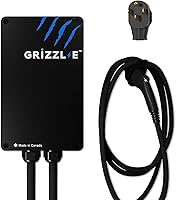
Grizzl-E Ultimate 48A Hardwired Charger
Best for metal weather housing - 5
 Check it
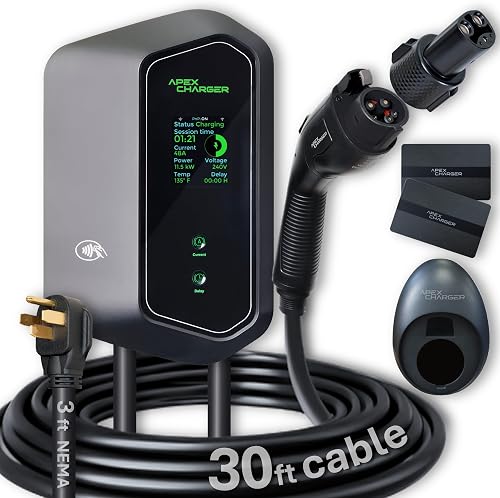
ApexCharger MACH 1 48A Charger
Best for flexible parking - 6
 Check it
IYILO 48A Hardwired J1772 Charger
Best for connector monitoring - 7
 Check it
Lectron 48A Hardwired J1772 Charger
Best for outdoor wall mounting - 8
 Check it
Wallbox Pulsar Plus 48A Charger
Best for dual app connectivity - 9
 Check it
ApexCharger MACH 2 48A Hardwired Charger
Best for shared EV households
How we chose the best 48 amp EV chargers
We compared output, installation type, connector, cable length, app functions and enclosure details. The scores reflect how each combination fits common home charging needs.
A 48A label is only one part of the buying decision. A longer cable can solve a difficult parking layout, while app controls or load balancing may matter more in a home with limited electrical capacity.
We compared published product features and specifications. Before choosing, confirm your charge port and ask an electrician whether your panel, circuit and installation location suit the model.
| Product | Best for | Output | Cable | Connection | Our score |
|---|---|---|---|---|---|
| Emporia 48A Hardwired J1772 Charger | app scheduling | Up to 48A, 240V | 25 ft, J1772 | Hardwired | 8.9 |
| Emporia Pro 48A Hardwired Charger | limited panel capacity | Up to 48A | 25 ft, J1772 | 8.5 | |
| EVIQO 48A Hardwired J1772 Charger | current adjustments | Up to 48A | 25 ft, J1772 | Hardwired | 8.4 |
| Grizzl-E Ultimate 48A Hardwired Charger | metal weather housing | Up to 48A | 25 ft, J1772 | 8.1 | |
| ApexCharger MACH 1 48A Charger | flexible parking | Up to 48A hardwired | 30 ft | Hardwired or NEMA 14-50 | 7.7 |
| IYILO 48A Hardwired J1772 Charger | connector monitoring | Up to 48A | 25 ft, J1772 | Hardwired | 7.6 |
| Lectron 48A Hardwired J1772 Charger | outdoor wall mounting | Up to 48A, 240V | 23 ft, J1772 | Hardwired | 7.4 |
| Wallbox Pulsar Plus 48A Charger | dual app connectivity | Up to 48A hardwired | 25 ft, J1772 | Hardwired for 48A | 7.2 |
| ApexCharger MACH 2 48A Hardwired Charger | shared EV households | Up to 48A, 240V | 30 ft | Hardwired | 7.1 |
The best 48 amp EV chargers for different home setups
The Emporia 48A Hardwired J1772 Charger is the top pick for homes that want app scheduling and energy data. The other options serve more specific needs, including load balancing, adjustable output, outdoor placement and extra cable reach.
Emporia 48A Hardwired J1772 Charger: Best for app scheduling
- Up to 48A hardwired
- 25 ft cable
- 2.4 GHz Wi-Fi app
- UL listed and ENERGY STAR certified
Wi-Fi scheduling and real-time energy data suit drivers who want to manage charging from a phone. The 25 ft J1772 cable works with North American EVs that use that port.
Pros
- Wi-Fi scheduling and energy data
- 25 ft cable
- UL listed and ENERGY STAR certified
Cons
- Hardwired installation needs planning
- J1772 port; Tesla and NACS vehicles need a compatible option
The Emporia 48A Hardwired J1772 Charger suits drivers who want to schedule charging and review energy use on a phone. Its 25 ft cable gives useful reach in many garages, and J1772 fits North American EVs with that charge port.
The charger uses 2.4 GHz Wi-Fi for energy data and mobile controls. You can set charging sessions around off-peak utility hours if your plan offers them.
This model is preconfigured for hardwiring up to 48A. Emporia recommends professional installation, and the charger is UL listed and ENERGY STAR certified.
Choose it for straightforward app scheduling and energy tracking. Skip this connector version if your car uses NACS and you don't want to use an adapter or select another connector option.
Emporia Pro 48A Hardwired Charger: Best for limited panel capacity
- PowerSmart load balancing
- Vue Home Energy Monitor included
- 25 ft J1772 cable
- App schedules and energy tracking
The included Vue monitor and PowerSmart software are designed to balance charging with home electricity use. Its app also supports schedules and real-time usage tracking.
Pros
- PowerSmart load balancing
- Vue monitor included
- App controls and schedules
Cons
- J1772 connector
- Professional installation is recommended
Emporia Pro is the pick for homes where other electrical loads make charging capacity a concern. Its included Vue Home Energy Monitor and PowerSmart software are designed to balance EV charging with home electricity use.
The app supports schedules and real-time energy tracking, while the 25 ft J1772 cable works for many garage layouts. Measure from the proposed wall mount to your car's port before installation.
Emporia Pro is available with hardwired and NEMA 14-50 setups. The hardwired J1772 configuration supports 48A, and Emporia recommends professional installation.
Choose Pro when home energy monitoring and load balancing solve a real need. Skip it if you only want a basic scheduled charger and won't use the included monitor or PowerSmart features.
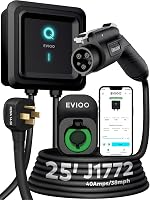
EVIQO 48A Hardwired J1772 Charger: Best for current adjustments
- App current setting from 6A to 48A
- 25 ft cable
- 2.4 GHz Wi-Fi
- IP66 / NEMA 4 housing
The app can set charging current from 6A to 48A and track energy use. The sealed enclosure is rated IP66 / NEMA 4 for indoor or outdoor placement.
Pros
- Adjustable current in the app
- 25 ft cable
- IP66 / NEMA 4 housing
Cons
- Requires hardwiring by a licensed electrician
- Tesla drivers need a J1772 adapter
EVIQO suits drivers who want to set charging current in an app, from 6A to 48A. That adjustment can be useful when you need a lower output for the circuit or a particular charging routine.
The app can start and stop charging, send reminders and track energy use. It requires 2.4 GHz Wi-Fi, and the charger has a 25 ft J1772 cable.
Its IP66 / NEMA 4 housing is designed for indoor or outdoor use. For 48A charging, EVIQO specifies hardwiring to a dedicated 60A, 240V circuit by a licensed electrician.
Choose EVIQO if app-based current adjustment is a priority. Skip it if you want a plug-in charger or don't need detailed control from your phone.
Grizzl-E Ultimate 48A Hardwired Charger: Best for metal weather housing
- 48A hardwired
- 25 ft J1772 cable
- Cast aluminum enclosure
- Wi-Fi charging schedules
The cast aluminum enclosure and NEMA 4X rating suit buyers prioritizing a weather-resistant housing. Wi-Fi features include schedules, usage statistics and remote control.
Pros
- Cast aluminum enclosure
- NEMA 4X rating
- Charging works with or without an online connection
Cons
- Hardwire-only
- J1772 connector
Grizzl-E Ultimate is suited to buyers who want a metal housing for an indoor or outdoor installation. It has a cast aluminum enclosure with a NEMA 4X water-resistant rating, plus a 25 ft J1772 cable and hardwire kit.
Wi-Fi connects it to Grizzl-E Connect for schedules, usage statistics, remote control and diagnostics. Charging works with or without an online connection, which can help if your garage Wi-Fi is unreliable.
It can balance power across multiple chargers, with equal sharing or priority charging options. That feature may suit a household planning more than one unit, though an electrician still needs to confirm the circuit.
Choose Grizzl-E for its enclosure and power-sharing features. Skip it if you need a plug-in unit or a connector other than J1772 without an adapter.
IYILO 48A Hardwired J1772 Charger: Best for connector monitoring
- Connector temperature sensor
- App current adjustment from 6A to 48A
- 25 ft J1772 cable
- Power sharing support
A connector sensor monitors temperature and can stop charging if it detects overheating. App settings include current adjustment, schedules and energy tracking.
Pros
- Connector temperature monitoring
- Power sharing support
- Adjustable current
Cons
- Tesla vehicles need a separate NACS adapter
- 48A hardwired installation calls for a 60A breaker and licensed electrician
IYILO adds a connector temperature sensor that monitors the J1772 handle and can stop charging if it detects overheating. Its app also offers current adjustment, charging schedules, energy tracking and multiple user accounts.
The hardwired unit supports up to 48A and includes a 25 ft cable. IYILO specifies a 60A breaker and licensed electrician for 48A installation; the app requires 2.4 GHz Wi-Fi.
Power sharing between two chargers on one breaker is supported. Dynamic load balancing requires the separate energy meter bundle, so confirm that configuration if you need it.
Choose IYILO if connector monitoring and power sharing are useful in your setup. Skip it if you want a NACS connector without a separate adapter, which is not included.
ApexCharger MACH 1 48A Charger: Best for flexible parking
- 30 ft cable
- Hardwired or NEMA 14-50 setup
- J1772 connector and NACS adapter
- Wi-Fi, Bluetooth and display
The 30 ft cable can help when the vehicle parks farther from the wall. It offers hardwired and NEMA 14-50 setups, with the plug-in option supporting a lower charge rate.
Pros
- 30 ft cable
- J1772 connector and NACS adapter included
- Wi-Fi, Bluetooth and display
Cons
- NEMA 14-50 setup is limited to 40A
- Confirm the correct circuit and installation setup
ApexCharger MACH 1 is the flexible pick when the car parks far from the wall or your household needs more than one connector type. It comes with a 30 ft cable, J1772 connector and NACS adapter.
The charger supports Wi-Fi, Bluetooth, RFID cards and a display. You can choose hardwiring for up to 48A or a NEMA 14-50 setup, which supports up to 40A.
That difference matters when comparing this model with hardwired-only units. Your car's onboard charger also limits how much power it can accept, so a 48A station won't make every vehicle charge at that rate.
Choose MACH 1 if the cable reach, adapter or choice of installation matters. Skip it if you need 48A from a plug-in setup.
Lectron 48A Hardwired J1772 Charger: Best for outdoor wall mounting
- 48A hardwired
- 23 ft cable
- IP66 enclosure
- ETL listed to UL 2594, UL 2251 and UL 2231
The IP66 enclosure is designed for indoor and outdoor use. A 23 ft cable and included holster offer a straightforward J1772 setup.
Pros
- IP66 weatherproof enclosure
- 23 ft cable and holster
- ETL listed to named UL standards
Cons
- Hardwired installation requires a professional
- Tesla vehicles need a compatible adapter
Lectron NEXUS suits drivers who need an outdoor-rated hardwired charger with a slightly shorter cable. Its IP66 enclosure is designed for indoor and outdoor use, and the 23 ft lead comes with a holster.
The J1772 unit is ETL listed to UL 2594, UL 2251 and UL 2231 standards. Lectron describes protection against overheating, overcurrent, voltage faults and ground faults.
This model requires professional installation on a dedicated 240V circuit. Tesla drivers need a compatible NACS adapter.
Choose Lectron if the 23 ft cable reaches your parking position and its enclosure suits the mounting location. Skip it if you need a longer lead or a plug-in setup.
Wallbox Pulsar Plus 48A Charger: Best for dual app connectivity
- Wi-Fi and Bluetooth
- 25 ft cable
- Adjustable current
- UL and ENERGY STAR certified
Wi-Fi and Bluetooth connect the charger to the Wallbox app for monitoring, control and schedules. The hardwired setup supports 48A, while the NEMA 14-50 version is limited to 40A.
Pros
- Wi-Fi and Bluetooth connectivity
- 25 ft cable
- UL and ENERGY STAR certified
Cons
- Tesla vehicles need an adapter
- 48A use requires hardwiring
Wallbox Pulsar Plus fits buyers who want Wi-Fi and Bluetooth app controls in a home charger. Its app supports monitoring, control and charging schedules, and the unit has adjustable current.
The 48A version is hardwired. Wallbox also offers a NEMA 14-50 version, but that configuration is limited to 40A, so verify the installation type before buying.
This J1772 charger has a 25 ft cable and is UL and ENERGY STAR certified. Tesla vehicles need a compatible adapter for the J1772 model.
Choose Wallbox if both app connections suit your garage and you want schedule controls. Skip it if you need 48A from a NEMA 14-50 plug-in setup; compare options in our best 40 amp EV chargers guide.
ApexCharger MACH 2 48A Hardwired Charger: Best for shared EV households
- 30 ft cable
- J1772 connector with NACS adapter
- Wi-Fi and Bluetooth
- Display and RFID cards
A 30 ft cable, display and included NACS adapter make this a flexible setup for households with different EV connectors. Wi-Fi, Bluetooth and RFID cards add access and control options.
Pros
- 30 ft cable
- NACS adapter included
- Display and RFID cards
Cons
- Hardwired installation
- Compare its connector setup with your vehicle before buying
ApexCharger MACH 2 is designed for households that want extra cable reach and options for different vehicle connectors. It includes a 30 ft cable, J1772 connector and NACS adapter.
The hardwired charger supports up to 48A and includes a display, Wi-Fi, Bluetooth and RFID cards. The plug-and-play function can suit a household that doesn't need to control who uses the charger.
Plan the mounting location and cable path before installation, especially if the charger will serve more than one parking position. Confirm the adapter and connector arrangement suits the vehicles in your household.
Choose MACH 2 if the long cable, display or RFID access will get regular use. Skip it if a simpler charger with fewer controls better fits your home.
For more Tesla-compatible home options, see our guide to home chargers for Tesla owners.
How do you choose a 48 amp EV charger for your home?
Choose a 48A charger only after checking your car's onboard charging limit, your home's electrical capacity, the connector and the cable route. Those four checks show whether the charger can deliver useful power and fit the way you park.
Start with the vehicle manual or manufacturer specifications to find its AC charging limit and charge port. If the car accepts less than 48A, it won't use the charger's full output, even when the home circuit can supply it.
Next, ask an electrician to review your panel and the proposed circuit. Many 48A hardwired units call for a dedicated 240V circuit and a 60A breaker, but requirements vary by model and local electrical rules.
Match the connector to the car. J1772 works with vehicles that have that port; a Tesla or other NACS vehicle may need an adapter or a charger configured with the appropriate connector.
Finally, measure the cable path from the planned wall mount to the charge port while the car is parked normally. Include bends, the route around the vehicle and where you will holster the connector, rather than measuring only the straight-line distance.
For wiring and placement questions, see our EV charger outlet guide and garage EV charger planning guide.
Is a 48 amp charger worth it over a 40 amp model?
A 48A charger makes sense when your car can accept the extra power and your home can support its circuit. If the vehicle or electrical setup is the limiting factor, a 40A charger may fit your routine without the additional capacity.
Charging speed depends on both the station and the vehicle's onboard charger. A car with a lower AC charging limit won't gain the full benefit of a 48A unit.
Installation affects the choice too. Some models offer a plug-in configuration that tops out at 40A, while their 48A configuration requires hardwiring.
Look at your normal overnight charging window, how much energy you need to add and the installation work each option requires. Our 40 amp vs 48 amp EV charger comparison explains when the higher output is useful.
What should you plan before installing a 48 amp EV charger?
Plan the electrical circuit, mounting location, cable path and Wi-Fi access before the installer arrives. A little measuring helps avoid a charger that reaches the car only when you park in one exact spot.
Have a licensed electrician confirm panel capacity, breaker requirements, wiring and local code. Don't assume an existing outlet or breaker is suitable because its shape or rating looks close to what the charger needs.
Choose a wall location that lets the cable reach the vehicle without stretching across a walkway or sitting where it can be driven over. Keep the cable off the floor when charging is finished, using the holster or cable management approach supplied with the unit.
If the charger uses an app, check that the intended mounting location has the required Wi-Fi band and signal. Several models here require 2.4 GHz Wi-Fi, so a 5 GHz-only connection won't meet that requirement.
For outdoor installation, choose a model whose enclosure is designed for the conditions at your mounting spot. Follow the installation instructions and electrician's guidance on protecting the connection and routing the cable.
What common 48 amp charger mistakes should you avoid?
The most common mistake is buying for the charger's maximum amperage before confirming the car and circuit can use it. Check those limits first, then compare features and cable length.
Don't assume every 48A model reaches 48A with a plug. The MACH 1 and Wallbox plug-in configurations are limited to 40A, while their hardwired setups support 48A.
Don't assume a J1772 connector plugs directly into every EV. Verify your port and adapter needs before ordering, especially if a household has different vehicle types.
Don't choose cable length from a product photo. Measure the route from charger to port with the car in its usual position, and leave enough room to dock the handle without tension.
Finally, don't treat load balancing as a substitute for an electrical review. A charger feature can help manage home loads, but the electrician still needs to confirm the circuit and installation match the product's requirements.
Which 48 amp EV charger should you choose?
Choose the Emporia 48A Hardwired J1772 Charger for Wi-Fi scheduling and energy data, Emporia Pro for PowerSmart load balancing, or EVIQO for current adjustment in its app. Pick Grizzl-E for its cast aluminum housing, and choose MACH 1 or MACH 2 if a 30 ft cable solves your parking layout.
A 48A charger is a good fit only when the car and home circuit can support its output. Confirm those limits, the connector and the cable path before buying, then compare more home options in our Level 2 charger guide.
Our top 3 picks at a glance
-
1
-
2
-
3
Frequently asked questions
What does a 48 amp EV charger need at home?
A 48A hardwired EV charger generally needs a suitable 240V circuit sized for the charger and installed to local electrical rules. Some models specify a dedicated 60A breaker, but requirements vary by charger and installation.
Have a licensed electrician check your panel, wiring route and local code before choosing a model.
Does a 48 amp charger charge faster than a 40 amp charger?
A 48A charger can deliver more power than a 40A charger when the circuit and vehicle support it. Your car's onboard charger sets another limit, so a vehicle that cannot accept the full output may charge at the same rate on either unit.
See our 40 amp vs 48 amp charger comparison for the tradeoffs.
Can I plug in a 48 amp EV charger?
Some chargers have both plug-in and hardwired options, but a NEMA 14-50 setup is commonly limited to 40A. The 48A rating on a model may apply only to its hardwired installation.
Check the exact configuration and outlet requirements before ordering.
Our EV charger outlet guide explains common home setups.
Will a J1772 48 amp charger work with a Tesla?
A J1772 charger can work with a Tesla when you use a compatible adapter. Some products include an adapter, while others require you to get one separately.
Check the connector and adapter included with the exact model you plan to buy.
See our guide to home Tesla chargers for more options.
Do I need a 48 amp charger for home charging?
No. A 48A charger is useful when your vehicle can accept its output and your home can support the required circuit, but many drivers can meet daily needs with a lower-amp Level 2 charger.
Compare your commute and charging window with the options in our best Level 2 chargers guide.