Does ChargePoint Have Fast Chargers?
Yes. ChargePoint makes Level 2 home chargers like the HomeFlex, which ChargePoint says adds up to 45 miles of range per hour, and it runs a public network of 274k+ stations, so fast charging is both a home and a road answer.
On this page (8 sections)
- Does ChargePoint have fast chargers for home use?
- How fast is the ChargePoint HomeFlex compared with a wall outlet?
- What makes the hardwired HomeFlex the fastest home option?
- Is the NACS HomeFlex the right fast charger for a Tesla?
- Do you need a special outlet for a fast ChargePoint install?
- What does the ChargePoint app add to a home fast charger?
- Are ChargePoint public chargers as fast as the home unit?
- Which ChargePoint fast charger should you get?
Yes. ChargePoint makes Level 2 home chargers, and the HomeFlex line is the one most people mean when they ask does ChargePoint have fast chargers.
ChargePoint says the hardwired unit adds up to 45 miles of range per hour, which is a full overnight fill for most drivers.
There is a second half to the answer. ChargePoint also runs a public network, so the same brand that sells you a garage unit also shows up on road trips.
Here is how the home side works and where the speed really comes from.
Does ChargePoint have fast chargers for home use?
The HomeFlex is a Level 2 charger, not a DC fast charger, and that is normal for a home. Level 2 runs on a 240V circuit and refills a car overnight instead of in minutes.
ChargePoint says the hardwired HomeFlex delivers up to 45 miles of range per hour, which it calls 9× faster than a 120V outlet. The product page also lists a lower 37 mi/hr figure on its highlight line, and both numbers depend on your vehicle and the circuit you install, so treat them as the maker's figures rather than a promise for every car.
The speed comes from amps and wiring. A hardwired unit can run at higher current than a plug-in model, and an electrician sets the output to match your panel.
Our guide to the best 48 amp EV charger covers what the top of that range looks like.
For most households, the practical result is simple: plug in after work, wake up full. That is faster than most people need, and it is why the home unit earns the fast label without being a highway charger.
How fast is the ChargePoint HomeFlex compared with a wall outlet?
ChargePoint's fastest home figure is 45 miles of range per hour on the hardwired model. A standard 120V wall outlet adds only a few miles per hour, which is why the jump feels dramatic.
The plugs and hardwired versions differ here. ChargePoint says the hardwired HomeFlex offers the fastest charge at up to 50A, while the NEMA 14-50 and 6-50 versions provide up to 40A from an existing 240V outlet.
Both plug versions still beat a wall outlet by a wide margin. The choice is about your wiring, not about whether the charger is fast.
If your panel cannot support a large circuit, a lower-amp install still works. ChargePoint's spec sheet shows the charger can be set to a range of currents, from 16A up through 40A and 48A to the full 50A, so an electrician can dial it down to fit your panel instead of walking away.
Our roundup of the best 40 amp EV charger shows where that middle ground sits.
The honest comparison is against your daily driving. A 40-mile commute needs under an hour at these rates.
What makes the hardwired HomeFlex the fastest home option?
Hardwiring lets the charger run at its top current, so it is the fastest HomeFlex you can put in a garage. The hardwired model carries a 50A rating on a 240V circuit and ships as part of ChargePoint's home lineup.
The NEMA 14-50 plug version tops out lower because a standard outlet and circuit set the ceiling. That is a wiring fact, not a flaw in the charger.
ChargePoint says both versions share the same app control, 23-foot cable, and indoor or outdoor rating. The UL listing and cold-resistant cable apply across the line.
If your goal is the quickest overnight fill and you are willing to hardwire, this is the version to price out. Our how much is a ChargePoint home charger guide covers the cost side, including install.
Is the NACS HomeFlex the right fast charger for a Tesla?
Yes, if you drive a Tesla or a newer EV with the NACS plug, the NACS HomeFlex avoids the adapter. ChargePoint builds this hardwired model around the NACS connector that Tesla uses and that many new EVs from 2025 also adopt.
It shares the 50A hardwired ceiling and the same up-to-45-mile hourly figure, dependent on the vehicle. ChargePoint backs it with a 3-year warranty.
The J1772 models still work for a Tesla with an adapter. Many drivers keep one adapter in the car anyway for public stations.
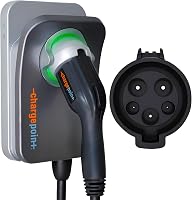
If you own a non-Tesla EV built before 2025, the J1772 connector is the one you want. ChargePoint says that is the common connector for most non-Tesla EVs from that era.
Do you need a special outlet for a fast ChargePoint install?
It depends on the model: hardwired needs an electrician and a dedicated circuit, while the plug version uses a 240V outlet. Neither is a DIY job if you want it done safely.
For the plug model, a NEMA 14-50 receptacle on a 40A or 50A circuit is the target. ChargePoint notes those versions work with existing 240V wall outlets, which can simplify a retrofit.
Hardwired installs skip the outlet entirely and wire straight into a junction box. ChargePoint recommends a licensed electrician for either path, and the brand points buyers to its installer program.
Panel capacity is the real gate. An electrician checks spare breaker space and load before quoting, and the answer decides whether you get 50A, 40A, or a lower setting.
That makes the plug version a strong pick for renters or anyone who wants to move the charger later. Our best EV charger for home roundup compares the plug and hardwired trade-offs.
What else comes in the box on the plug model?
The plug model is sold as a two-item set, the charging station and its cable, and it is the same cable owner the brand points buyers to for a replacement cable down the line. The plug-in unit weighs 13.8 pounds and measures about 7 inches deep, 11 inches wide, and 7 inches tall, so it mounts as a compact wall box next to the outlet.
What does the ChargePoint app add to a home fast charger?
The app adds control, reminders, and station finding, which is useful once the charger is already fast. ChargePoint says the mobile app lets you manage the charger, connect smart home devices, and read charging data.
WiFi is needed for certain functions, so a weak garage signal can limit the smart side. ChargePoint also notes WiFi is needed for some troubleshooting steps if connectivity issues come up.
The charging itself still works without the app.
The network side is the bigger extra. ChargePoint says its network covers 274k+ stations across North America and Europe, plus 565k+ roaming partner stations, all findable in the app.
That is where the public half of the answer lives. You get a home charger and a map of public stations in one account, so road trips need less planning.
Apple CarPlay and Android Auto support puts nearby stations on your car screen too, and the app lets you set widgets so nearby stations show without opening it.
Are ChargePoint public chargers as fast as the home unit?
The public network includes fast charging, and it is built for road trips rather than overnight fills. ChargePoint says its network spans hundreds of thousands of stations, and the app helps you find them.
Level 2 public stations are common at workplaces and shopping centers, and they match the home unit's pace. DC fast stations are the ones that top up in minutes, and they sit in the same network.
The home charger and the public network solve different jobs. One fills the car while you sleep, the other covers the miles between charges on a long drive.
ChargePoint also offers 24/7 support across home, business, and fleet products, per the brand.
For a garage-focused buyer, that public coverage is a bonus, not the reason to buy. The reason is the overnight fill.
Which ChargePoint fast charger should you get?
Pick the hardwired 50A HomeFlex if you want the fastest home charge and can add a dedicated circuit. It is the top of the home line at up to 45 miles per hour.
Choose the NACS hardwired model for a Tesla or another NACS EV, and the NEMA 14-50 plug model if a 240V outlet already sits in your garage. All three share the app, cable, and outdoor rating.
Check the connector against your owner's manual before you order, as ChargePoint advises, since the plug is the one part you cannot adjust after install.
So the answer to does ChargePoint have fast chargers is a clear yes on both fronts. The home unit is fast enough to skip public stops for daily driving, and the public network covers the trips where it isn't.
Check your panel with an electrician before ordering, and match the connector to your car. That step decides which of the three you actually buy.
Frequently asked questions
Is a ChargePoint home charger the same as a DC fast charger?
No. The HomeFlex is a Level 2 AC charger for home use, while DC fast chargers are much larger public units.
A home setup gives you an overnight fill, not the 20-minute highway stop a DC fast charger provides.
How many amps does a ChargePoint home charger need?
The hardwired HomeFlex can run up to 50A, while the NEMA 14-50 plug version works on a 40A or 50A circuit. An electrician checks your panel before installing so the charger matches the circuit you have.
Can a ChargePoint charger work for a Tesla?
Yes. Pick the NACS hardwired model for a Tesla, or use the J1772 version with an adapter.
The NACS unit is built for Tesla vehicles and many new EVs that arrive with the NACS plug.
Does the ChargePoint app add features to home charging?
ChargePoint says the mobile app lets you control the charger, set reminders, connect smart home devices, find stations, and read charging data. Some functions need WiFi, so check your garage signal before you count on them.