How Much Is a Wallbox Charger?
A Wallbox Pulsar Plus costs more than a basic no-frills charger but less than many premium smart models. The exact amount depends on whether you buy the 40A plug-in or the 48A hardwired version.
On this page (8 sections)
- What does a Wallbox charger cost in general terms?
- Why do Wallbox charger prices vary so much?
- How much is the Wallbox Pulsar Plus 40A charger?
- How much is the Wallbox Pulsar Plus 48A charger?
- What else adds to the total cost of a Wallbox charger?
- How does the Wallbox compare with other chargers on cost?
- Is a Wallbox charger worth the price for your home?
- How can you lower what you pay for a Wallbox charger?
How much is a Wallbox charger? A Wallbox Pulsar Plus costs more than a basic no-frills charger but less than many premium smart models.
The exact amount depends on whether you buy the 40A plug-in or the 48A hardwired version. That answer only gets you so far, because the charger is half the story.
The other half is your electrical setup, and that's where the real variation comes in.
What does a Wallbox charger cost in general terms?
A Wallbox Pulsar Plus sits in the mid-to-upper range for home EV chargers. Basic fixed-amp units are the budget option, while smart chargers with app control and solar support often ask more.
You're paying for more than raw charging speed. The Pulsar Plus adds Wi-Fi and Bluetooth control, scheduling through the Wallbox app, solar-pairing support, and a UL and Energy Star certified build assembled in the US.
The 40A model is the more affordable of the two Pulsar Plus versions. The 48A model adds more power and a hardwired install, so it usually costs more on both counts.
If budget is your main concern, a basic charger will charge your car fine overnight. The Wallbox premium buys convenience and smarter energy management, not a car that runs better.
Our roundup of the best 40 amp EV chargers puts the Pulsar Plus next to simpler rivals so you can see the trade-off.
Why do Wallbox charger prices vary so much?
The model, the connector and your home's wiring all move the total. Two people buying the same Wallbox charger can end up spending very different amounts.
Start with the model. The 40A Pulsar Plus is a plug-in unit built for a NEMA 14-50 outlet.
The 48A version must be hardwired to a dedicated circuit.
Then there's the connector. Wallbox makes Pulsar Plus in J1772 and NACS versions, and the one you need depends on your car.
Teslas take NACS natively, while other EVs use J1772.
The J1772 connector also works with Teslas when you add an adapter, which Wallbox does not include. Finally, installation.
If your garage already has a 14-50 outlet, the 40A model is a plug-in job you can do in 5 to 10 minutes.
The 48A model needs an electrician, conduit and a 60A circuit breaker, which can cost more than the charger itself.
How much is the Wallbox Pulsar Plus 40A charger?
The 40A Pulsar Plus is the cheaper Wallbox option and the easiest to install. It delivers up to 25 to 35 miles of range per hour, depending on the vehicle, and runs on a standard 240V circuit.
The key cost saver is the outlet. Wallbox says the NEMA 14-50 version takes only 5 to 10 minutes to install when a compatible outlet is already there.
No electrician, no conduit run, no new breaker.
It's UL and Energy Star certified and rated for indoor and outdoor use. The Wallbox app lets you schedule charging to off-peak hours, which can trim your electric bill over time.
Wallbox also says the unit supports solar-only or solar-plus-grid charging. If you have panels, that feature can pay for part of the premium.
For homes without solar, the scheduling alone is the main money saver.
What comes in the Pulsar Plus 40A box?
The unit arrives fully assembled and includes a 25 ft cable. That length matters for cost planning, since a detached garage or an outlet far from the parking spot may need cable routing you didn't expect.
The charger measures about 3.9 inches deep, 7.8 inches wide and 7.9 inches high in matte black. A 3 year manufacturer warranty covers the unit.
A longer cable can save you a conduit run, so check the distance from your outlet to the car before you commit to a spot on the wall.
How much is the Wallbox Pulsar Plus 48A charger?
The 48A Pulsar Plus costs more upfront and needs a hardwired install. In exchange, it charges faster and handles bigger batteries with less overnight time.
Wallbox says the 48A version delivers up to 45 miles of range per hour and up to 11.5 kWh. That's meaningfully quicker than the 40A model, which makes it the better fit for long commutes or two-EV households.
It's about 9x faster than a basic portable charger, against 8x for the 40A unit. The catch is the installation.
Wallbox recommends a licensed electrician for the hardwired setup. An electrician, a 60A breaker and any conduit add real cost on top of the charger.
If you're weighing the two, our guide to the best 48 amp EV chargers covers what the extra amperage actually buys you.
What else adds to the total cost of a Wallbox charger?
Installation is the big variable, and it's usually the item people forget. The charger is a known cost; the electrical work is not.
A 14-50 outlet install in an unfinished garage with the panel nearby is the cheap scenario. A detached garage, a long conduit run or a panel that needs upgrading pushes the bill up fast.
Wallbox's smart features can offset some of that over time. Scheduling to off-peak rates and solar pairing both lower running costs, though the savings depend on your utility's rates.
The app connects over both 2.4GHz and 5GHz Wi-Fi plus Bluetooth, which matters in basements where a single-band signal often drops. Wallbox also says local utilities across the US reward EV drivers for charging smarter.
Check whether your utility or state offers an EV charger rebate before you buy. Our breakdown of how much a ChargePoint Home charger costs shows the same install-cost logic applied to a rival brand.
How does the Wallbox compare with other chargers on cost?
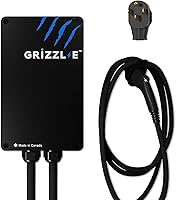
The Pulsar Plus costs more than budget metal-box chargers and less than some premium smart units. The Grizzl-E Classic Connect is a useful benchmark on the simpler end.
The Grizzl-E Classic Connect is UL tested and certified and runs on a NEMA 14-50 plug, so it installs the same easy way as the 40A Pulsar Plus. It's built in Canada with a heavy-duty NEMA 4 metal enclosure.
Where it differs is the smart side. The Grizzl-E Connect app handles scheduling, monitoring and energy stats, and the charger offers OCPP support with a one-time activation fee.
It adjusts amperage from 40A down to 16A to match your breaker. At 40A on a 50A breaker it adds about 28 to 30 miles per hour, and at 16A on a 20A breaker it drops to 10 to 12 miles per hour.
If you want app control without paying the Wallbox premium, this is the natural comparison. If solar pairing and a polished app matter more, the Pulsar Plus justifies its higher price.
For a broader view of home units, see our roundup of the best EV chargers for home use.
Is a Wallbox charger worth the price for your home?
Buy the Wallbox if smart charging and solar pairing matter to you; skip it if you just want steady overnight charging. The premium is easiest to justify when you'll use the features.
The 40A Pulsar Plus is the sensible default for most homes with an existing 14-50 outlet. It's cheaper, easier to install, and still offers full app control.
Step up to the 48A model if your daily drive is long or you have two EVs to keep charged. The faster rate pays off in fewer hours plugged in.
If budget is tight or your utility rates are flat, a basic charger like the Grizzl-E covers the job for less. The decision rule is simple: pay for smart features you'll actually use, and skip the ones you won't.
That's the honest way to answer how much a Wallbox charger costs for your garage.
How can you lower what you pay for a Wallbox charger?
Check incentives first, then choose the model that matches your existing wiring. Both steps cut the total without sacrificing charging speed.
Start with your utility and state energy office. EV charger rebates and off-peak rate plans vary widely, and Wallbox notes that incentives might apply.
A rebate can change the math between the 40A and 48A models.
Next, look at your panel and outlet. If a NEMA 14-50 outlet is already there, the 40A model avoids an electrician bill.
If you need a new circuit anyway, the 48A model's install cost is less of a jump.
Finally, use the app. Scheduling to off-peak hours and, if you have panels, solar-only charging both lower running costs over the years you own the car.
Those savings are where the Wallbox premium earns its keep.
Frequently asked questions
How much is a Wallbox charger compared with a basic charger?
A Wallbox Pulsar Plus sits in the middle of the market. Basic fixed-amp units cost less, while premium smart chargers with similar features often cost more.
The gap is usually a few hundred dollars either way.
Does the 48A Wallbox charger cost more than the 40A?
Usually yes. The 48A Pulsar Plus delivers more power, so it sits above the 40A model.
You also need a hardwired install, which costs more than plugging into a NEMA 14-50 outlet you already own.
Does a Wallbox charger need an electrician?
The 40A version plugs into a NEMA 14-50 outlet in 5 to 10 minutes if your home already has one. The 48A version must be hardwired, and Wallbox recommends using a licensed electrician for that job.
Are there incentives that lower the cost of a Wallbox charger?
Possibly. Wallbox says local utilities across the US reward EV drivers for charging smarter, and federal or state EV charging rebates may apply.
Check with your utility and state energy office to see what your address qualifies for.
How much does installing a Wallbox charger add to the total?
The 40A model adds little if you already have a NEMA 14-50 outlet. For the 48A hardwired model, an electrician visit, conduit and a dedicated 60A circuit can cost more than the charger itself in some homes.