Are Home EV Chargers Universal?
No, home EV chargers are not universal. A home charger's plug must match your car's charge port, and its power setup must suit your home's wiring. The charger body can often be swapped or adapted, but the connector and the electrical side decide what actually works.
On this page (8 sections)
- What makes a home EV charger non-universal?
- What are the two main home charging connector types?
- Can an adapter make a home charger fit my car?
- Can I use a Tesla Supercharger adapter at home?
- Does the charger's amp rating have to match my car?
- Plug-in or hardwired: which setup travels better?
- What should I check before buying a home charger?
- So are home EV chargers universal in practice?
No, home EV chargers are not universal. A home charger's plug must match your car's charge port, and its power draw must suit your home's wiring.
The charger unit itself can often be swapped or adapted, but the connector type and the electrical side decide what actually works in your garage.
That matters because the word "universal" gets used loosely in listings. A charger may be sold as fitting "all EVs" while its handle only fits one of the two main AC connector standards used in North America.
Here is how the pieces line up, and when an adapter closes the gap.
What makes a home EV charger non-universal?
Two things break the universal idea: the connector and the electrical supply. A Level 2 home charger ends in a J1772 handle or an NACS handle, and the car needs to match it.
The power side adds a second limit, since the charger, breaker and wiring all cap how many amps reach the car.
The charger is really a smart switch that tells the car how much current it may draw. If the charger advertises 48 amps but the car's onboard charger tops out at 32, the car takes 32.
If the circuit feeding the charger is smaller than the unit expects, the breaker trips. Neither issue is a defect; they are mismatches.
So "universal" in the true sense would need one handle for every car and one circuit for every home. Neither exists.
What you get instead is a small set of standards and a set of adapters that bridge them.
What are the two main home charging connector types?
North America's home charging world runs on J1772 and NACS. J1772, also called the SAE J1772 connector, is the round five-pin handle used by most non-Tesla EVs.
NACS, the North American Charging Standard, is the smaller handle Tesla uses.
Adapters connect one to the other for AC charging.
The split is easing. Several automakers have announced NACS ports for future models, and some cars already ship with them.
Older Teslas and many current non-Tesla EVs still use the older J1772 port. A charger bought today should be chosen for the car you own, not for a future model you might buy.
DC fast charging is a separate world with its own connectors, CCS1 and NACS. Home chargers do not do DC fast charging, so the DC adapters below are for road trips only.
Can an adapter make a home charger fit my car?
Yes, for AC charging, and only in the direction the adapter is built for. A J1772 to Tesla adapter lets a Tesla owner plug into a J1772 home or public Level 2 station.
A NACS to J1772 adapter does the reverse for a non-Tesla car at a Tesla wall connector.
Neither changes the current the car can accept.
A J1772 to Tesla adapter is the common fix for a Tesla household that already has a J1772 station, or for Tesla drivers who want to use destination chargers at hotels and workplaces. The adapter must carry the full current the station offers.
An 80 amp adapter won't add speed to a car limited to 32 or 48 amps, but it won't bottleneck a higher-current station either.
Two adapters here do that job, and they differ mainly in certification and price tier.
Which J1772 to Tesla adapter fits a home setup?
The Lectron 80A is the pick for most Tesla homes. It supports 240V AC at up to 80 amps and carries TUV and UL 2251 certifications.
Lectron rates it IP67 for outdoor use and lists an operating range of -22°F to 122°F, so a garage or driveway install is fine.
The body is compact enough for the glove box, which helps when you take it to a public station. It's an AC adapter only.
It won't connect a Tesla to a CCS fast charger, so keep a separate CCS to NACS adapter for road trips.
When is the FOCSPROD adapter the better buy?
The FOCSPROD unit is the value alternative when you want the same 80A AC rating with a longer warranty. It's SGS certified to UL 2252 and built from polycarbonate with silver-plated pins.
FOCSPROD backs it with a 3-year limited warranty.
Its temperature range matches the Lectron, from -22°F to 122°F. FOCSPROD notes that your car's onboard charger still sets the real speed, so a Standard Range Model 3 will cap the session well below 80 amps.
Pick this one when warranty length matters more than brand familiarity.
Can I use a Tesla Supercharger adapter at home?
No. The NACS to CCS adapter is for DC fast charging only, so it has no place on a home charger.
Home Level 2 charging is AC.
The Lectron NACS to CCS adapter is rated for 500 amps and 1,000 volts and is built for V3 and V4 Tesla Superchargers. It won't work on a home wall connector or a public Level 2 station.
It's worth knowing about because "universal" talk often blurs AC and DC. If you drive a CCS1 car and your automaker has granted Supercharger access, this adapter opens those sites on long trips.
Check that access first, since it depends on the automaker's agreement with Tesla rather than the adapter.
At home, skip it. A DC adapter on an AC home charger won't fit or won't pass current safely.
Our guide to the ev charger for home covers the AC units that belong in a garage.
Does the charger's amp rating have to match my car?
The car's onboard charger sets the ceiling, and the station's rating only matters when it's lower. Most current EVs accept 32 to 48 amps on AC, and some base trims accept less.
A 40 amp station maxes out at 40 amps, so it won't slow a car limited to 32 amps, but it will cap a car that could take 48.
The practical rule: buy for the lower of the two numbers. If your car takes 48 amps and your panel can feed a 60 amp circuit, a 48 amp hardwired unit makes sense.
If the car takes 32 or your panel is tight, a 40 amp unit is the sensible buy. Our roundup of the 40 amp ev charger options covers units built for 50 amp breakers.
Plug-in or hardwired: which setup travels better?
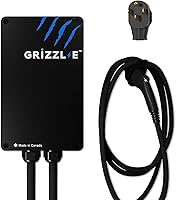
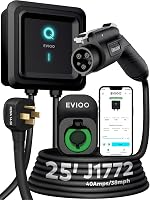
A plug-in charger is the more portable option; a hardwired one is fixed to its circuit. Plug-in Level 2 units use a NEMA 14-50 or 6-50 outlet and a 40 to 50 amp breaker.
Hardwired units skip the outlet and connect straight to the panel, which is how 48 amp charging is usually delivered.
If you rent or expect to move, a plug-in unit is the flexible choice because you can unplug it and take it with you. A hardwired install stays with the house unless you pay to have it removed.
Either way, the handle type still has to match the car.
The hardwired ev charger for home guide covers units built for a permanent install. For the fastest AC charging a car will accept, compare 48 amp ev charger models and confirm your panel can supply 60 amps first.
What should I check before buying a home charger?
Check three things in this order: the car's port, the car's AC limit, and your panel's capacity. Get those right and the "universal" question answers itself for your garage.
Brand and app features come after.
Start at the charge port. A Tesla needs NACS; most other cars need J1772.
If you own both types, a charger with the port your main car uses plus an adapter for the other is cheaper than two stations. Next, find the car's onboard charger rating in amps.
Finally, have an electrician confirm what your panel can spare. A 60 amp circuit for a 48 amp charger, or a 50 amp circuit for a 40 amp unit, is the usual split.
Skip the charger that promises "fits all EVs" without naming its handle. Check the connector type in the specs, not the marketing line.
So are home EV chargers universal in practice?
No. Home EV chargers are not universal, but the gaps are bridgeable.
The handle must match the car or be adapted, and the electrical supply must match the unit's needs. Everything else is convenience.
The decision rule is simple. If you drive a Tesla and want to use J1772 stations, add the Lectron 80A adapter.
If warranty length and value matter more, the FOCSPROD does the same job. If you drive a CCS1 car on long trips, keep the Lectron NACS to CCS adapter for Superchargers.
And at home, match the station to your car's port and your panel's amps before you buy anything.
Frequently asked questions
Can one home EV charger charge any electric car?
Not with the wrong plug. A Level 2 home charger ends in either a J1772 handle or an NACS handle, and the car needs the matching port or a compatible adapter.
The charger's power output also has to suit the car's onboard charger, so a 48 amp station won't push 48 amps into a car limited to 32.
Do I need an adapter to use a Tesla home charger on a non-Tesla car?
Only if the car has a J1772 port and you want to plug it into a Tesla NACS wall connector. In that case a NACS to J1772 adapter bridges the two AC standards.
The reverse setup, a J1772 station into a Tesla, needs a J1772 to Tesla adapter rated for the current involved.
Is a 40 amp or 48 amp home charger the safer buy?
A 40 amp charger is the more flexible buy for most homes because it runs on a 50 amp breaker and often on existing wiring. A 48 amp unit needs a 60 amp breaker and a dedicated hardwired circuit, so it only pays off when your car can accept that current.
Can a home charger be moved to a new house?
A plug-in Level 2 charger can usually be unplugged and reinstalled in a new garage that has a matching outlet and breaker. A hardwired charger is tied to its circuit, so moving it means paying an electrician to remove it and wire it at the new address.