How to Choose a Home EV Charger
Know three things first: your panel's spare capacity, the car's charging speed, and where the charger will live. That sets your amperage, safe circuit and plug type, and the rest is cable, weatherproofing and app features that suit how you park.
On this page (9 sections)
- How much power does your home's electrical panel have?
- How many amps should you choose for your EV?
- Should you hardwire the charger or use a plug-in model?
- Which connector fits your car, J1772 or NACS?
- How long a cable do you need, and where will the charger mount?
- What should a smart charger's app actually do?
- Do you need the charger outdoors, in a cold garage or a shared space?
- How do you compare charger features without overpaying?
- Which home EV charger would we pick for each setup?
The first decision in how to choose a home EV charger is amperage, and it starts at your electrical panel rather than the shopping page. A charger is only useful if your home can feed it safely, so work out the spare circuit, the car's limit and the parking spot before you compare models.
Most drivers end up wanting a 40 or 48 amp wall unit on a 240V circuit. That size fills an EV overnight and still leaves margin for the house.
This guide runs through the checks in order and names the units we would pick at the end of each section.
How much power does your home's electrical panel have?
Start with a load calculation from a licensed electrician. It tells you how many spare amps the panel can give a new 240V circuit without overloading the service.
A 48 amp charger needs a dedicated 60A circuit, and a 40 amp unit needs a 50A circuit. If the panel cannot spare that, you have two routes: a lower amperage setting or a panel upgrade.
Many chargers let you dial the current down in software. The EVIQO runs from 6 to 48A, so a smaller spare circuit doesn't rule it out.
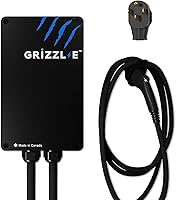
The AIMILER is adjustable from 16 to 40A and also matches a 30A or 40A breaker when you trim the output.
A qualified electrician signs off the circuit and handles the breaker, wiring and permit. Don't skip that step to save time: the install has to meet the National Electrical Code.
Write down three figures before you shop: the spare amps, the distance from the panel to the parking spot, and whether the run crosses a garage, basement or exterior wall.
Rule: know your spare circuit amps first; pick the charger amperage second.
How many amps should you choose for your EV?
Pick 40 or 48 amps for most homes, then match the circuit to it. That range adds plenty of miles overnight without pushing the panel harder than it needs to work.
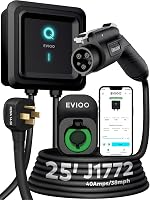
A 48A unit on a 60A circuit is the fastest common home setup. The EVIQO reaches 48A and, with DIP switches 4 and 5 set, can run at 50A on a dedicated 70A circuit.
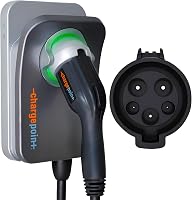
The ChargePoint HomeFlex Hardwired delivers up to 50A and adjusts anywhere from 16 to 50A. That range gives an electrician more room to fit the circuit your panel can actually support.
A 40A charger on a 50A circuit is the sensible middle. The AIMILER tops out at 40A and runs at 32A on a 40A breaker or 24A on a 30A breaker.
Think about the car too. A vehicle with a smaller onboard charger won't take full advantage of a 48A unit, so the extra circuit capacity buys you nothing on that car.
Use the rule of 80 percent: a circuit breaker should carry no more than 80 percent of its rating continuously. That's why a 48A charger pairs with a 60A breaker, and a 40A charger with a 50A breaker.
Rule: choose 40A for an easy fit on a common 50A circuit; choose 48A when the panel can spare a 60A circuit and the car can use it.
Should you hardwire the charger or use a plug-in model?
Hardwire when you want the most amps and a fixed install; go plug-in when you want flexibility. The choice mostly comes down to the circuit and whether you plan to move the unit.
Hardwiring skips the outlet and connects the charger straight to the circuit. The EVIQO is built for that route, with a sealed IP66 and NEMA 4 housing for indoor or outdoor use.
ChargePoint's HomeFlex Hardwired follows the same idea and is UL certified for indoor or outdoor installation.
A plug-in charger uses a NEMA 14-50 outlet on its own circuit. The AIMILER ships with a NEMA 14-50P plug, which suits a garage that already has that outlet or a renter who wants to unplug and take the unit along.
One practical note on outlet installs: some areas require a GFCI breaker on a 240V garage receptacle. The AIMILER has built-in CCID-20 leakage protection and its maker says you don't need to add a separate GFCI breaker for the 14-50 receptacle.
Hardwired units usually sit at the top of a buyer's list because they avoid the outlet and deliver more current. For more fixed options, see our roundup of the best hardwired EV charger for home.
Rule: hardwire for a permanent 48A setup; pick a plug-in unit if you rent, plan to move or already have a 14-50 outlet.
Which connector fits your car, J1772 or NACS?
Check the port on your car before anything else: J1772 covers most non-Tesla EVs, and NACS is the Tesla plug. A J1772 charger also serves a Tesla through the adapter that ships with the car.
All three units here use the J1772 connector. That covers Ford, Chevrolet, Hyundai, Kia, Nissan, BMW, Volkswagen, Audi, Rivian and Lucid models with a J1772 port.
Tesla drivers plug a J1772 charger into the car's own adapter. It's a small extra step, and no different in practice from using a public J1772 station.
Newer EVs from some brands now ship with a NACS port. Those cars need a NACS-to-J1772 adapter or a charger with a NACS connector.
Confirm the port on the car you own now, not the one you might buy in three years.
Plug-in hybrids use J1772 too, and many take a lower current, so a 40A unit is more than enough for them.
If you drive a Tesla and want a dedicated option, the J1772 route still works. The charger doesn't care what badge is on the hood, only what plug reaches the port.
Rule: match the connector to the port on your current car; use the car's J1772 adapter if you drive a Tesla.
How long a cable do you need, and where will the charger mount?
Measure from the mounting spot to the car's charging port, not to the garage door. A cable that falls short forces awkward parking every night.
The EVIQO includes a 25 ft cable, the longest legal length for this class, which reaches across a garage or driveway. ChargePoint's HomeFlex uses a 23 ft cable with a cold-resistant jacket.
The AIMILER also runs 25 ft of cable and adds a portable handbag for storage.
Mount the charger where the cable hangs free of the car and the garage door. A wall beside the nose of the car usually keeps the run short and out of the walkway.
Consider the driver's habits. If you back in, mount on the side nearest the rear port.
If two cars share the circuit, plan where the second one parks before the electrician arrives.
The EVIQO adds a glow-in-the-dark holster, so finding the plug after dark is easier. The AIMILER ships with a gun and cable holder plus a fix cover for the wall mount.
Outdoor mounting raises the weather question. All three handle wet conditions, and the EVIQO's IP66 and NEMA 4 rating states it directly.
Rule: treat cable length as a measurement, not a spec to upgrade later; get the run wrong and the daily parking gets harder.
What should a smart charger's app actually do?
A good app lets you schedule off-peak charging, set the current and see what each session cost. Those three jobs cover most of what a home driver needs from a connected charger.
The EVIQO app starts and stops charging, sets speed from 6 to 48A, sends reminders and tracks energy and money per charge. It needs a 2.4 GHz WiFi network, and the maker notes a stronger antenna keeps the unit online in a garage or basement.
ChargePoint's app controls the charger, manages reminders, connects to smart home devices and finds public stations on its large network. The AIMILER app shows charging cost and history, tracks status and sends a fully-charged notice.
Scheduling matters where utilities offer lower overnight rates. Set the timer once and the car tops up in the cheap window without you thinking about it.
Two things to plan: a 2.4 GHz network and a signal that reaches the garage. Both EVIQO and AIMILER call out 2.4 GHz specifically, and range can fade through a thick wall.
If you want a charger whose app does more, our guide to the smart EV charger covers scheduling, load sharing and connected features.
Rule: buy the app for scheduling and cost tracking; skip the connected model if you only charge during the day.
Do you need the charger outdoors, in a cold garage or a shared space?
Match the weather rating to where the unit lives, and check the cable in cold weather. A garage charger and a driveway charger face different conditions.
ChargePoint's HomeFlex is UL certified for indoor or outdoor installs and includes a cold-resistant cable.
The AIMILER is rated NEMA Type 4 with a degree of IP66 protection, though Aimiler suggests avoiding direct sunlight and heavy rain exposure.
A cold garage is normal for many owners. A cold-resistant cable stays flexible when temperatures drop, which matters if you coil it every night.
Shared spaces need a little thought too. ChargePoint's app finds stations across its network and supports reminders, useful if you split charging between home and work.
If you plan to move the unit, the AIMILER's portable form factor helps. It's a plug-in design with a carrying bag, so it travels better than a fixed wall box.
Where the charger sits also affects the circuit. Run the cable through conduit if the path crosses exposed exterior wall or a footpath.
Rule: install outdoors only a unit whose weather rating states it, and choose a cold-rated cable if your garage drops below freezing.
How do you compare charger features without overpaying?
Spend on the circuit, the connector and the cable first, then add connected features only if you'll use them. Those first three decide whether the charger works at all.
Check the safety certifications. The EVIQO is tested and certified (UL, ETL, FCC, Energy Star).
ChargePoint's HomeFlex is UL certified and Energy Star listed. The AIMILER is ETL listed and meets SAE J1772 and the UL 2231 and UL 2594 standards.
Look at the warranty. EVIQO backs its charger with a 3-year manufacturer warranty and U.S.-based support.
ChargePoint offers 24/7 support and access to its network.
Weigh the maintenance side. The EVIQO has a side reset button to restart in seconds without opening the unit, and it receives over-the-air updates.
That's less time on a ladder.
Skip features you won't touch. If you always charge at night on a timer, a charger with a plain app still does the job, and a 40A unit covers most daily drives.
The best EV chargers for home use roundup compares more options across amperage and price tiers. For a narrower shortlist, our 40 amp EV charger picks focus on that middle band.
Rule: pay for the circuit and connector first, add app features second, and only buy certifications you can point to on the box.
Which home EV charger would we pick for each setup?
We would pick the EVIQO 48A Hardwired for most homeowners with a 60A circuit to spare. It runs up to 48A, works with every non-Tesla EV through J1772, and its 25 ft cable and IP66 housing suit a garage or driveway.
Choose the ChargePoint HomeFlex when you want the widest amperage range and a large public network behind the app. Its 16 to 50A adjustment is the most useful part here if the panel's spare capacity is still being worked out.
Pick the AIMILER when a 14-50 outlet already exists or you rent and want to take the charger with you. It also fits a smaller circuit: 32A on a 40A breaker and 24A on a 30A breaker.
The simple way to choose a home EV charger is to sort the circuit first. If you have a 60A circuit and a permanent spot, take the 48A hardwired EVIQO.
If the panel is tight or the outlet already exists, the plug-in AIMILER is the lower-commitment route. If you want the most flexible amperage on a hardwired install, the ChargePoint HomeFlex is the one to price out next.
Frequently asked questions
Should I install a home EV charger hardwired or plug-in?
Hardwiring uses a dedicated circuit with no outlet, so the unit delivers more amps and stays fixed in place. Pick the plug-in route when you want to move the charger or keep things simple with an existing 240V outlet.
Do I need a permit to install a home EV charger?
Many towns require an electrical permit for a new 240V circuit, and a licensed electrician knows your local rules. Ask about permits before work starts so the install passes inspection.
Will a home EV charger work with a Tesla?
Yes, if the charger has a J1772 connector and you own the J1772 adapter that ships with the car. Teslas and other NACS vehicles charge through that adapter on any J1772 unit.
Can I install a home EV charger without upgrading my electrical panel?
Often you can. Some chargers let you lower the amperage to fit the spare circuit your panel already has.
A load calculation from an electrician tells you the safe limit.
How long does a home EV charger cable need to be?
Measure from the charger to the car's port, not the garage door. A 25 ft cable covers most garages and driveways, while a parked car in a narrow bay may fit fine with less.