What to Know Before Putting an EV Charger in Your Garage
For an EV charger in your garage, first have an electrician assess your panel and circuit, then match the charger to your car, parking layout, and preferred installation. Measure cable reach before you buy.
On this page (8 sections)
- What should you check before choosing an EV charger for your garage?
- Can your electrical panel support an EV charger in the garage?
- Should you choose a plug-in or hardwired garage EV charger?
- Where should you mount an EV charger in your garage?
- What connector should your garage EV charger use?
- Do you need smart controls on an EV charger in your garage?
- How do you keep a garage EV charger safe and easy to use?
- Which EV charger should you choose for your garage?
An EV charger in your garage can make overnight home charging practical, but the right choice depends on your electrical panel, vehicle, and parking layout. Have an electrician assess the circuit, then measure the cable path before selecting a charger.
Start by checking your car’s charge port and onboard charging limit. A higher-capacity wall charger won’t make a car charge faster than the car can accept, and the panel may also limit the circuit available.
What should you check before choosing an EV charger for your garage?
Before buying an EV charger for a garage, confirm the electrical plan and where the car will park. These two checks help narrow down the charger type, current setting, connector, and cable length.
Write down the vehicle’s connector type and charging limit. Check whether you have one EV or expect to share the charger between vehicles, since their ports and parking positions may differ.
Measure from the planned wall location to the charge port with the car parked as usual. Trace the route the cable will take around the vehicle, and avoid a path that would cross a doorway or walking area.
The garage charger guide covers home charging options. For more on installation types and charging rates, see Level 2 chargers for home.
Can your electrical panel support an EV charger in the garage?
Ask an electrician to assess the panel before you choose a Level 2 charger. Available capacity, wiring, breaker size, circuit route, and charger settings all affect which setup is suitable.
An open breaker slot does not show whether the panel can support the additional load. Tell the electrician about other large electrical loads in the home and ask whether the planned charging circuit fits alongside them.
Some chargers allow the current to be set lower, but that setting does not replace a proper assessment of the panel and circuit. If several major loads could run at the same time, ask about EV charger load management.
What should you ask about a garage EV charger installation?
Give the electrician the charger model, installation instructions, vehicle details, and planned parking position. Explain whether you prefer a plug-in or hardwired setup and whether another EV might use the charger.
Ask what circuit and wiring the charger needs, whether the panel can support it, and where it should be mounted. Discuss the outlet, current setting, and cable route before buying the charger or making changes to the electrical system.
Should you choose a plug-in or hardwired garage EV charger?
A plug-in charger connects to a suitable 240V receptacle; a hardwired charger connects directly to its circuit. Your electrician should confirm which option works with the panel, charger, and intended current.
A plug-in setup can be unplugged or moved, but it depends on having the right receptacle and circuit. Do not assume an existing outlet is suitable just because its shape fits.
Hardwiring creates a permanent connection and requires an electrician. Depending on the charger and circuit, it can also allow a higher charging rate than a plug-in setup.
Read which outlet a Level 2 EV charger needs before settling on a receptacle, and compare installation options in the home Level 2 charger guide.
When does a NEMA 14-50 garage charger make sense?
A NEMA 14-50 charger can fit a garage where an electrician confirms that a suitable 240V receptacle and circuit are available or can be installed. The charger, outlet, and circuit all need to be appropriate for regular charging.
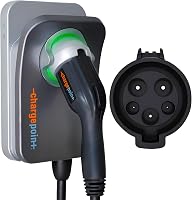
The ChargePoint HomeFlex NEMA 14-50 model uses a 14-50 plug and a J1772 connector. It suits drivers who want a plug-in option and whose car uses J1772; Tesla drivers need an adapter for this version.
Skip this option if your electrician recommends a hardwired setup, or if the receptacle and circuit do not match the charger’s requirements. Have the electrical work assessed before relying on an existing outlet.
When should you choose a hardwired EV charger for your garage?
Choose a hardwired charger when your electrician recommends a permanent connection and the panel can support its circuit. This option also makes sense when you do not need a plug-in unit that can be unplugged.
The EVIQO 48A Hardwired J1772 Charger has a 25 ft cable and requires professional installation on a dedicated circuit. It suits J1772 vehicles, including Tesla vehicles with the appropriate adapter.
Skip a hardwired model if you want to unplug and move your charger, or if the electrical assessment does not support the planned circuit. EVIQO’s app controls need a 2.4 GHz Wi-Fi network, so check the signal where the unit will go if you want those features.
Where should you mount an EV charger in your garage?
Mount the charger where the cable reaches the charge port without crossing a walkway or pulling tight. Plan around the way you park, not just the nearest open patch of wall.
Check the charge port location and whether you normally back in or pull forward. If two vehicles share the space, measure the cable path for each one before choosing a single mounting point.
Keep the cable clear of doors, storage, and places where a vehicle could run over it. Have the electrician confirm the location and follow the charger’s installation instructions.
Is a 25 ft or 30 ft cable right for your garage EV charger?
Choose a cable long enough to reach the port from the charger’s planned position with the car parked normally. A straight-line wall-to-car measurement can underestimate the reach needed when the cable must go around the vehicle.
A 25 ft cable may suit a typical layout, while a longer cable can help when the car parks farther from the wall or has a less convenient port position. Measure the actual route and leave enough slack to connect without stretching.
The ApexCharger MACH 1 includes a 30 ft cable and offers plug-in or hardwired installation. Its connector arrangement includes J1772 and a Tesla NACS adapter.
This model may suit a household that wants both installation options and the included connector arrangement. Skip it if you do not need the extra reach or its features, and ask the electrician which installation option fits your circuit.
What connector should your garage EV charger use?
Match the connector to the vehicle’s charge port before buying. J1772 serves many non-Tesla EVs, while Tesla drivers may use an adapter or select a charger with a compatible connector.
Check the vehicle manual or manufacturer information, especially if more than one car will use the charger. A shared charger needs to work with each vehicle’s port, either directly or with the correct adapter.
For help identifying connectors, see what NACS is and whether you need a J1772 to Tesla adapter. Don’t buy based on the brand of the car alone; confirm its actual port and adapter needs.
Do you need smart controls on an EV charger in your garage?
Choose app controls if you want scheduling, energy information, or remote management; skip them if you will charge without those features. Smart functions depend on Wi-Fi reaching the charger.
The Emporia 48A Hardwired J1772 Charger offers Wi-Fi energy data and charging schedules over 2.4 GHz Wi-Fi. It suits drivers who want those controls and already plan a hardwired installation.
Skip this model if you need a plug-in charger or your vehicle requires a connector other than J1772 without an adapter. Check the Wi-Fi signal at the mounting point before counting on app features, especially in a detached garage.
How do you keep a garage EV charger safe and easy to use?
Follow the charger instructions, keep the cable in good condition, and have electrical work completed to the required specifications. A clear cable route makes everyday charging easier and reduces trip and damage risks.
After charging, return the connector to its holster and store the cable as instructed. Keep it away from tires, closing doors, and sharp edges, and stop using it if the cable, plug, or connector is damaged.
If the garage is exposed to moisture or the charger will be installed outside, check that the specific model is suitable for that location. The guide to charging an EV in the rain explains what to consider in wet conditions.
Common setup mistakes include buying before checking the panel, assuming a receptacle is suitable because it fits, and measuring only the distance from wall to car. Avoid using an extension cord unless the charger maker explicitly allows it.
Which EV charger should you choose for your garage?
Choose based on the electrical plan first, then narrow the options by connector, cable reach, and features. The highest current rating is not automatically the right fit if the vehicle, circuit, or daily routine does not need it.
Choose ChargePoint if an electrician confirms a suitable 14-50 setup and you want a plug-in J1772 option. Choose Emporia or EVIQO if a hardwired J1772 charger fits your plan; Emporia adds Wi-Fi scheduling and energy data, while EVIQO has a 25 ft cable and app controls.
Choose ApexCharger if its 30 ft cable, installation choices, and connector arrangement suit your garage and vehicles. If those features do not solve a specific need, compare simpler options instead.
Before ordering, confirm the panel assessment, receptacle or hardwired plan, vehicle connector, cable path, and Wi-Fi needs. Use the garage charger guide to compare more choices, or read how long it takes to charge an EV at home to see how charging speed fits your routine.
Frequently asked questions
Do I need an electrician to put an EV charger in my garage?
A licensed electrician should assess the panel, circuit, wiring, and installation location before a Level 2 charger is installed. Hardwired chargers need professional installation, and a plug-in charger still needs a suitable 240V outlet and circuit.
Ask the electrician to confirm the setup matches the charger instructions and local requirements.
Can I install an EV charger in any garage?
A garage can work if the electrical supply supports the charger and the installation location suits the cable, vehicle, and equipment instructions. Check the wall space, parking position, cable route, and whether the charger is approved for indoor or outdoor use.
Have an electrician assess the wiring and panel.
Should I choose a plug-in or hardwired garage charger?
Choose a plug-in charger if you have a suitable 240V receptacle and want a unit that can be unplugged. Choose hardwiring if the planned circuit and charger support that setup or you want a permanent installation.
Have an electrician compare the circuit, outlet, and charger limits before you buy.
How long should an EV charger cable be for a garage?
Choose a cable length that reaches the vehicle's charge port from the planned charger location without stretching across a walkway or creating a trip hazard. Measure from the wall to the port with the car parked in its usual position, and allow for different parking angles.
Check the charger's cable length before buying.