Which Outlet Does a Level 2 EV Charger Need?
Most plug-in Level 2 EV chargers use a 240-volt NEMA 14-50 outlet on a dedicated circuit. Some use a NEMA 6-50 outlet, while hardwired chargers need no receptacle.
On this page (9 sections)
- What outlet does a Level 2 EV charger use?
- Is NEMA 14-50 or 6-50 better for an EV charger?
- What circuit does a 40-amp EV charger outlet need?
- Can you use an existing outlet for an EV charger?
- Does an EV charger outlet need a neutral wire?
- When should you choose a hardwired Level 2 charger?
- Which EV chargers use a NEMA 14-50 outlet?
- How should you set up and care for an EV charger outlet?
- Which EV charger outlet should you choose?
Most plug-in Level 2 EV chargers use a 240-volt outlet that matches the charger’s plug, commonly a NEMA 14-50 receptacle. Some models use NEMA 6-50, while hardwired chargers connect to a dedicated circuit without a receptacle.
For an EV charger outlet, the plug shape is only the starting point. The circuit, breaker, wiring, charger settings, and electrical panel must suit the installation, so have an electrician verify them before you buy or plug in a charger.
What outlet does a Level 2 EV charger use?
A plug-in Level 2 charger uses the receptacle specified for its model, often NEMA 14-50 or NEMA 6-50. Choose a charger that matches your existing outlet, or ask an electrician to install the right receptacle and circuit.
A NEMA 14-50 has four prongs, while a NEMA 6-50 has three. The plug must fit correctly, and the receptacle and circuit must meet the charger’s electrical requirements.
If you’re comparing home installation options, see our guide to a Level 2 charger for home.
Is NEMA 14-50 or 6-50 better for an EV charger?
Neither receptacle is automatically better for every home. Use the outlet that matches your charger’s plug and instructions, with an electrician confirming the circuit and wiring.
| Outlet | What to check |
|---|---|
| NEMA 14-50 | Four-prong receptacle; common on plug-in EV chargers |
| NEMA 6-50 | Three-prong receptacle; used by some EV chargers |
| Hardwired connection | No receptacle; charger connects to a dedicated circuit |
A charger with a NEMA 14-50 plug won’t fit a NEMA 6-50 receptacle, or vice versa. Don’t bridge a mismatch with an adapter unless the charger maker allows it and an electrician confirms the setup is suitable.
What does NEMA 14-50 vs 6-50 mean for an EV charger outlet?
The difference is the receptacle and matching plug configuration. A 14-50 is four-prong, while a 6-50 is three-prong; the branch circuit and charger instructions matter too.
Before buying, check the plug type in the charger specifications. If you already have an outlet, show a clear photo to an electrician instead of guessing from its location or appearance.
What circuit does a 40-amp EV charger outlet need?
A 40-amp EV charger commonly calls for a dedicated 50-amp circuit, but follow the charger’s instructions and local electrical code. The required breaker and wiring depend on the installation, so an electrician should verify them.
The charger’s current rating isn’t the same as the circuit rating. Don’t assume a similar-looking outlet is suitable, or that an existing circuit can serve the charger.
The EVIQO 40A NEMA 14-50 J1772 Charger is a plug-in option designed for a NEMA 14-50 outlet and a dedicated 50-amp circuit.
If you’re comparing charging rates, our guide to 40 amp vs 48 amp EV chargers explains what changes as charger current rises.
Can you use an existing outlet for an EV charger?
Use an existing outlet only when its type, voltage, circuit, and wiring match the charger’s instructions. A plug that appears to fit doesn’t confirm that the circuit is suitable for charging.
Ask an electrician to inspect an older receptacle and circuit before relying on them. The inspection can determine whether the receptacle needs replacement, whether the circuit is dedicated, and whether your panel has capacity.
A regular 120-volt household outlet is a different setup with slower charging. Read whether you can charge an EV from a regular outlet if you’re deciding between Level 1 and Level 2 charging.
Does an EV charger outlet need a neutral wire?
It depends on the charger and the receptacle configuration. A NEMA 14-50 includes a neutral connection, while a NEMA 6-50 doesn’t; the charger must be designed for the receptacle and wiring used.
Don’t modify a plug, remove a pin, or ask an installer to omit a conductor based on a generic diagram. Have the electrician follow the charger’s instructions and applicable electrical code.
When should you choose a hardwired Level 2 charger?
Choose a hardwired charger if the model supports hardwiring and you want a fixed installation without a plug and receptacle. It still needs a properly sized circuit and professional installation.
A hardwired charger can’t be unplugged from a wall receptacle for simple removal or relocation. Check the installation options before choosing; some models offer plug-in and hardwired versions with different current limits.
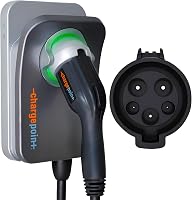
The ChargePoint HomeFlex is available in a NEMA 14-50 version, and ChargePoint also describes a hardwired version. Its plug-in version uses a 14-50 receptacle and calls for a 40A or 50A circuit, with the setup aligned to the charger setting and your home’s electrical capacity.
Which EV chargers use a NEMA 14-50 outlet?
The ChargePoint, EVIQO, Lectron, and ELEGRP options here use a NEMA 14-50 plug. Confirm the exact model and installation requirements before choosing one.
For a fixed home charger with app controls, ChargePoint’s HomeFlex has a J1772 connector and supports app features such as reminders and charging information. Its 23 ft cable is cold-resistant, and the charger can be installed indoors or outdoors by an electrician.
EVIQO suits drivers who want app control, adjustable charging from 6A to 40A, scheduling, and a long reach across a garage or driveway. It requires 2.4 GHz Wi-Fi, and Tesla drivers need the J1772 adapter that comes with the car.
Lectron is a simpler choice for J1772 drivers who want a portable 40A charger and don’t need app features. Its cable is 16 ft, so measure the distance from outlet to vehicle before choosing it.
ELEGRP fits drivers who want adjustable current levels, a delay timer, and a 25 ft cable for home, travel, or outdoor charging. Tesla drivers need a NACS adapter sold separately, and its current settings should match the home circuit.
All four are plug-in J1772 chargers, so Tesla drivers need a compatible adapter. Skip any of them if you need a different connector, can’t meet the charger’s electrical requirements, or don’t have enough cable reach for your parking position.
How should you set up and care for an EV charger outlet?
Have a licensed electrician install or inspect the circuit, receptacle, wiring, and breaker before charging. Ask them to confirm panel capacity and set the charger’s current to suit the circuit and vehicle.
Check where the car parks and measure the cable route before selecting a charger. Keep the cable from crossing a walkway or creating a trip hazard, and use the charger’s holster or storage method when it’s not connected.
Inspect the plug, cable, and receptacle from time to time for visible damage or signs of heat. Stop using the charger and contact an electrician if a plug or outlet looks damaged, feels unusually hot, or doesn’t hold the plug securely.
Avoid common installation mistakes: treating a dryer outlet as automatically compatible, using a non-dedicated circuit without confirmation, choosing a cable that can’t reach, or increasing the charger setting beyond what the circuit supports. Follow the charger’s own instructions for cleaning and storage.
If your home has other major electrical loads, ask about managing them together. Our guide to EV charger load management explains how a system can coordinate charging with the rest of the home.
Which EV charger outlet should you choose?
Choose a NEMA 14-50 or NEMA 6-50 only when it matches the charger’s plug and electrical instructions. Choose hardwiring if your charger supports it and you want a fixed installation without a receptacle.
If you already have an outlet, have an electrician verify its type and circuit before buying. If you need a new installation, select the charger first so the electrician can size the circuit and wiring correctly.
For placement and installation advice, read what to know before putting an EV charger in your garage.
Frequently asked questions
What outlet does a Level 2 EV charger need?
Many plug-in Level 2 chargers need a 240-volt NEMA 14-50 outlet, but some use NEMA 6-50 and others are hardwired. Check the charger's plug and installation instructions, then have an electrician confirm the outlet, circuit, wiring, and panel capacity are suitable.
Is a NEMA 14-50 outlet the same as a dryer outlet?
No. A NEMA 14-50 is a 240-volt, four-prong receptacle often used for ranges or RVs.
Dryer outlets can have different configurations and ratings, so don't assume one fits an EV charger.
Match the charger's plug and electrical requirements to the receptacle.
Can I use a NEMA 6-50 outlet for an EV charger?
Yes, if the charger is designed for a NEMA 6-50 plug and the circuit is correctly sized for it. A 6-50 and 14-50 have different plug shapes and wiring, so they aren't interchangeable.
Confirm the charger instructions and ask an electrician to assess the circuit.
Does a Level 2 charger need a dedicated circuit?
Many plug-in Level 2 chargers call for a dedicated circuit sized for the charger's maximum current. The required breaker and wiring depend on the charger and installation.
Have a licensed electrician check your panel capacity, circuit, and local code before adding an outlet.