How Much Does It Cost to Charge an EV at Home?
Charging an EV at home costs about battery energy needed ÷ charging efficiency × your electricity rate. For example, a 60 kWh charge at 0 dollars.16 per kWh with 10% losses costs about 10 dollars.67.
On this page (7 sections)
- How much does it cost to charge an EV at home?
- How do you estimate a full charge or monthly cost?
- Which electricity rate should you use?
- Does a home charger change the electricity cost?
- Can a plug-in charger help you manage home charging?
- How can you lower the cost of charging at home?
- What should you use to estimate your own cost?
Charging an EV at home costs the electricity used to refill the battery, plus charging losses. Divide the energy added to the battery by charging efficiency, then multiply by your electricity rate.
A 60 kWh refill at 0 dollars.16 per kWh with 10% losses is about 10 dollars.67.
Your cost depends on the battery energy you add, your local rate, and when you charge. Check your electric bill for the rate you pay, then use the calculation below.
How much does it cost to charge an EV at home?
Estimate the cost with this formula: energy added to the battery ÷ charging efficiency × electricity rate. If you don't know your car's exact charging efficiency, use an assumption such as 90% and treat the result as an estimate.
For example, suppose you add 60 kWh to the battery and pay 0 dollars.16 per kWh. With 90% efficiency, the home draws about 66.7 kWh, for an estimated cost of 10 dollars.67.
The example uses an assumed rate and efficiency, not a typical price. Your electric bill and vehicle data will give you a more relevant estimate.
How much does it cost to charge an EV at home per kWh?
Your cost per kWh of battery energy is your home rate divided by charging efficiency. At 0 dollars.16 per kWh and 90% efficiency, each kWh added to the battery costs about 0 dollars.18.
This gives you a way to compare home charging with public charging. Include any session fees or different pricing at a public station in your comparison.
How do you estimate a full charge or monthly cost?
For a full charge, estimate the energy needed to refill the battery, not just its advertised capacity. A car may not let you use its full capacity, and you may usually charge only part of the battery.
For a monthly estimate, start with the miles you drive and your vehicle's efficiency in miles per kWh. Divide monthly miles by miles per kWh to estimate the energy used for driving, then divide by charging efficiency and multiply by your rate.
As an example, assume 1,000 miles a month, 3 miles per kWh, a 0 dollars.16 rate, and 90% charging efficiency. The estimate is about 59 dollars: 1,000 ÷ 3 ÷ 0.90 × 0 dollars.16.
These figures are illustrative. Real energy use changes with the car, driving conditions, weather, and charging habits, so compare the estimate with your utility bill over time.
Which electricity rate should you use?
Start with the per-kWh rate on your electric bill. If your utility uses time-of-use pricing, check the rate for the hours when you usually charge.
Some bills show multiple charges, such as energy supply and delivery. If those charges are separate, check your utility's explanation of the bill or its online account to find the total rate.
The U.S. Energy Information Administration's electricity data can help you compare state and national figures.
Those averages aren't a substitute for your own utility's rate.
If your utility offers a cheaper overnight period, charging then may reduce the energy cost. The Emporia supports charging schedules through its mobile app, which can help you target that window.
Does a home charger change the electricity cost?
A home charger affects charging speed and setup, while your electricity rate determines the energy charge. A faster charger can add energy in less time, but it doesn't make each kWh cost less by itself.
A Level 2 setup may suit drivers who want to recharge more quickly or add more energy overnight. See how long it takes to charge an EV at home for a closer look at charging time.
The ChargePoint HomeFlex is a hardwired J1772 charger with app controls and adjustable current. Its app can manage charging, but your utility's rate still determines the energy cost.
Before choosing a charger, check whether your home needs new wiring or a suitable circuit. Our guide to how much a Level 2 EV charger costs to buy covers the charger purchase separately from electricity use.
Can a plug-in charger help you manage home charging?
A plug-in charger can suit a home with a compatible outlet when you want a portable setup. Confirm that the outlet and circuit match the charger's requirements before using it.
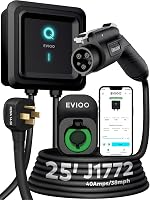
The AIMILER is a 40A Wi-Fi charger with a NEMA 14-50 plug and adjustable current. Its app can set a charging period, which may help you use an off-peak window if your utility offers one.
A plug-in charger doesn't automatically reduce the bill. For outlet and installation considerations, see which outlet a Level 2 EV charger needs.
How can you lower the cost of charging at home?
Use the lowest available electricity rate that fits your schedule, and avoid charging more energy than you need. If your utility offers off-peak pricing, compare those hours with your usual charging routine.
Check whether your utility has an EV rate plan or other home-charging program. Read the plan terms, including the hours covered and any separate fees, before switching.
You can also use your car's energy screen or charging history to track how much electricity it adds. Compare that with your bill over a full billing period, since a single session can be a poor guide to monthly cost.
For a wider overview of home charging expenses, visit the power and costs guide.
What should you use to estimate your own cost?
Use your bill's rate, your car's energy use, and an efficiency assumption to build a starting estimate. Then compare it with actual charging records and your next bill.
For a single refill, estimate the kWh needed and divide by charging efficiency before multiplying by your rate. For monthly driving, use miles driven divided by your car's miles per kWh, then apply the same efficiency adjustment and rate.
Choose a charger based on your home wiring, charging needs, and schedule. The charger may change how and when you add energy, while the utility rate and total energy used drive the electricity cost.
Frequently asked questions
How much does it cost to charge an EV at home from empty?
Multiply the energy needed to refill the battery by your electricity rate, then allow for charging losses. A 60 kWh refill at 0 dollars.16 per kWh and 10% losses is about 10 dollars.67.
Your car may not use its full rated battery capacity, so treat this as an estimate rather than an exact bill.
How much does it cost to charge an EV at home each month?
Monthly cost depends on how far you drive, your car's efficiency, your electricity rate, and charging losses. Estimate monthly miles divided by miles per kWh, then divide by charging efficiency and multiply by your rate.
Use your own driving and utility figures for a useful result.
Is it cheaper to charge an EV at home or at a public charger?
It depends on your utility rate and the public charger's price and fees. Home charging can cost less when your electricity rate is low, especially during an off-peak period, but compare the cost per kWh and any session fees at the public station you use.
Does a Level 2 charger lower the cost of charging at home?
A Level 2 charger usually changes how quickly you can charge, not the price your utility charges per kWh. Your bill depends on the energy used and your rate.
A time-of-use plan or charger schedule may help you charge during cheaper hours if your utility offers them.