How Long Does It Take to Charge an EV at Home?
Charging an EV at home can take overnight on Level 1 or a few hours on Level 2, depending on the battery size, starting charge, and the car's onboard charging limit.
On this page (9 sections)
- How long does it take to charge an EV at home?
- What changes your home charging time?
- How long does Level 1 home charging take?
- How long does Level 2 home charging take?
- How do you estimate your own charging time?
- Does a faster charger always mean a faster charge?
- How long should you charge each night?
- What should you check before choosing a charger?
- Which home charging setup fits your routine?
Charging an EV at home can take overnight on Level 1 or a few hours on Level 2, depending on how much energy the battery needs and the limits of the car and electrical setup. For many drivers, the useful question is whether a regular overnight parking window replaces the miles driven that day.
A full charge from empty is less common than topping up at home. Your starting battery level, commute, and time plugged in matter as much as the charger's maximum rate.
How long does it take to charge an EV at home?
A Level 1 outlet may take a day or longer to refill a large battery from empty; Level 2 can often handle a daily top-up overnight. Exact times vary by battery capacity, the amount of charge needed, charger output, and the vehicle's onboard charging limit.
A rough estimate is:
Hours needed = energy to add (kWh) ÷ charging power (kW)
For example, adding 30 kWh at a steady 7 kW takes a little over 4 hours in a simple estimate. Real charging can take longer because power may taper near full, and losses occur between the outlet and battery.
Use the car's charging screen or manual for a model-specific estimate. Charger power alone doesn't tell you how long your EV will take.
What changes your home charging time?
Battery size and the amount of charge you need are the biggest factors. A small top-up takes less time than going from nearly empty to full, and a larger battery needs more energy for the same percentage increase.
The charging rate is also limited by the lowest-capacity part of the setup:
- The EV's onboard charger
- The home charger
- The circuit and electrical service
- The cable and connection
Cold or hot conditions can affect charging speed, too. Your vehicle may also slow the rate as the battery approaches its upper charge limit.
If you're comparing charger levels, our guide to what a Level 2 EV charger is explains the basic difference. For the equipment and electrical choices, see Level 2 chargers for home.
How long does Level 1 home charging take?
Level 1 charging uses a standard 120V outlet and is the slowest home option. It can work for drivers with short daily trips and long parking periods, but a large battery may need more than one night for a substantial refill.
The Lectron Level 1 Charger 15A uses a 120V outlet and provides up to 1.65 kW. It has a NEMA 5-15 plug and a J1772 connector, so confirm that your car's inlet is compatible.
Lectron says this charger can add 40–50 miles of charge overnight. Actual miles depend on the vehicle and charging conditions, so use your EV's own estimate as a guide.
A regular outlet should be in good condition and suitable for the charging load. Learn what to check in our guide to charging an EV from a regular outlet.
How long does Level 2 home charging take?
Level 2 charging uses a 240V supply and is usually the practical choice when you need a larger daily refill. The time still depends on the charger's output and the car's onboard limit.
A 40A Level 2 charger can supply up to 9.6 kW under the usual 240V calculation, while a 48A charger can supply up to 11.5 kW. These are approximate maximums; the car may accept less, and the circuit must be sized for the charger.
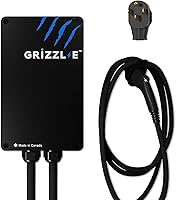
The Grizzl-E Classic 40A NEMA 14-50 Charger offers selectable current settings of 16A, 24A, 32A, or 40A. Grizzl-E gives a charge-rate estimate of 28–30 miles per hour at 40A, with lower rates at its lower settings.
The Emporia 48A Hardwired J1772 Charger is a hardwired 240V option rated up to 48A. Emporia says it can provide up to 46 miles of range per hour, but your vehicle and installation determine the rate you actually get.
For circuit and plug decisions, read which outlet a Level 2 EV charger needs. If you need to balance charger demand with other large loads, see EV charger load management.
How do you estimate your own charging time?
Estimate the energy you need, then divide it by the charging power your car can accept. Treat the result as a planning range because the charge rate can change during a session.
- Check the battery capacity and current charge level in your vehicle app or manual.
- Decide how much energy you want to add, rather than assuming every session starts empty.
- Find the charger output and your EV's maximum AC charging rate.
- Divide the energy needed in kWh by the lower of those two power limits in kW.
- Allow extra time for charging losses and a slower rate near the top of the battery.
For example, if you need 24 kWh and the car accepts 7 kW, the simple estimate is about 3.5 hours. If the charger can supply 11 kW but the car accepts only 7 kW, use 7 kW for the estimate.
Does a faster charger always mean a faster charge?
No. Your EV's onboard charger sets a ceiling for AC charging.
A higher-output home charger won't make the car accept more power than it was designed to take.
Check the car manual for its maximum AC charging rate. Then compare it with the charger and circuit you can support.
A 48A charger may be useful for a vehicle that can accept the extra power, but it won't shorten charging time for a car capped at a lower rate. Installation and electrical capacity matter, too.
How long should you charge each night?
Charge for the energy you expect to use, with enough time to cover your next drive. You usually don't need to wait for a full battery if a shorter session replaces your daily miles.
A home charger can fit around your parking routine. Plug in after arriving, schedule a session if your charger and utility plan support it, and set a charge limit according to the vehicle maker's guidance.
To estimate the cost of those sessions, use our guide to the cost to charge an EV at home. Charging time and charging cost are separate questions: a faster rate doesn't automatically mean a higher bill if you use the same amount of energy.
What should you check before choosing a charger?
Match the charger to your vehicle, circuit, and normal parking time. A charger that fits your routine is more useful than one with a maximum rate your car or home can't use.
Start with the vehicle's connector and AC charging limit. Then confirm whether you have a suitable 120V outlet, a 240V outlet, or a hardwired installation path.
A plug-in charger may suit a compatible existing outlet, while a hardwired unit may support a higher output. Have a qualified electrician assess the circuit and installation requirements, especially before adding a new 240V circuit.
Which home charging setup fits your routine?
For a driver with low daily mileage and many hours parked, Level 1 may be enough. Choose a Level 2 setup if you need more energy overnight, drive longer distances, or want a quicker refill between trips.
The Grizzl-E Classic 40A NEMA 14-50 Charger offers adjustable current for a compatible NEMA 14-50 setup. The Emporia 48A Hardwired J1772 Charger is a hardwired option for a compatible installation, while the Lectron Level 1 Charger 15A fits a compatible 120V outlet and J1772 vehicle.
Estimate your daily energy need first, then check your vehicle's charging limit and home circuit. That gives you a realistic time range and a clearer path to choosing the right charger.
Frequently asked questions
How long does it take to charge an EV at home from empty?
It depends on the battery and charging setup. A standard 120V Level 1 outlet may need more than a day for a large battery, while a 240V Level 2 charger can often replenish a typical daily commute overnight.
The car's onboard charger can limit the rate even when the home charger can supply more power.
How many miles does Level 1 charging add overnight?
The miles added vary by vehicle efficiency, charging time, and outlet conditions. A Level 1 charger provides a slow trickle that can cover a modest daily commute if the car is plugged in for many hours, but it may not replace a large amount of driving every day.
Check your vehicle's estimate after a normal overnight session.
Is Level 2 charging faster than a regular outlet?
Yes. A Level 2 charger uses a 240V supply and can add energy much faster than a standard 120V outlet, though the actual rate depends on the charger, circuit, vehicle, and temperature.
See your vehicle manual and charger instructions for compatible limits.
Should I charge my EV to 100% every night?
Follow your vehicle maker's guidance for daily charging and battery care. Many EVs let you set a charge limit for routine use, then raise it before a longer trip.
The best setting depends on your model, battery chemistry, and driving plans.