How Much Does a Level 2 EV Charger Cost to Buy?
A Level 2 charger unit can cost from a few hundred dollars to over 1,000 dollars. Installation is separate, and the total depends on your circuit, wiring, and choice of plug-in or hardwired charger.
On this page (8 sections)
- How much does a Level 2 charger cost to buy?
- What makes the total cost go up?
- Is a plug-in charger cheaper than a hardwired one?
- When is a hardwired charger worth the extra setup?
- Does a higher-amp charger cost more overall?
- Which charger features are worth paying for?
- How should you estimate the full home charging budget?
- Is a Level 2 charger worth the cost?
A Level 2 charger unit can cost from a few hundred dollars to over 1,000 dollars, which answers the basic question of how much a Level 2 charger costs. Installation adds to the total, and your panel, wiring route, circuit size, and charger type shape the final budget.
The charger is only one part of the project. First find out whether your home can support the circuit and where the charger will sit, then compare units that fit those conditions.
How much does a Level 2 charger cost to buy?
A Level 2 charger unit can range from a few hundred dollars to over 1,000 dollars. Amperage, plug-in or hardwired setup, cable length, weather protection, and smart features all affect the unit price.
Keep the charger and installation as separate budget lines. A lower priced unit may still need a new circuit, while a higher amperage charger can call for a larger circuit and more electrical work.
The four chargers above cover several common choices: 40A plug-in models and hardwired models with higher amperage. Their connections and features can help you narrow the type to discuss with an electrician before comparing specific prices.
What makes the total cost go up?
Electrical work often makes the biggest difference to the installed total. A suitable outlet and circuit near the parking spot can simplify the job, while a longer wire run or panel upgrade can add work.
Ask an electrician to check:
- Whether your panel has capacity for the charger circuit
- The amperage and breaker size the charger requires
- Whether a compatible 240V outlet is already installed
- How far the charger is from the panel
- Whether wiring can run through an unfinished area or needs work through walls
- Whether the charger will be indoors or outdoors
Get an estimate based on your home before choosing a charger. Don't assume an outlet is suitable just because its shape matches the charger's plug.
For plug types and outlet details, see our guide to which outlet a Level 2 charger needs. If you are choosing a home setup, our Level 2 charger guide for home explains amperage, plugs, and what to buy.
Is a plug-in charger cheaper than a hardwired one?
A plug-in charger can be the simpler choice if you already have a suitable 240V outlet in a useful location. A hardwired charger needs a permanent connection, so plan on an electrician for installation.
The Grizzl-E Classic and SEGUMA both use a NEMA 14-50 plug. The Grizzl-E offers adjustable current from 16A to 40A, and the SEGUMA also lets you choose a current setting and delay charging.
Choose one of these plug-in options if your electrician confirms that the outlet and circuit match the charger's requirements. Skip them if the outlet is in the wrong place, its capacity is unsuitable, or you need a permanent hardwired connection.
Don't use an adapter or extension cord to make an unsuitable outlet work. Follow the charger's instructions and electrician's guidance for the circuit setting.
When is a hardwired charger worth the extra setup?
A hardwired model fits a permanent installation when the electrician confirms the circuit and the charger’s amperage suit your home. It can also make sense when you want app controls or a longer cable built into the setup.
EVIQO's 48A charger needs a dedicated 60A circuit. Its optional 50A setting calls for a dedicated 70A circuit, so choose that higher setting only if the home circuit is designed for it.
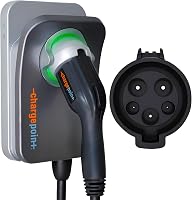
The ChargePoint HomeFlex is another hardwired option, with adjustable current and app controls. It uses a J1772 connector, so Tesla drivers need an adapter.
Both are poor choices if you want to plug the charger into an existing outlet or if your panel cannot support the required circuit without costly changes. Ask for an installation estimate before paying more for higher amperage.
Does a higher-amp charger cost more overall?
A higher-amp charger can raise both the unit price and the electrical work required. The EVIQO's 48A setting needs a dedicated 60A circuit, while its optional 50A setting requires a dedicated 70A circuit.
Higher amperage only helps when the home's circuit and the car can use it. Your vehicle's onboard charger limits how much AC power it can accept, so a more powerful wall unit may not shorten charging for every car.
If you are weighing speed against installation needs, see 40A vs 48A EV chargers. For a plain explanation of charger levels, read what a Level 2 EV charger is.
Which charger features are worth paying for?
Pay for a feature when it solves a real problem at your parking spot or with your schedule. A longer cable can reach a car parked farther from the wall, while adjustable current can help match charging to a compatible circuit.
The EVIQO and ChargePoint both offer app controls. EVIQO's app requires 2.4 GHz home WiFi and supports charging schedules, while ChargePoint's app manages charging and reminders, with WiFi needed for some functions.
The SEGUMA has a display for charging information and a delay timer. The Grizzl-E keeps things simpler, with adjustable current and no app feature listed among its supplied product details.
Weather protection matters if the charger will be outdoors. Confirm the charger's installation rating and your home's wiring suit that location, and follow the instruction manual for setup and care.
How should you estimate the full home charging budget?
Start with an electrician's assessment, then compare charger and installation estimates together. This gives you a more useful total than choosing a unit first and guessing at the electrical work.
Use this checklist:
- Confirm your vehicle's connector and maximum AC charging rate.
- Ask an electrician to assess panel capacity and the route to the parking spot.
- Compare plug-in and hardwired estimates for your home.
- Check the charger's amperage, cable length, and indoor or outdoor rating.
- Ask whether permits or inspections apply in your area.
Avoid buying a charger before confirming the connector and circuit. J1772 chargers work with many non-Tesla EVs, while Tesla drivers may need an adapter; check your vehicle manual and the charger's compatibility details.
The cost of charging the car is a separate budget question. Our guide to the cost to charge an EV at home covers electricity use, apart from buying and installing the charger.
Is a Level 2 charger worth the cost?
A Level 2 charger makes sense if faster home charging is useful and your electrical setup can support it at a reasonable installation cost. If your overnight charging needs are modest, compare the convenience with the full quote before committing.
Choose EVIQO or ChargePoint if you want a hardwired setup and your electrician confirms the circuit. Choose Grizzl-E or SEGUMA if you have a suitable NEMA 14-50 outlet and prefer a plug-in option.
When you compare how much a Level 2 charger costs, count the charger, installation, and any needed circuit or panel work. For the separate electricity budget, see how much it costs to charge an EV at home.
What should you budget for first?
Budget first for an electrical assessment, then set separate amounts for the charger and installation. The electrician can tell you whether an existing outlet is appropriate or whether the panel and wiring need work.
Compare chargers after you know the circuit requirements. That lets you weigh the unit price against the actual setup your home needs.
Frequently asked questions
How much does a Level 2 EV charger cost?
A Level 2 charger unit can cost from a few hundred dollars to over 1,000 dollars, depending on its amperage, connection type, cable, and features. Installation is a separate expense.
Your total depends on whether a suitable 240V circuit is already near the parking spot and how much electrical work the installation requires.
Is it cheaper to install a plug-in or hardwired EV charger?
A plug-in charger may cost less to install if you already have a suitable 240V outlet in the right place. A hardwired charger needs a permanent electrical connection, usually installed by an electrician.
If you need a new circuit or panel work, those costs can outweigh the difference between charger types.
Does a Level 2 charger need a new circuit?
A Level 2 charger needs a suitable 240V circuit, but your home may already have one. The circuit's capacity, breaker, outlet, wiring, and charger amperage all need to match.
Ask a licensed electrician to inspect your panel before choosing a charger or scheduling installation.
What affects the cost of installing a home EV charger?
Installation cost depends on the distance from the electrical panel, circuit capacity, wiring route, outlet or hardwired connection, and whether the panel needs an upgrade. Outdoor placement and work through finished walls can add complexity.
Get an electrician's assessment before budgeting around a charger alone.