What Is a Level 2 EV Charger and Who Needs One?
A Level 2 EV charger uses 240-volt power to charge an electric car faster than a standard 120-volt outlet. It suits drivers who need more range overnight or a faster recharge between trips.
On this page (9 sections)
- What is a Level 2 EV charger?
- Who needs a Level 2 charger at home?
- What does a Level 2 charger need to work?
- Is a portable Level 2 charger enough?
- Which connector should you check?
- How long does Level 2 charging take?
- How much does Level 2 charging cost to use?
- How should you set up and care for a Level 2 charger?
- How do you decide whether to buy a Level 2 charger?
A Level 2 EV charger uses 240-volt power to charge an electric car faster than a standard 120-volt outlet. It may suit you if daily driving uses more range than Level 1 charging can replace overnight, or if you need a quicker recharge between trips.
The right choice depends on your car’s charging limit, your home’s electrical setup, the connector, and where you park. Start with your charging routine, then choose the charger style and output that fit it.
What is a Level 2 EV charger?
A Level 2 EV charger supplies power from a 240-volt circuit to your car’s onboard charger, which charges the battery. It is a home charging option for drivers who want more power than a standard 120-volt outlet provides.
Level 1 charging uses a regular 120-volt outlet. Level 2 can add range faster, but the effective rate depends on the charger, the car’s onboard charging limit, and the electrical circuit.
The cable connector must match your vehicle or an approved adapter. Many non-Tesla vehicles use J1772 connectors, while NACS is used by Tesla and many newer EVs.
Check your owner’s manual for the car’s connector and charging limits, and see our guide to a Level 2 charger for home for setup basics.
How fast is Level 2 EV charging?
Level 2 charging can add range faster than a 120-volt outlet, but speed varies by vehicle and setup. Amperage is one factor; the car’s onboard charger may limit how much power it accepts.
The Grizzl-E Classic gives approximate rates of 28–30 miles per hour at 40 amps, 22–25 at 32 amps, 15–18 at 24 amps, and 10–12 at 16 amps. Those figures describe that charger and can differ with a particular car and charging conditions.
Charging may slow as the battery fills, and temperature can affect the time shown by the car. Use your vehicle’s display or manual for an estimate that reflects your setup.
Who needs a Level 2 charger at home?
Level 2 is most useful if your regular driving uses more range than a 120-volt outlet can replace while the car is parked. It can also help if you have short gaps between trips and need the car ready sooner.
Think about how far you drive, how long the car stays parked, and whether charging is available at work or nearby. A short commute and a full night at home may leave enough time for Level 1 charging.
A plug-in hybrid’s smaller battery may make Level 1 charging practical for many routines. Our guide to Level 2 chargers for plug-in hybrids explains when faster charging may help.
Is a Level 2 EV charger worth it for a short commute?
A short commute may not justify installing a Level 2 charger if a 120-volt outlet restores the range you use before your next trip. The need changes if you have several daily drives, little time at home, or no other convenient place to charge.
Track your charging pattern for a week or two. If you often start the day with less charge than you want, or need to recharge during a short parking window, faster charging may be useful.
Factor in installation needs and your home’s electrical capacity as well as your driving. Compare the full setup with how often the extra speed would solve a real scheduling problem.
What does a Level 2 charger need to work?
A Level 2 charger needs a 240-volt electrical supply and a connection that matches your car. Depending on the model, it may plug into a suitable outlet or connect directly to the electrical system through hardwiring.
An outlet’s shape alone doesn’t confirm that it is suitable for EV charging. The circuit, wiring, breaker, outlet condition, and charger requirements all matter.
Have an electrician review the installation and follow the charger and vehicle instructions. For outlet types and what to check, read which outlet a Level 2 EV charger needs.
Should you choose a plug-in or hardwired Level 2 charger?
Choose plug-in if you have a suitable outlet and want a charger you can remove or replace more easily. Choose hardwired if you want a permanent installation or your preferred charger supports higher output that your circuit can handle.
A plug-in unit still needs an outlet and circuit suited to EV charging. A hardwired installation needs an electrician to connect it to the electrical system.
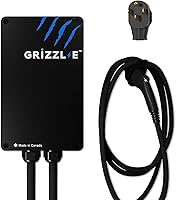
The Grizzl-E Classic has a NEMA 14-50 plug and adjustable current from 16 to 40 amps. It suits drivers who want a portable, plug-in wall charger with adjustable output, and who have a compatible outlet and circuit; skip it if you want Wi-Fi controls or a hardwired unit.
The Emporia charger is hardwired, uses a J1772 connector, and supports up to 48 amps. It suits drivers who want Wi-Fi energy data and mobile charging controls, provided their vehicle uses J1772; skip this version if you need a plug-in charger or a NACS connector.
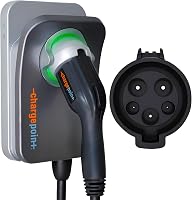
The ChargePoint HomeFlex is a hardwired J1772 charger with adjustable output up to 50 amps. Its app provides charging information and controls, with Wi-Fi needed for certain functions; it suits drivers who want app features and have a compatible vehicle, while Tesla drivers need an adapter.
Is a portable Level 2 charger enough?
A portable charger can provide Level 2 charging if it supports a compatible 240-volt connection. Some portable models also support Level 1 charging from a suitable 120-volt outlet.
Check the plug type, voltage, maximum current, and vehicle connector before buying. A portable unit with a lower current rating may charge more slowly than a higher-output wall charger.
The EVDANCE portable charger supports 12-amp charging at 120 volts and 16-amp charging at 240 volts. It suits drivers who want one unit for both levels and have a compatible outlet; skip it if you need higher output or have an outlet it cannot connect to without a separate adapter.
The EVDANCE charger uses J1772, and Tesla vehicles need a separate J1772-to-Tesla adapter. For more on charging from a regular outlet, see our guide to EV charging at home.
Which connector should you check?
Check your vehicle’s charge-port type before choosing a Level 2 charger. A mismatch may require an adapter, and your owner’s manual can confirm compatibility.
J1772 is common on many non-Tesla EVs sold before 2025. NACS is used by Tesla and many newer EVs, but compatibility varies by vehicle and charger.
The Emporia charger described here has a J1772 connector and works with North American EVs that use J1772. Emporia also offers a separate NACS version, so confirm the exact connector and vehicle fit before buying.
How long does Level 2 charging take?
Charging time depends on how much energy your car needs, the charger’s output, and the car’s onboard charging limit. A larger battery or a nearly empty battery takes longer to charge than a small top-up.
A higher amp rating won’t necessarily charge every vehicle faster. If your car accepts less power than the charger can supply, the vehicle sets the effective limit.
Use your car’s displayed charging time or manual as a guide, allowing for changes in temperature and charging conditions. Our guide to how long it takes to charge an EV at home covers the main factors.
How much does Level 2 charging cost to use?
The cost to charge depends on your electricity rate and how much energy your car uses. Faster charging doesn’t automatically change the cost for the same amount of energy.
Check your utility bill for the rate per kilowatt-hour and your car’s energy-use information. Some utilities offer time-based rates, so charging at different hours may change the cost.
Installation is separate from the electricity used to charge. See how much it costs to charge an EV at home to estimate your charging costs.
How should you set up and care for a Level 2 charger?
Have an electrician confirm the circuit and installation before you use a new Level 2 charger. Match the charger’s connection and current setting to the electrical setup, then follow its manual and your vehicle instructions.
Keep the cable where it won’t be driven over, pinched in a door, or left across a walking path. Return the connector to its holster or storage position after charging, and check the cable and plug for visible wear before use.
For outdoor use, confirm that the specific charger is rated for the location and weather exposure. Don’t rely on an outlet adapter to make an incompatible connection safe, and stop using equipment that looks damaged until it has been checked.
What mistakes should you avoid with a Level 2 EV charger?
The most common mistake is choosing by amp rating before checking the car, circuit, connector, and outlet. A higher-rated charger cannot make a vehicle accept more power than its onboard charging limit.
Avoid assuming that a familiar-looking 240-volt outlet is suitable for continuous EV charging. Don’t set adjustable current above the circuit’s capacity, and don’t assume a J1772 cable will fit a NACS port without the correct adapter.
Also consider how much charging time you actually need. Paying for a more permanent or higher-output setup may not help if Level 1 already restores your daily driving range overnight.
How do you decide whether to buy a Level 2 charger?
Choose Level 2 if you need more overnight range or a faster recharge between trips; keep Level 1 if it already fits your routine. Then match the charger type to your outlet, circuit, connector, and need for app controls.
Pick the Grizzl-E Classic if you want an adjustable plug-in unit with a NEMA 14-50 connection. Choose Emporia for hardwired installation with Wi-Fi controls, or ChargePoint if you want its app features and adjustable hardwired output; confirm your car’s connector first.
Choose the EVDANCE if portability and both 120-volt and 240-volt charging matter more than higher output. For a broader comparison of home Level 2 EV chargers, compare the installation style and connector alongside the amp rating.
Frequently asked questions
What is a Level 2 EV charger?
A Level 2 EV charger uses a 240-volt circuit to charge an electric car faster than a standard 120-volt outlet. The actual rate depends on the charger’s output, the car’s onboard charging limit, the circuit, and battery conditions.
Check your vehicle manual and charger requirements before choosing a setup.
Does a Level 2 charger need a 240-volt outlet?
A Level 2 charger needs a 240-volt power source, but it may connect through a suitable outlet or be hardwired. The right setup depends on the charger’s design and your home’s wiring.
Have an electrician check the circuit, outlet, breaker, and installation requirements before choosing equipment.
Who should get a Level 2 EV charger?
A Level 2 charger suits drivers whose daily use exceeds what a 120-volt outlet can replace overnight, and people who need a quicker recharge between trips. Drivers with short commutes and long parking periods may find Level 1 charging sufficient, especially if they can charge at work or nearby.
Can a portable charger be Level 2?
Yes. Some portable chargers support Level 2 charging from a compatible 240-volt connection and Level 1 charging from a suitable 120-volt outlet.
Check the charger’s plug and current limits, your vehicle’s connector, and the outlet requirements.
A portable model may charge more slowly than a higher-output wall unit.