Why Are Home EV Chargers So Expensive?
A home EV charger costs what it does because most of the money goes into the cable and electronics, not the plastic case. UL certification, a thick 240V cable, and in many cases an electrician's install are what push the bill past the charger's own sticker price.
On this page (8 sections)
- What are you actually paying for inside an EV charger?
- Why does UL certification add so much to the price?
- Why does hardwiring cost more than a plug-in charger?
- Is the electrical panel the real reason home EV charging gets pricey?
- Do smart features and Wi-Fi really add to the cost?
- What drives the difference between cheap and premium chargers?
- How can you lower the total cost of home charging?
- Which charger makes the most sense for the money?
Why are home EV chargers so expensive? The unit itself is only part of the bill.
A certified home charger carries real cost in its cable and electronics, and hardwired models add electrician labor on top. Understanding that split helps you spend where it matters and skip where it doesn't.
A Level 2 charger is a small computer with a big safety job. It sits between a 240V circuit and a car battery, and it has to do that safely in rain, heat and cold for years.
That is why the price looks high next to a basic phone charger.
What are you actually paying for inside an EV charger?
You are mostly paying for copper cable and certified electronics, not the case. The cable alone is a serious cost, because it has to carry 40A to 48A continuously without overheating.
Continuous current is a much harder job than the short bursts inside most home appliances.
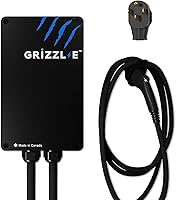
Inside the box sit contactors, ground-fault protection, temperature sensing and a controller that talks to the car. The Grizzl-E Ultimate 48A lists full electrical protections and UL certification, and Grizzl-E says its cast aluminum enclosure is rated for harsh weather.
The IYILO 48A adds a built-in GFCI breaker to that list.
The connector is another cost. A J1772 plug has to survive thousands of insertions and keep its pins clean.
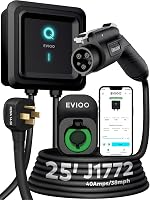
A 25-foot cable like the one on the EVIQO 40A is thick and heavy, and the copper in it is a real part of what you buy.
Where the money goes in the case
The IYILO 48A weighs 13.45 pounds and the EVIQO 40A weighs 21 pounds. Most of that heft is cable and copper, not plastic.
When you pick up a charger, you are feeling the part of the price that does the actual work.
Why does UL certification add so much to the price?
Certification costs money because testing costs money. A charger that carries UL, ETL or Energy Star marks has been put through independent safety and efficiency checks.
Those checks cost the maker, and the maker passes part of that on to you.
The marks matter more than the logo suggests. A certified unit has been evaluated for ground faults, overcurrent and enclosure safety.
The Grizzl-E Ultimate 48A, the EVIQO 40A and the IYILO 48A all name UL or ETL certification. The EVIQO 40A also lists FCC testing.
Energy Star adds a second layer. It covers standby power and efficiency, so a certified unit wastes less electricity when the car isn't plugged in.
For a device that stays wired to your house 24 hours a day, that adds up. All three units here carry the Energy Star mark.
Skipping certification is how a cheap charger gets cheap. That saving is real on the sticker and risky everywhere else, because the failure you're insuring against is a fire in your garage.
Why does hardwiring cost more than a plug-in charger?
Hardwiring usually costs more because it needs an electrician and a new breaker. A hardwired unit like the Grizzl-E Ultimate 48A or the IYILO 48A has no plug, so the circuit is connected directly inside the charger.
That means a permit in many areas, a 60A breaker for 48A output, and labor.
Both units ship with a hardwire kit, terminal lugs and heat shrink wrap, but the kit doesn't cover the electrician's time.
A plug-in model trades some speed for simplicity. The EVIQO 40A uses a NEMA 14-50 outlet on a dedicated 50A circuit.
If your garage already has that outlet, the install is mostly mounting the unit and plugging it in. If the outlet isn't there, you're still paying an electrician to run the circuit.
The EVIQO's own notes warn that the outlet is the RV or range type, not a dryer outlet, so a mistaken outlet is one more cost to fix.
The cable run is the wild card. A short run from a full panel is cheap.
A long run through finished walls, or a panel upgrade, can cost more than the charger several times over. That is the hidden line item in most home charging bills.
Is the electrical panel the real reason home EV charging gets pricey?
Often, yes. A 48A charger draws 48A continuously on a 60A breaker.
Older homes with a 100A service, or a panel already close to full, may need an upgrade before any charger goes in.
That work is expensive and has nothing to do with the charger's own quality.
This is where smart power sharing earns its keep. The Grizzl-E Ultimate 48A can balance power across multiple chargers, with equal sharing or priority charging for your daily driver.
The IYILO 48A supports power sharing so two chargers can run on one breaker without overloading it.
Those features let some homes avoid a panel upgrade. If your service is tight, compare what a hardwired ev charger for home offers before you assume you need new service.
Load management can be cheaper than a new panel.
The IYILO 48A also lets you dial current down in 1A steps from 6A to 48A, so a smaller breaker stays safe. That flexibility is a real cost saver when the panel is the problem.
Do smart features and Wi-Fi really add to the cost?
They add some cost, and they are worth it when you use them. A Wi-Fi connected charger like the Grizzl-E Ultimate 48A gives real-time monitoring, schedules and energy statistics through Grizzl-E Connect.
Charging still works without an online connection.
The external antenna also helps the signal reach across a garage.
The app side is where the savings can appear. The EVIQO 40A app lets you set speed from 6A to 40A and schedule off-peak charging.
The IYILO 48A app handles time-of-use rates and tracks energy and cost. Both need a 2.4 GHz network, so a 5 GHz-only setup won't connect.
If your utility offers a discounted overnight rate, a schedule pays for itself over time. If your rate is flat all day, the smart features are convenience rather than savings.
Buy them for the schedule only if your bill rewards it. The IYILO 48A goes a step further by listing utility program support on several official portals, which can open the door to local incentives.
What drives the difference between cheap and premium chargers?
The gap is mostly safety margins, cable quality and support. A budget charger and a premium one may both charge at 40A.
The difference is in the enclosure, the connector temperature sensing and what happens when something goes wrong.
The IYILO 48A monitors connector temperature with a built-in sensor and stops charging above 221°F. That kind of protection costs money to design and certify.
A unit without it leaves the safety decision to the car. The Grizzl-E Ultimate 48A takes the opposite approach to toughness, wrapping its parts in a NEMA 4X water-resistant cast aluminum enclosure.
Warranty and support also show up in the price. The Grizzl-E Ultimate 48A carries a 3-year warranty and the IYILO 48A does too.
The EVIQO 40A matches that with a 3-year warranty and U.S.-based support Monday to Saturday. That backing is part of what the sticker covers, and it is worth having on a device that runs overnight while you sleep.
How can you lower the total cost of home charging?
Pick the lowest amperage your car can actually use, and check whether an outlet already exists. A 48A charger only pays off if the car accepts 48A.
Many EVs cap lower, and paying for speed the car can't take is pure waste.
If your car tops out around 40A, a 40 amp ev charger on an existing 14-50 outlet is the cheaper path. If it takes the full 11.5 kW, a 48 amp ev charger hardwired on a 60A breaker is the right spend.
The IYILO's 1A dial-down option is worth knowing if your car sits somewhere in between.
Also check for utility rebates and off-peak rates before you buy. Some utilities list approved chargers and help with the install.
That paperwork can cut the real total by more than any discount on the unit.
Which charger makes the most sense for the money?
Start with your car's accepted rate and your panel, then buy the charger that fits both. If you want full 48A speed and smart controls, the Grizzl-E Ultimate 48A is the strongest fit among these three.
Its UL certification, cast aluminum enclosure and power sharing cover the hardwired path well.
If your garage already has a NEMA 14-50 outlet and your car tops out near 40A, the EVIQO 40A is the practical buy. It skips the electrician for the unit itself and its app handles scheduling.
The IYILO 48A suits a tight panel or a two-car setup, since its power sharing can avoid a service upgrade and its temperature sensor covers the connector.
So when someone asks why are home EV chargers so expensive, the honest answer is that the price is the safe part of a system. Spend on certification, a proper cable and a good install.
Cut costs by matching amperage to your car and using the outlet you already have.
Compare the full field in our guide to the best ev charger for home before you order. Then get a quote for the circuit, because that number, not the charger, often decides the final bill.
Frequently asked questions
Why is a 48A charger more expensive than a 40A one?
A 48A charger needs a 60A breaker and thicker wiring, and many require hardwiring, so the install costs more. A 40A plug-in model runs on a 50A outlet and a 50A breaker, which is cheaper to wire.
Do you always need an electrician to install a home EV charger?
No. A plug-in charger that uses an existing NEMA 14-50 outlet on a dedicated 50A circuit needs no new wiring.
Hardwired units and any new circuit do need a licensed electrician, and that labor is a large part of the total.
Are cheap EV chargers a false economy?
Often yes. An uncertified unit can skip UL testing and the internal protections a certified charger carries.
The savings on the unit are small next to the cost of replacing damaged wiring or a vehicle inlet.
Can a smart charger cut my electricity bill?
Yes, if your utility offers time-of-use rates. Scheduling charging overnight moves most of your power use to cheaper hours.
An app that tracks energy and cost makes the savings visible.
Does a more expensive charger charge my car faster?
Only up to your car's onboard limit. A 48A charger delivers 11.5 kW, but a car capped at 32A will draw 32A no matter what you install.
Check the car's accepted rate before paying for extra speed.